What the 2026 Nutritional Pyramid Really Means
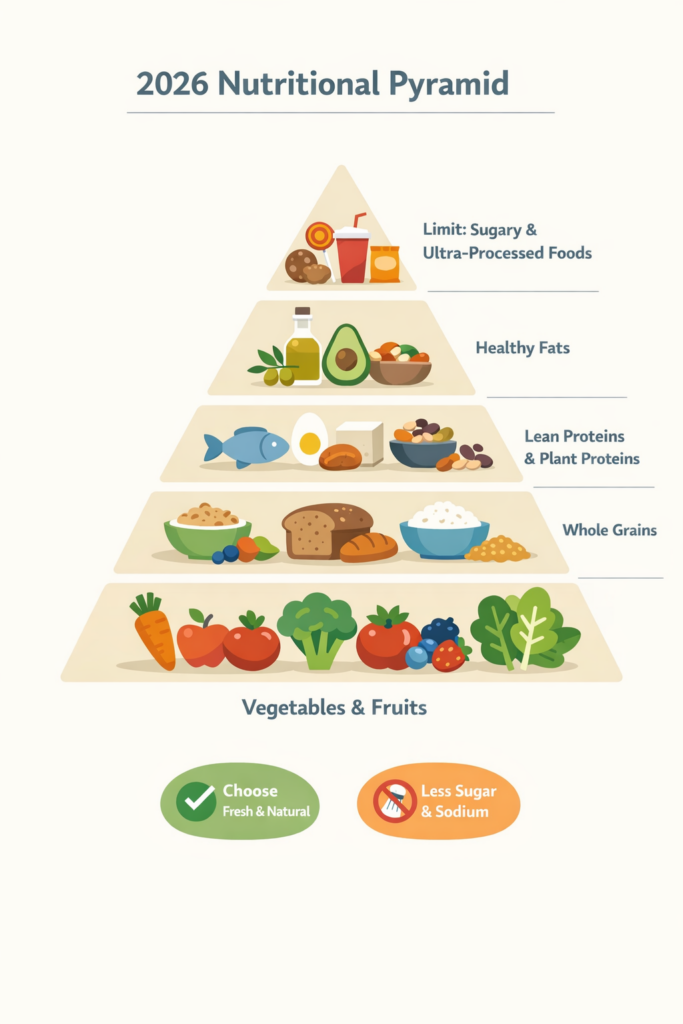
The 2026 Pyramid puts whole, real foods at the center. Vegetables and fruits form the base. Whole grains, legumes, lean proteins, and healthy fats come next. Ultra-processed foods, added sugars, and excess salt are near the top and should be limited. The aim is practical: build meals around plants and whole ingredients, and keep things simple and tasty.
The Pyramid in Plain English: What to Eat More Often
Think of the pyramid as a checklist for every meal. Focus on these groups most days.
- Vegetables and fruits: aim for color and variety. Fresh, frozen, or canned (low-sodium) all count.
- Whole grains: oats, brown rice, barley, whole-wheat bread, or whole-grain pasta instead of refined grains.
- Plant proteins: beans, lentils, chickpeas, tofu, and tempeh.
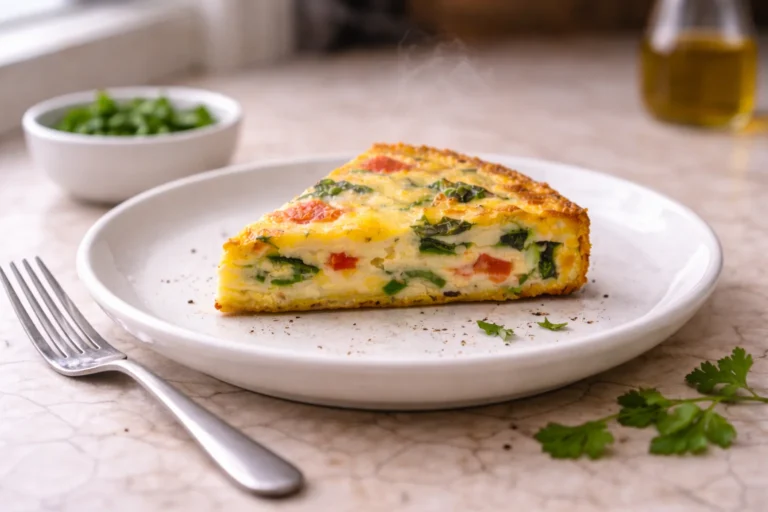
- Lean animal proteins: skinless poultry, eggs, and fish in modest portions.
- Healthy fats: olive oil, avocados, nuts, and seeds in small amounts.
- Minimize: ready-made snacks, sugary drinks, and highly processed frozen meals.
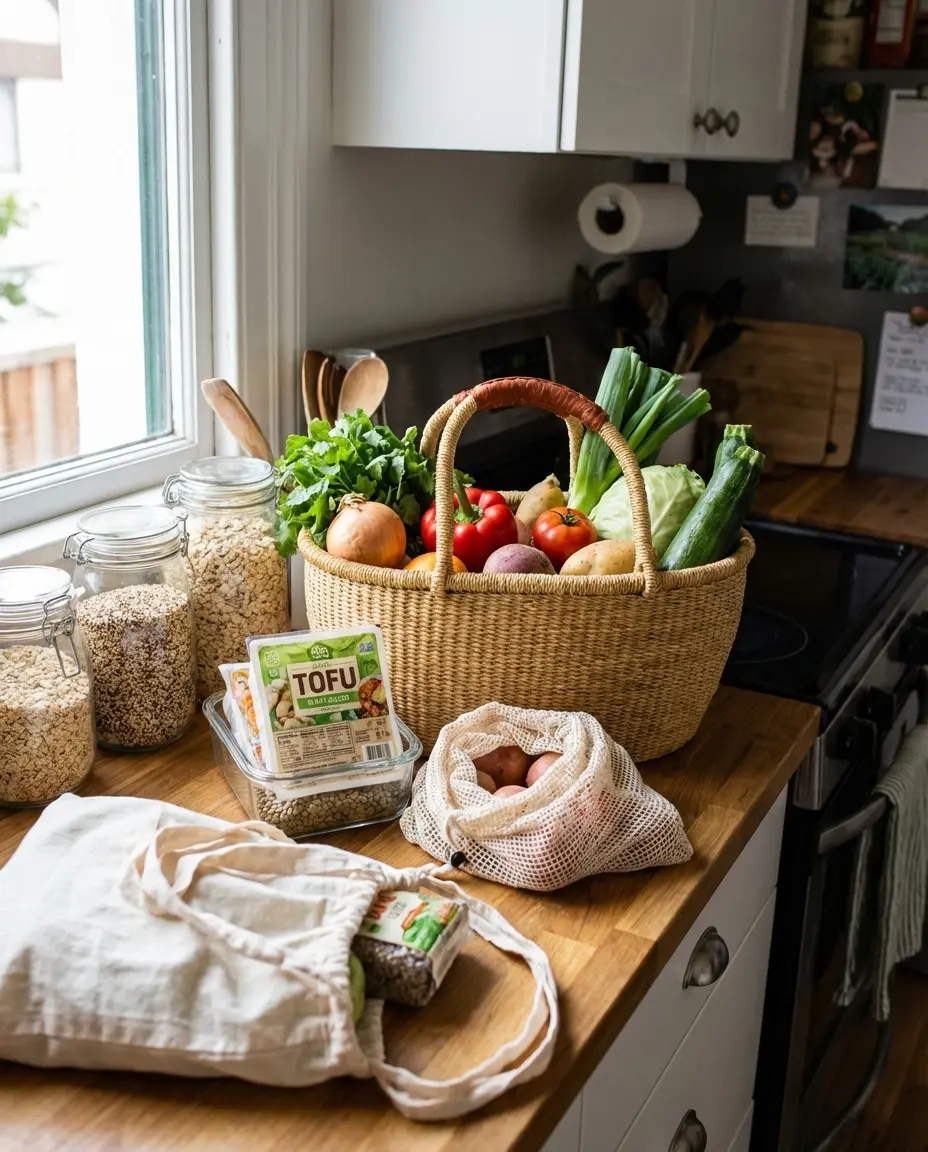
The Simple Plate Formula (Perfect for 1–2 People)
Use a half-and-half rule to keep plates balanced with minimal fuss.
- Half the plate: cooked or raw vegetables and a small portion of fruit (salad, roasted veg, or a fruit cup).
- One-quarter: whole grains or starchy veg (brown rice, quinoa, sweet potato).
- One-quarter: lean or plant protein (beans, fish, tofu, or chicken).
- Add a small drizzle of healthy fat (olive oil, a few chopped nuts, or sliced avocado).
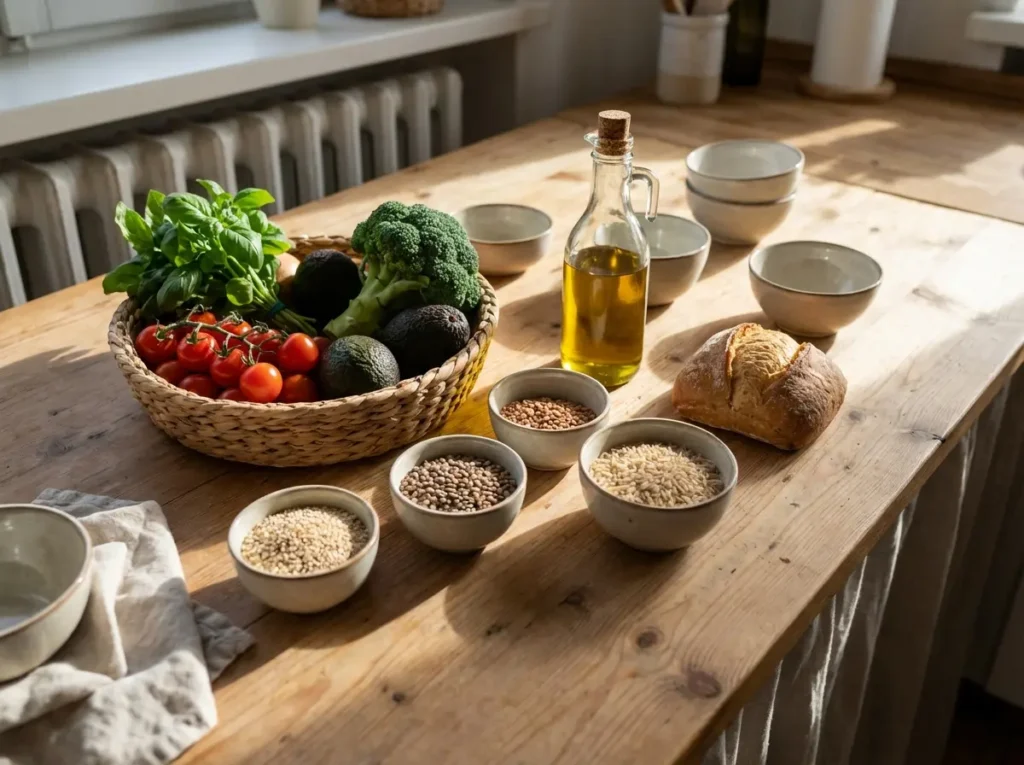
For quick meal planning, keep a few pantry staples on hand and focus on rotating simple proteins and vegetables. For ideas on stocking a small pantry to support this approach, see tips for building a small pantry.
Easy, Gentle Meal Ideas That Fit the Pyramid
Choose soft textures and low-effort prep. These work well for one or two portions.
- Vegetable and lentil soup: simmer until soft, freeze single portions for later.
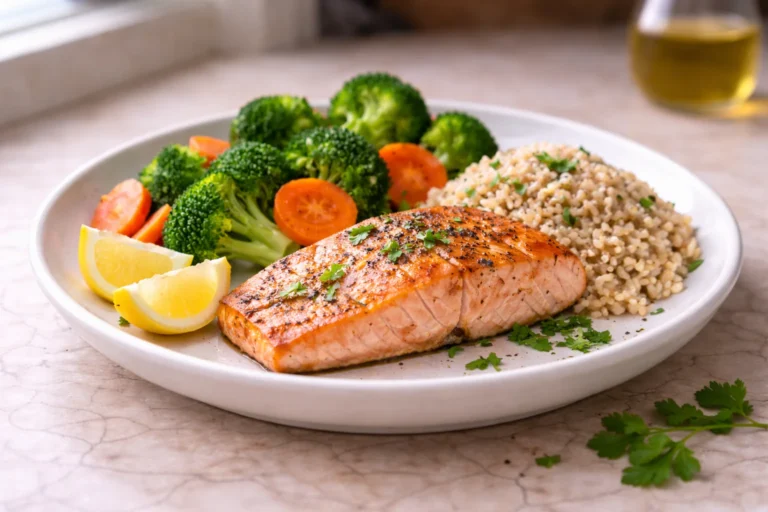
- Sheet-pan salmon with broccoli and sweet potato: minimal hands-on time, roast at one temperature.
- Baked chicken thighs with barley and roasted carrots: hearty, easy to reheat.
- One-pan tofu stir-fry with brown rice and a rainbow of veggies.
- Slow-simmer bean stew with canned tomatoes and greens—serve over quinoa or whole-grain bread.
- Oat and fruit breakfast bowl with a spoonful of nut butter and seeds.
A Small Grocery List Built on the Pyramid
Buy a few versatile items each week. Keep quantities small and predictable.
- Vegetables: one leafy green, two root vegetables, one head of broccoli or cauliflower.
- Fruits: 3–6 pieces that store well (apples, oranges) plus one softer fruit for immediate use.
- Whole grains: small bags of brown rice, oats, or quinoa.
- Proteins: a couple of cans of beans, a block of tofu, and one or two portions of fish or chicken. For more guidance on proteins for small households try this guide to shopping for fresh proteins for one or two.
- Healthy fats: olive oil, a small jar of nut butter, a small bag of nuts or seeds.
Low-Waste Storage Tips (So Food Doesn’t Spoil)
Small households benefit most from smarter storage and portioning.
- Store fruits by ripeness: keep firmer fruit on the counter and move to the fridge as they ripen. For detailed ideas see these fresh fruit storage tips.
- Portion and freeze single servings of soups, stews, and grains in freezer-safe containers.
- Use clear containers so leftovers are visible and used sooner.
- Trim and freeze herbs in olive oil in ice cube trays for quick flavor boosts.
- Buy loose produce when possible to take only what you need.
Conclusion
- Keep meals centered on vegetables, whole grains, and modest portions of lean or plant protein. Small, regular habits beat occasional extremes.
- Plan for leftovers, use gentle cooking methods, and stock a compact pantry. These steps make the 2026 Nutritional Pyramid practical and sustainable for one or two people.