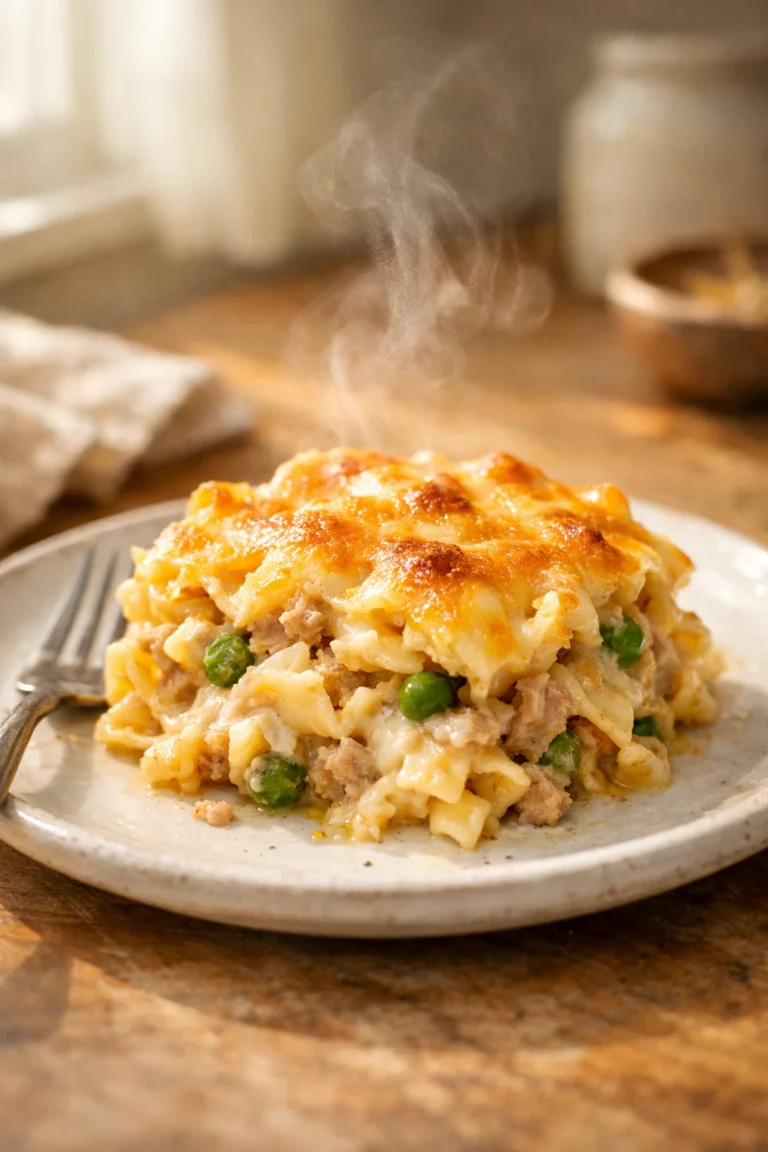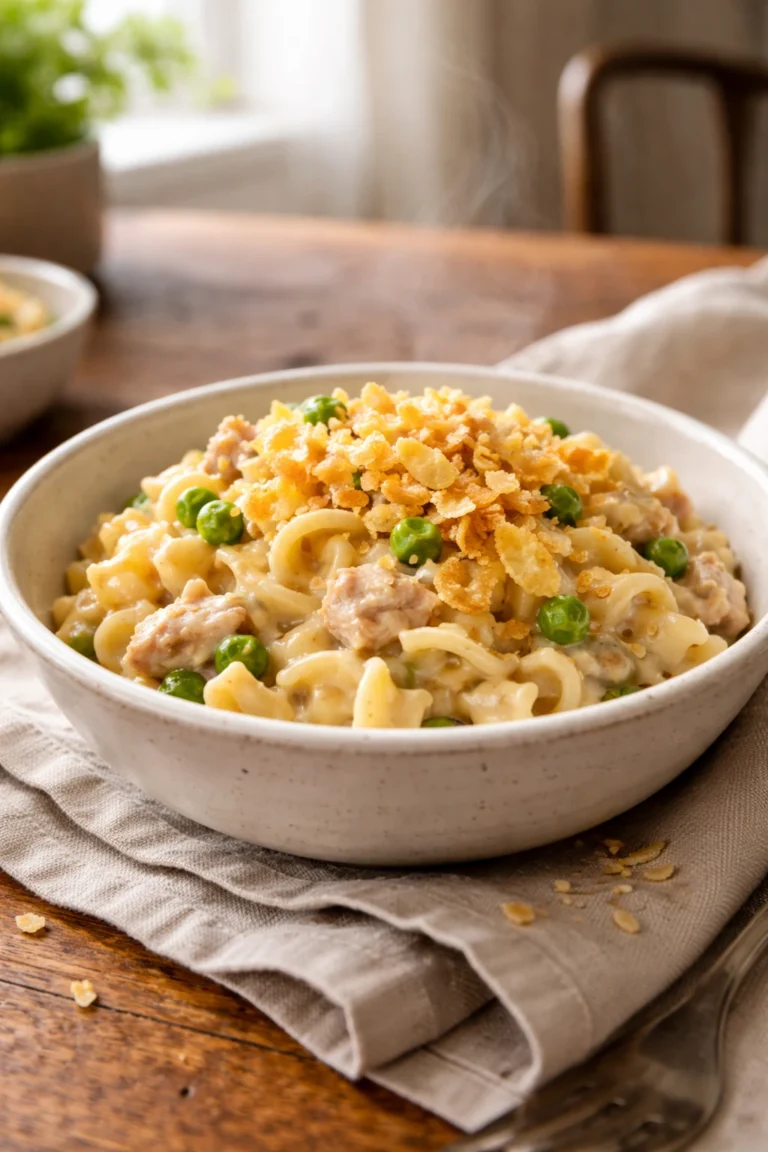
Low Sodium Tuna Noodle Casserole for Two
This gentle, diabetic-friendly low sodium tuna noodle casserole makes a cozy dinner for one or two and uses whole wheat pasta and simple vegetables for fiber and steady energy. The sauce is light and tangy from plain yogurt and lemon so you keep flavor while limiting added salt.
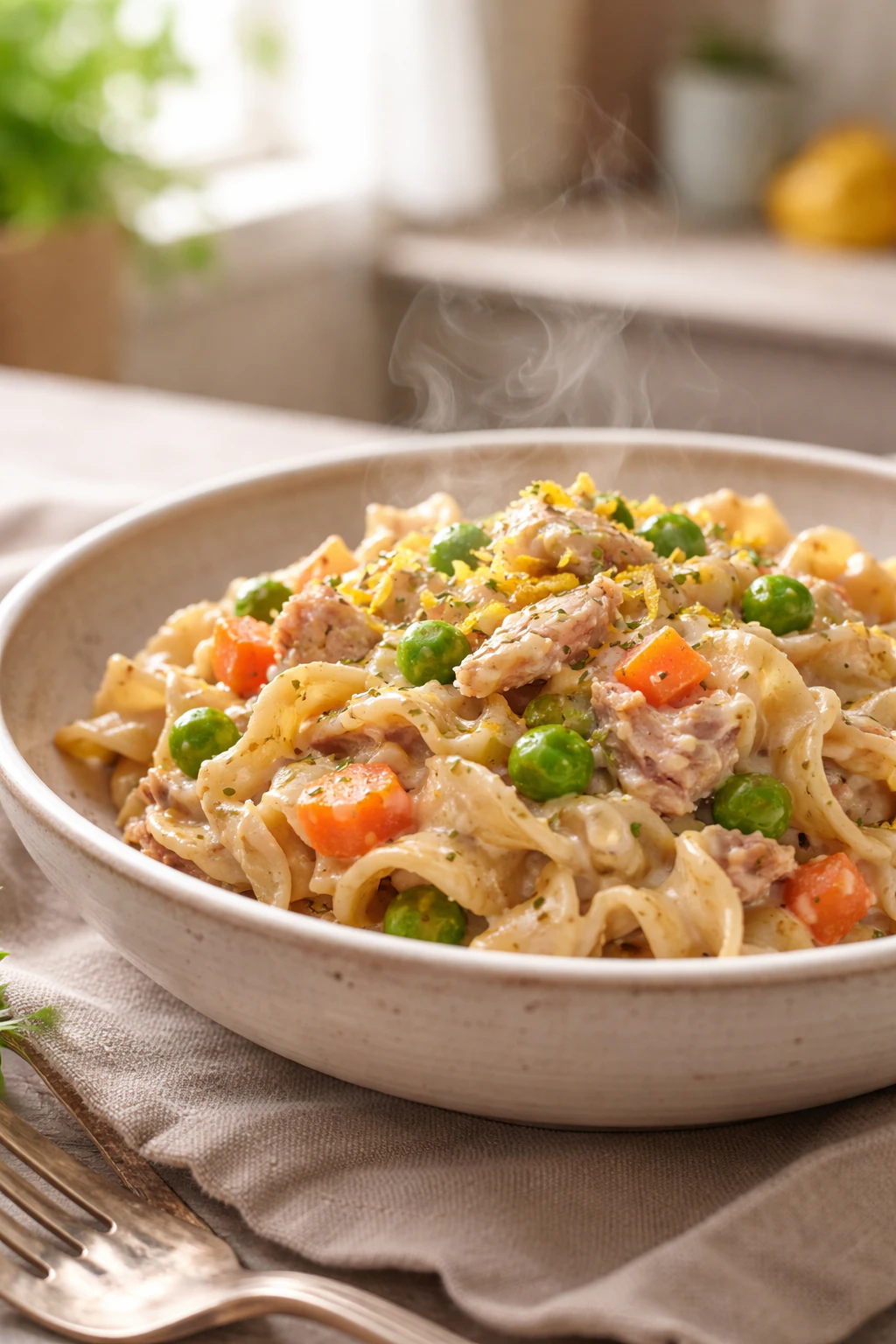
Cooking for one or two is easier when recipes are small and forgiving. This casserole is designed to be soft in texture, easy to chew, and quick to finish in one skillet and a small baking dish.
Ingredients are common grocery items and you can adjust vegetable size or softness to suit digestion preferences. The result is comforting without being heavy.
Ingredients You’ll Need
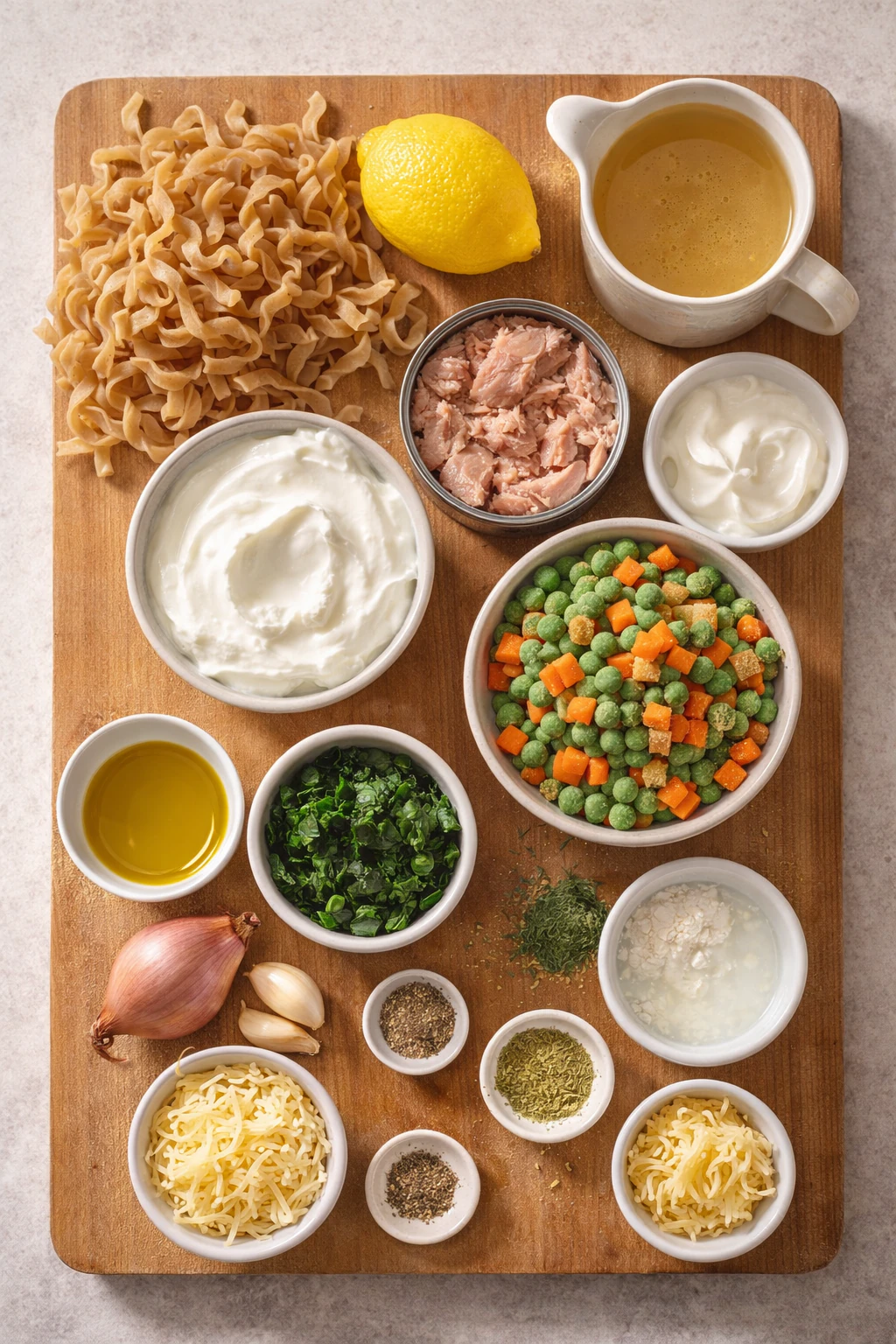
- 4 ounces whole wheat pasta – small shapes like elbow, shells, or small penne (about 1 heaping cup dry)
- 1 5-ounce can tuna in water – no salt added or low sodium, drained
- 1/2 cup low-sodium vegetable or chicken broth
- 1/3 cup plain nonfat Greek yogurt or plain low-fat yogurt
- 1/2 cup frozen peas and diced carrots or 1 cup fresh spinach, roughly chopped
- 1 small shallot or 1/4 cup onion, finely chopped
- 1 clove garlic, minced (optional)
- 1 tablespoon olive oil
- 1 teaspoon lemon juice and 1/2 teaspoon lemon zest
- 1/4 teaspoon black pepper and 1/2 teaspoon dried dill or parsley
- 1 tablespoon cornstarch mixed with 2 tablespoons cold water – optional for a thicker sauce
- 2 tablespoons low-sodium shredded cheddar or Parmesan-style cheese – optional
You can serve this casserole with a small side of soft bread, mashed potatoes, or a simple salad if you like.
Step-by-Step Recipe
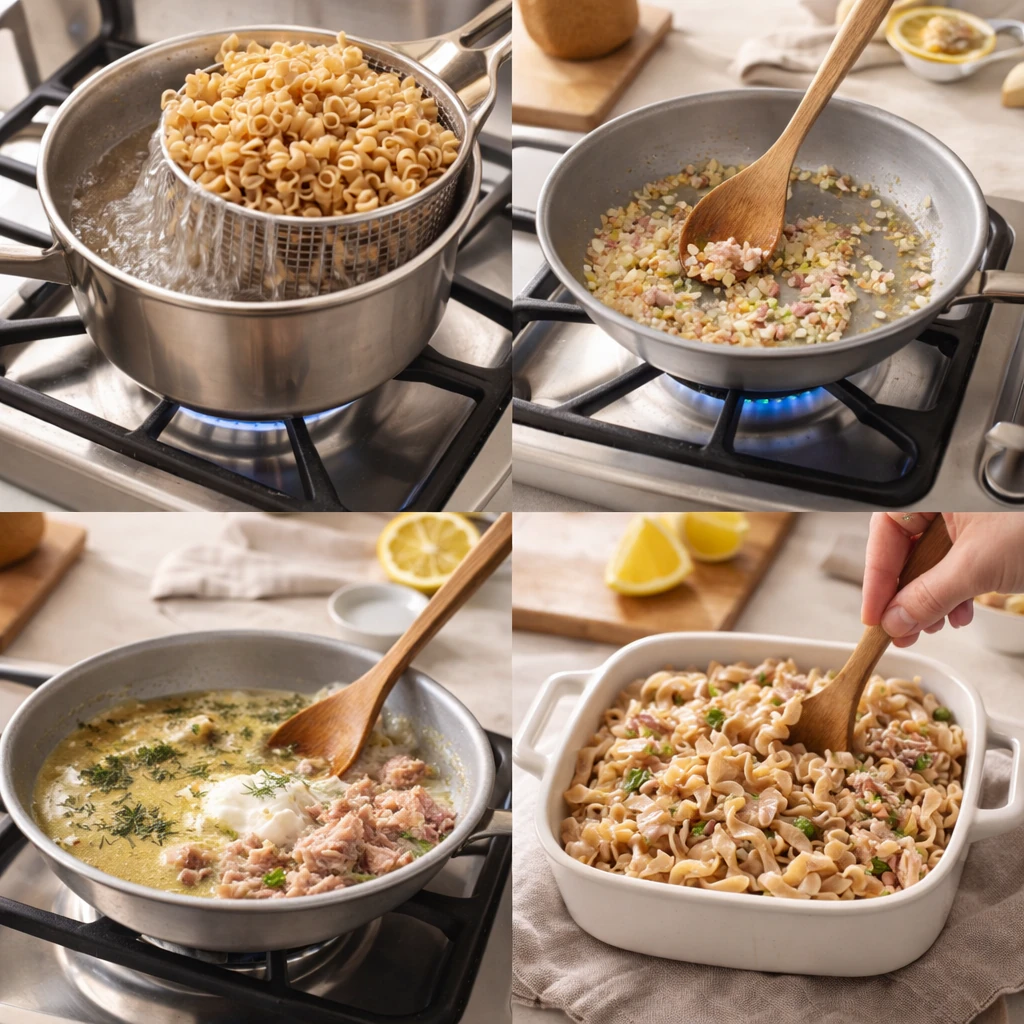
- Preheat oven to 350 degrees F if you want a lightly browned top. You can skip baking and serve straight from the skillet for a softer texture.
- Cook the pasta in a pot of boiling water until very tender – one to two minutes beyond al dente for a softer bite. Drain and set aside.
- In a small skillet over medium heat, warm the olive oil. Add the shallot or onion and cook until translucent and soft, about 3 minutes. Add garlic and cook 30 seconds if using.
- Stir in the broth, lemon zest, lemon juice, and dried herbs. Bring to a gentle simmer. If you like a thicker sauce, whisk in the cornstarch slurry and simmer until it slightly thickens.
- Lower the heat. Stir in the yogurt until smooth. Add the drained tuna, peas and carrots or spinach, and black pepper. Gently fold in the cooked pasta so everything is coated. Taste and adjust with more lemon or herbs rather than salt.
- For a baked top spoon into a small ovenproof dish, sprinkle the optional low-sodium cheese, and bake 8 to 10 minutes until warmed through and cheese is just melted. For a softer result serve directly from the skillet.
Tips and Easy Variations
Make it easier to chew
- Cook the pasta until softer than usual and cut larger vegetables into small pieces
- Mash some of the tuna into the sauce for an even softer texture
- Steam vegetables longer until very tender before adding
Make it lighter for digestion
- Skip the cheese and use extra yogurt for a lighter tangy sauce
- Use more broth and less starch so the dish stays moist and not heavy
- Choose nonfat or low-fat plain yogurt to reduce richness
Swap vegetables and proteins
- Use soft cooked zucchini, mushrooms, or canned low-sodium corn for variety
- Spinach wilts quickly and adds moisture without much chewing effort
- Replace tuna with cooked white beans for a softer lower sodium protein option
Quick salt and texture tips
- Boost flavor with lemon, fresh herbs, and garlic instead of adding salt
- Cook pasta and vegetables until soft for easier chewing
- Use no salt added tuna and low-sodium broth when reducing sodium
Storage and Leftovers
Fridge
Cool leftovers to room temperature then store in an airtight container in the refrigerator for up to 3 days.
Freezer
Do not freeze if you used yogurt as texture may change. If you omit yogurt you can freeze portions for up to 1 month.
Reheating
Reheat gently on the stove over low heat with a splash of broth or water to loosen the sauce and preserve a soft texture.
Conclusion
Give this low sodium tuna noodle casserole a try when you want a small-batch, comforting meal that is gentle on digestion. It is simple to make, soft in texture, and easy to adjust for lower salt and lower fat needs.
Make small swaps to match your taste and dietary needs and enjoy a warm easy dinner that is easy to prepare and easy to eat.
FAQ
Can I use regular canned tuna instead of no salt added?▶
You can but choose the lowest sodium option available. Rinse canned tuna under cold water to remove surface salt and reduce sodium.
Is Greek yogurt OK if I am watching sugar?▶
Plain Greek yogurt has very little sugar. Avoid flavored yogurts which add sugar and use nonfat or low-fat plain yogurt for a lighter sauce.