Easy Vegetable Soup for Gentle Digestion
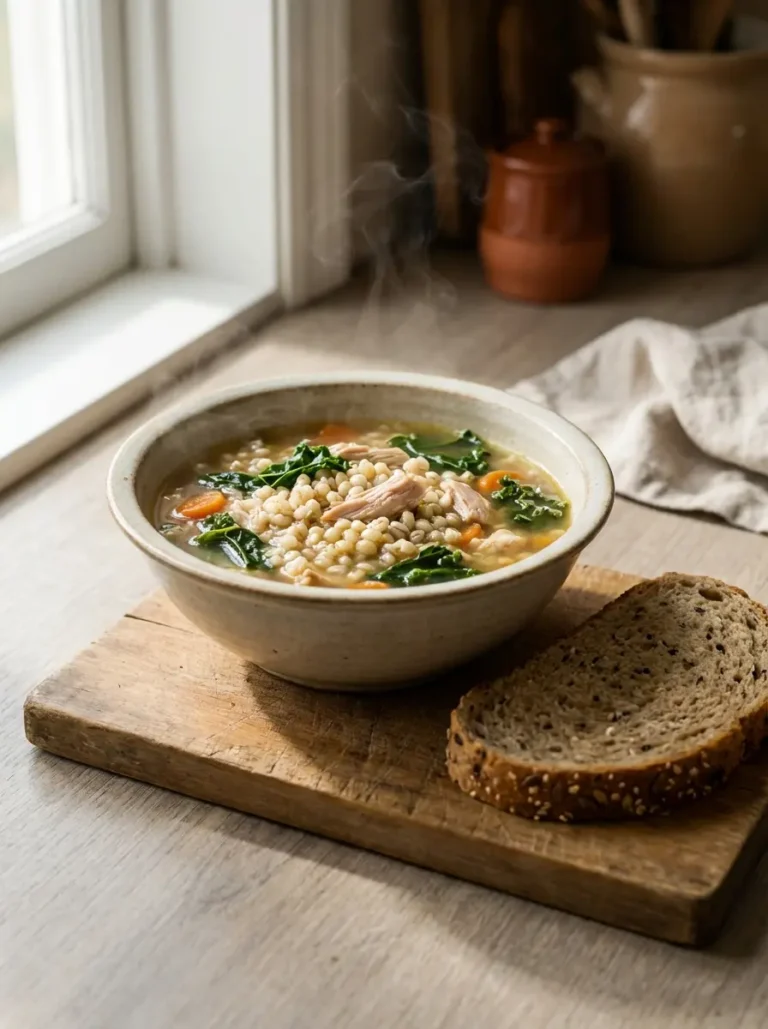
Warm, one-pot winter vegetable soups are a simple way to get comforting, nutrient-dense meals that are gentle on the stomach. This collection centers on low-sodium recipes and soft textures so you can enjoy a cozy bowl with minimal effort.
Cooking for one or two shouldn’t mean long prep or giant pots. These soups are made in one pan, use everyday supermarket ingredients, and easily scale to small portions. You’ll spend less time washing dishes and more time eating.
Textures are soft and easy to chew. Steps are short and forgiving. If you prefer lighter digestion, I include tips to reduce fat or salt without sacrificing flavor.
Ingredients You’ll Need
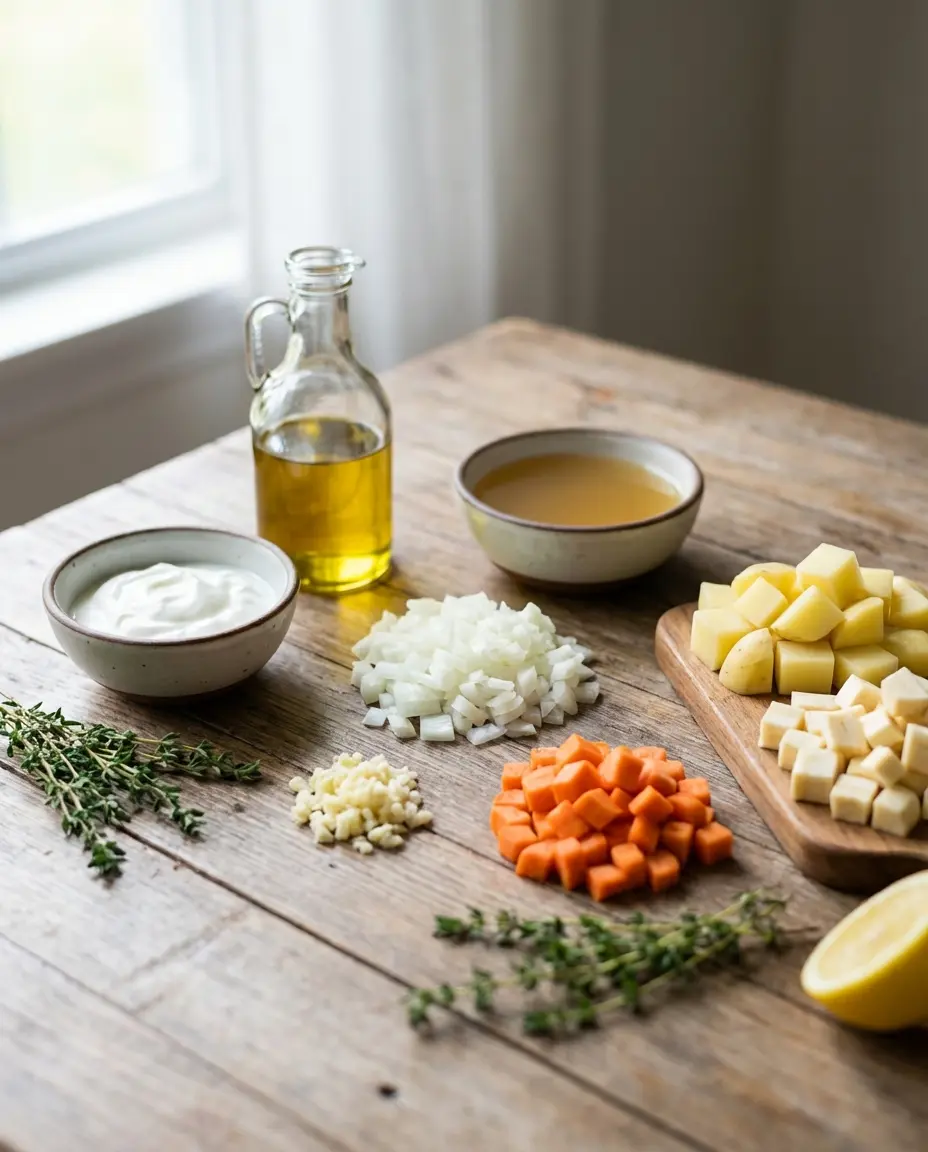
- 1 tablespoon extra-virgin olive oil
- 1 small onion, finely chopped
- 1 clove garlic, minced
- 1 medium carrot, peeled and diced
- 1 small parsnip or ½ sweet potato, diced
- 1 medium potato (Yukon or russet), diced — helps create a silky texture
- 2 cups low-sodium vegetable broth or water plus a low-sodium bouillon cube
- 1 teaspoon fresh thyme or ½ teaspoon dried thyme
- Freshly ground black pepper, to taste
- 2 tablespoons plain yogurt or a splash of low-fat milk (optional, for creaminess)
- 1 teaspoon lemon juice (optional, to brighten)
You can serve this soup with a small piece of soft whole-grain bread, cooked rice, or a scoop of mashed potato. If you enjoy squash, try adding gentle winter squash for sweetness.
Step-by-Step Recipe
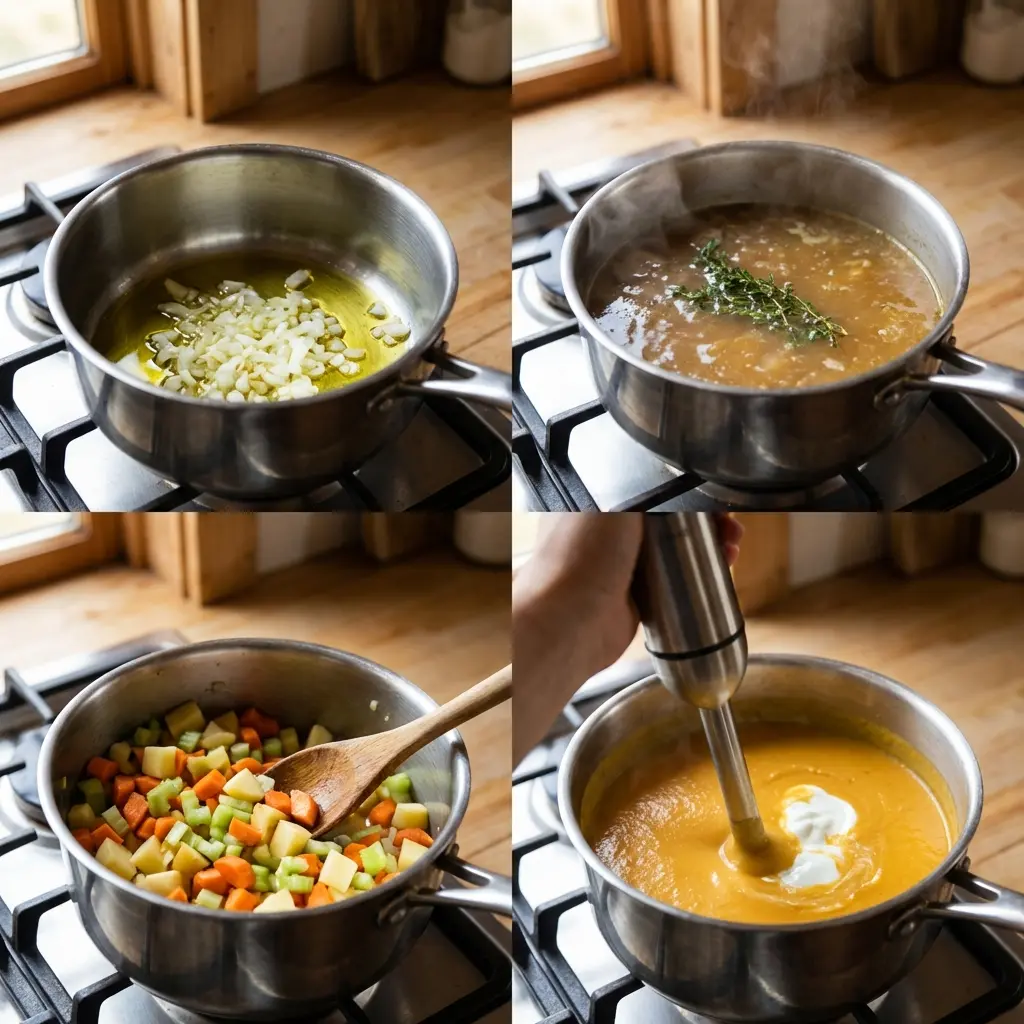
- Heat the olive oil in a medium saucepan over medium heat. Add the onion and a pinch of black pepper or salt substitute and cook until soft, about 4–5 minutes.
- Add the garlic, carrot, parsnip (or sweet potato), and potato. Stir for 1–2 minutes to combine.
- Pour in the low-sodium broth and add the thyme. Bring to a gentle simmer, cover, and cook until vegetables are very soft, about 15–20 minutes.
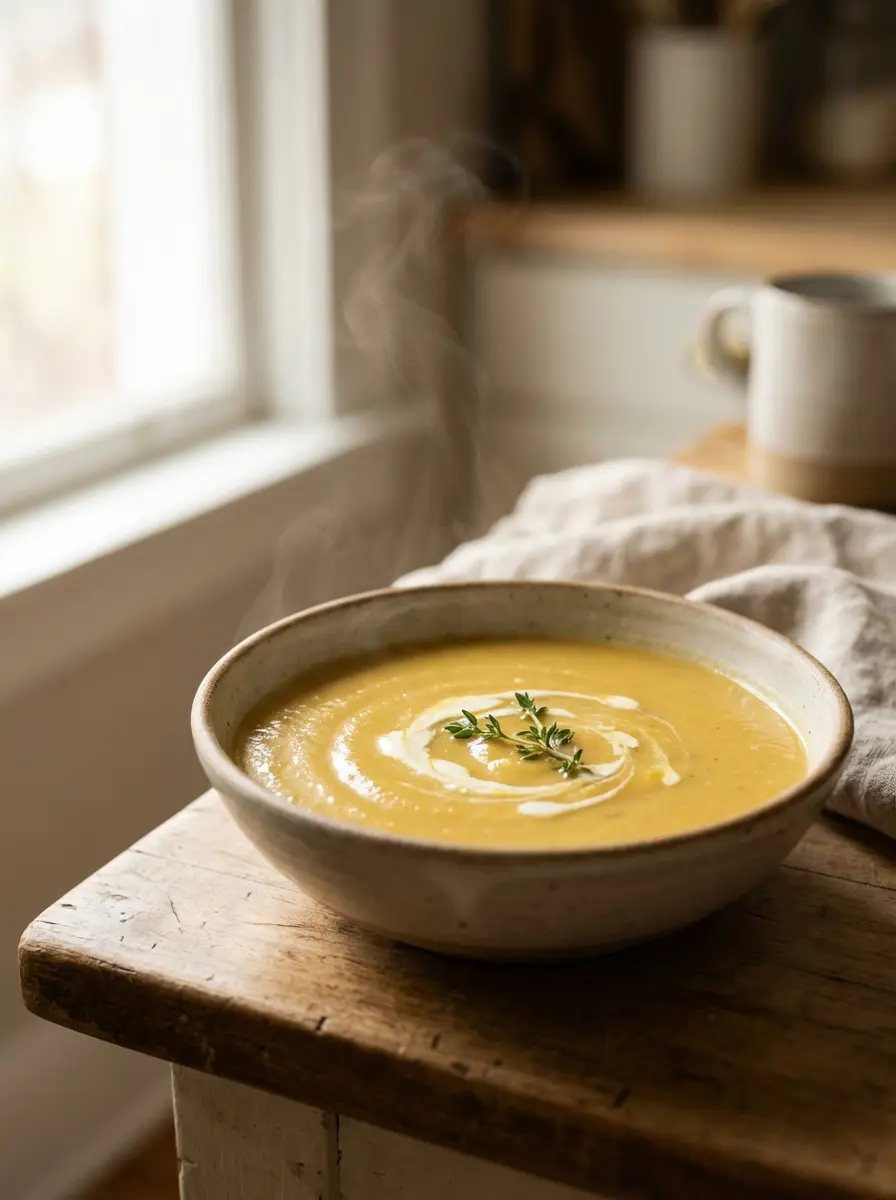
- Turn off the heat. Use an immersion blender to puree the soup until silky, or transfer in batches to a blender and purée, then return to the pot.
- Stir in the yogurt or milk if using, and add lemon juice and black pepper to taste. Reheat gently if needed and avoid boiling after adding dairy.
- Serve warm; the soup will be very soft and easy to chew.
Tips and Easy Variations
Texture & Chewing
- Puree the soup fully and strain for an ultra-smooth texture.
- Cook vegetables a few minutes longer for extra softness.
- Add extra potato or a small scoop of cooked rice when blending for more body.
Gentle Digestion
- Use water or extra broth and skip the oil — sauté in a splash of broth instead.
- Add a bit of grated ginger or a pinch of turmeric for soothing warmth.
- Choose low-fat dairy or skip dairy entirely for a lighter finish.
Flavor & Protein
- Reduce sodium by tasting before adding salt and using herbs, lemon, and pepper for brightness.
- Stir in pureed low-sodium white beans or shredded cooked chicken for protein.
- Quick swaps: parsnip → turnip, potato → cauliflower, or add spinach at the end for color.
Quick swaps and low-sodium tips
- Use low-sodium broth and add lemon or herbs instead of extra salt.
- Add umami with roasted mushrooms or a small amount of low-sodium miso sparingly.
- Freeze single servings for easy, gentle meals ready to reheat.
Storage and Leftovers
Fridge
Cool within 2 hours and store in an airtight container in the refrigerator for up to 3 days.
Freezer
Freeze in single-serving containers for up to 3 months. Thaw overnight in the fridge before reheating.
Reheating
Reheat gently on the stove and add a splash of broth or water if the texture is too thick. Avoid boiling after adding dairy.
Conclusion
Try one of these one-pot, low-sodium bowls this week. Each recipe is simple, gentle, and sized for one or two servings for easy cooking and clean-up.
These vegetable-forward, whole-food soups follow the Nutritional Pyramid 2026–2030 guidance by prioritizing vegetables, healthy fats, and modest portions that are digestion-friendly.
FAQ
Can I make these soups ahead?▶
Yes. Refrigerate for up to 3 days or freeze single portions for up to 3 months.
How do I thin the soup if it’s too thick?▶
Stir in a splash of low-sodium broth, water, or milk while reheating until you reach the desired consistency.
Can I add protein?▶
Yes. Stir in soft, cooked beans, shredded poultry, or soft tofu. Puree beans with some soup for a smooth result.
Any tips for flavor without salt?▶
Use fresh herbs, lemon juice, black pepper, roasted vegetables, or a touch of umami from mushrooms or low-sodium miso to boost flavor.
Are these soups good if I have mild chewing difficulty?▶
Yes — fully pureed soups or soups strained through a sieve are easy to swallow and chew and can be tailored to very soft textures.