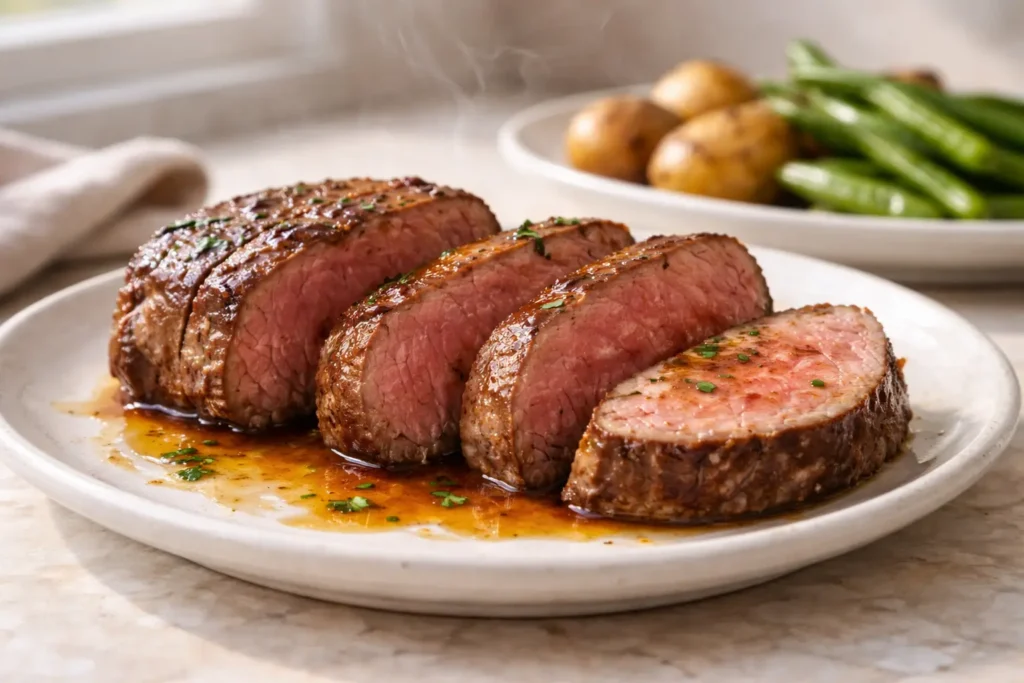
Beef tenderloin is lean and delicate, so reheating it the wrong way turns it dry fast. The best approach is low, gentle heat until it’s warm inside then an optional quick sear for flavor.
Below are the best reheating methods (oven, stovetop, sous vide, microwave), exact temps/times, and quick fixes if it’s already a bit dry.
Quick Answer (Best Method)
The best overall method is low oven (covered) + optional quick sear. It warms the center gently and helps keep the tenderloin juicy.
Before You Start (Do This First)
- Whole vs sliced: Whole reheats more evenly and stays juicier. Slices heat faster but overcook easily.
- Let it sit 10–15 minutes (covered) to take the chill off.
- Add a little moisture: beef broth or pan juices helps prevent drying.
- Use gentle reheating targets: you’re warming, not recooking.
Best Overall Method: Low Oven + Quick Sear
Best for: best texture and easiest to control
Time: 15–35 minutes (depends on thickness)
Step-by-step
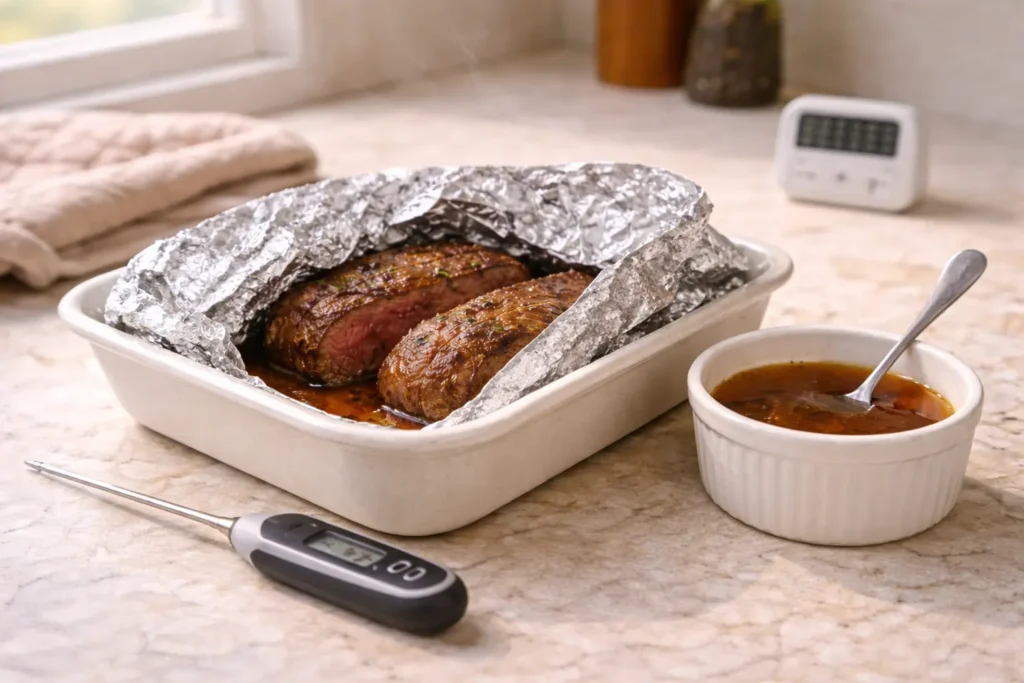
- Preheat oven to 120°C / 250°F (or 110°C / 230°F for even gentler reheating).
- Place tenderloin in a baking dish and add 1–3 tbsp beef broth (or drippings).
- Cover tightly with foil.
- Heat until internal temp reaches:
- 43–46°C / 110–115°F if you plan to sear after
- 49–54°C / 120–130°F if you won’t sear
- Sliced (2–3 cm / 1 in): 10–15 minutes
- Whole piece: 20–35 minutes
- Optional (recommended): Sear 30–60 seconds per side in a very hot skillet with a little oil/butter.
- Rest 3–5 minutes, then serve.
Why it works: Low heat warms the center without squeezing out juices; a quick sear restores flavor and crust.
Method 2: Stovetop (Fast, Great for Slices)
Best for: medallions or sliced tenderloin
Time: 5–10 minutes
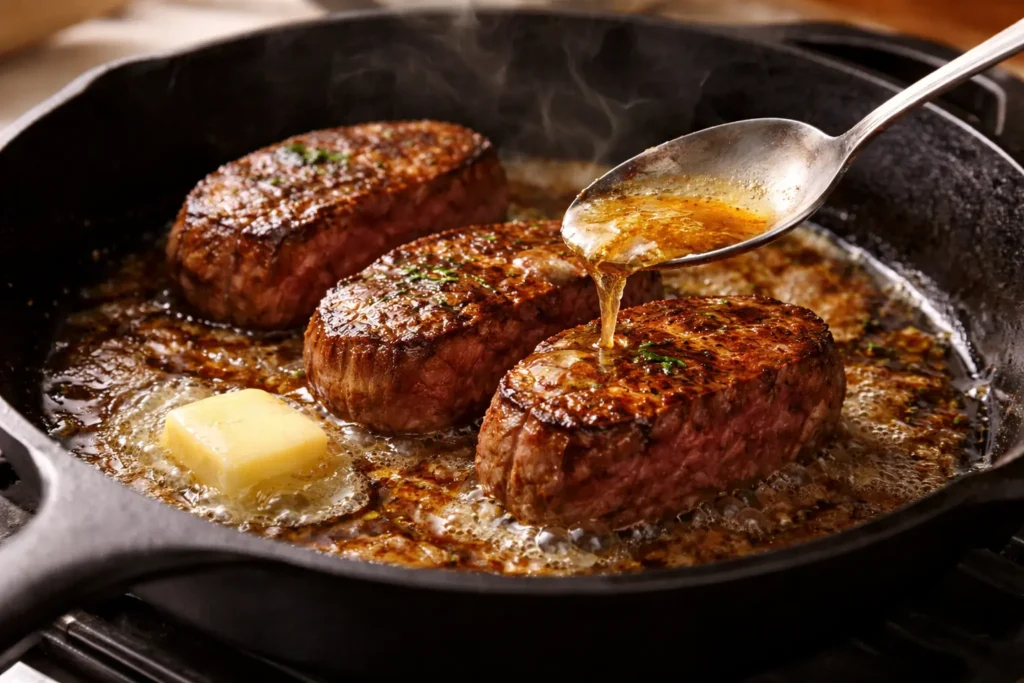
- Heat a skillet on low.
- Add 1 tsp butter + 1–2 tbsp broth.
- Add slices, cover with a lid, and warm 1–2 minutes per side.
- If you want browning, finish with 10–20 seconds per side on higher heat.
Tip: Keep it low until warmed through—high heat dries tenderloin fast.
Method 3: Sous Vide (Most Reliable for Perfect Doneness)
Best for: results closest to freshly cooked
Time: 30–60 minutes
- Bag the tenderloin with a little butter or pan juices.
- Set sous vide temperature:
- Rare: 50°C / 122°F
- Medium-rare: 54°C / 129°F
- Medium: 57°C / 135°F
- Warm:
- Slices: 20–30 minutes
- Whole piece: 35–60 minutes
- Pat dry. Optional: quick sear 30–45 seconds per side.
Method 4: Microwave (Only If You Must)
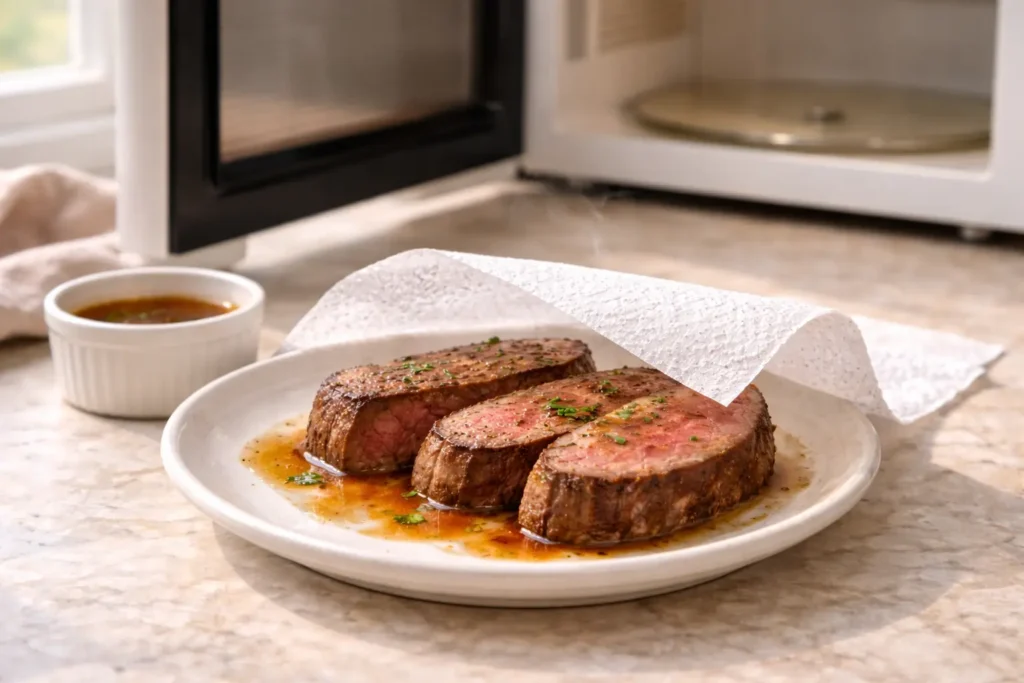
Best for: small portions and quick reheating
Time: 1–3 minutes
- Slice the tenderloin (microwave reheats slices more evenly than a whole piece).
- Place on a plate with 1 tbsp broth and cover loosely.
- Microwave at 30–50% power in 20–30 second bursts, flipping once.
- Stop early and rest 1 minute so carryover heat finishes warming.
Rule: Avoid full power—this is how tenderloin turns rubbery and dry.
Internal Temperature Guide (Reheat Targets)
- Rare: 49–52°C / 120–125°F
- Medium-rare: 52–55°C / 125–131°F
- Medium: 56–60°C / 133–140°F
Aim to reheat gently and stop once it’s warm—going higher will push it into overcooked territory.
Common Problems (Quick Fixes)
- It’s dry already: slice it and warm covered with broth + butter; serve with pan sauce, peppercorn sauce, or chimichurri.
- It got overcooked while reheating: chill, slice thin, and use for steak sandwiches, tacos, or stir-fry (add at the end).
- No crust: pat dry and sear fast, about 30 seconds per side in a very hot pan.
FAQ
Should I reheat tenderloin whole or sliced?
Whole stays juicier and reheats more evenly. Slices reheat faster but can overcook quickly. For the best results, reheat whole and slice after.
Can I reheat beef tenderloin the next day without drying it out?
Yes—use the low oven method with foil and a splash of broth, or sous vide for the most consistent doneness.
What’s the single best method?
Low oven (covered) + quick sear is the best balance of easy and excellent texture.