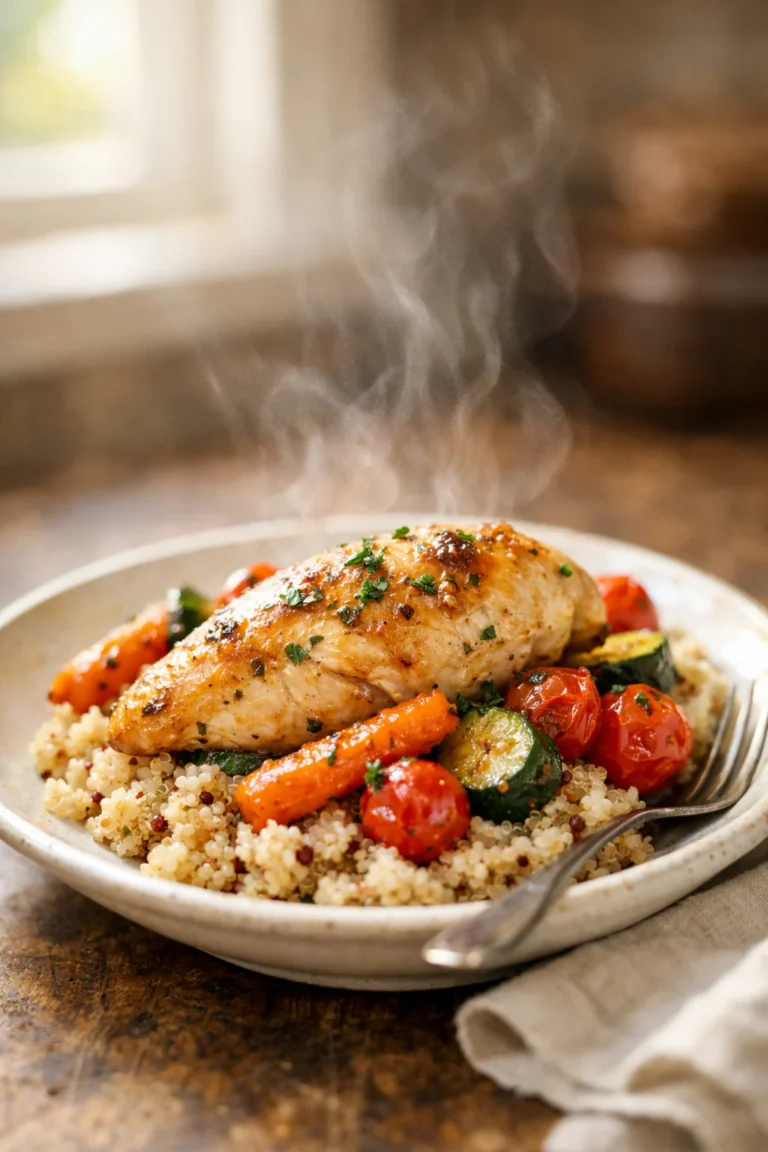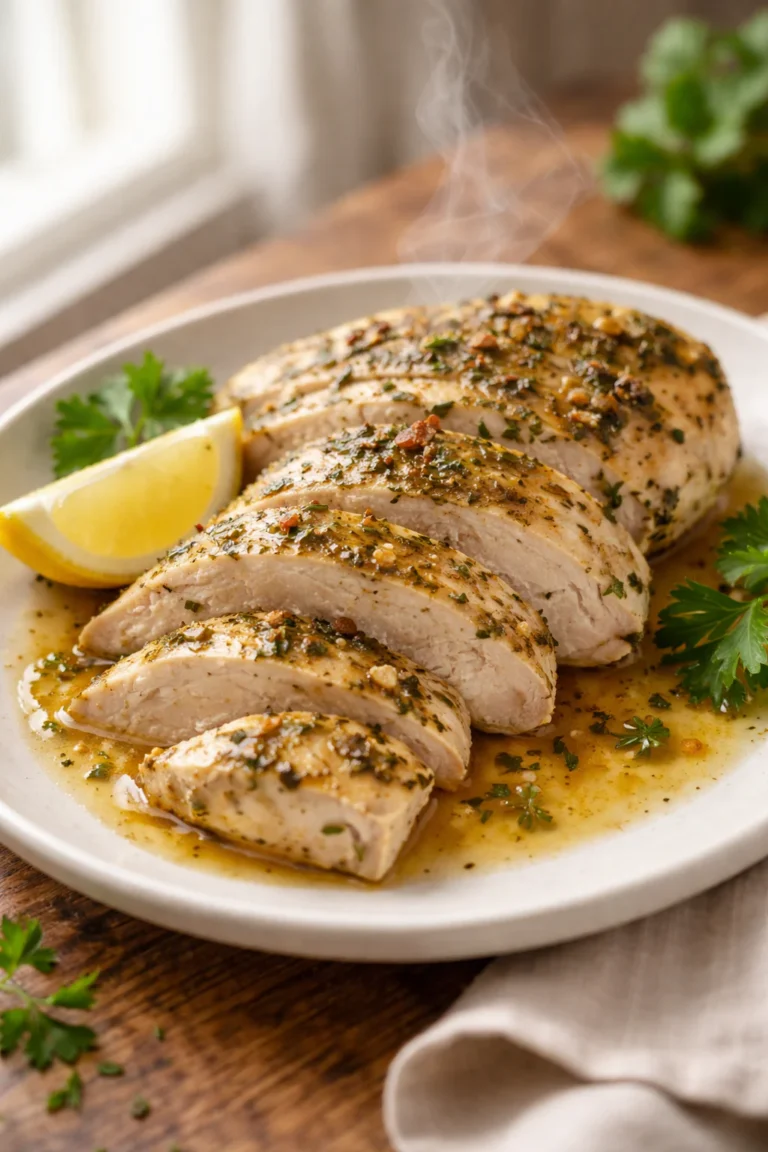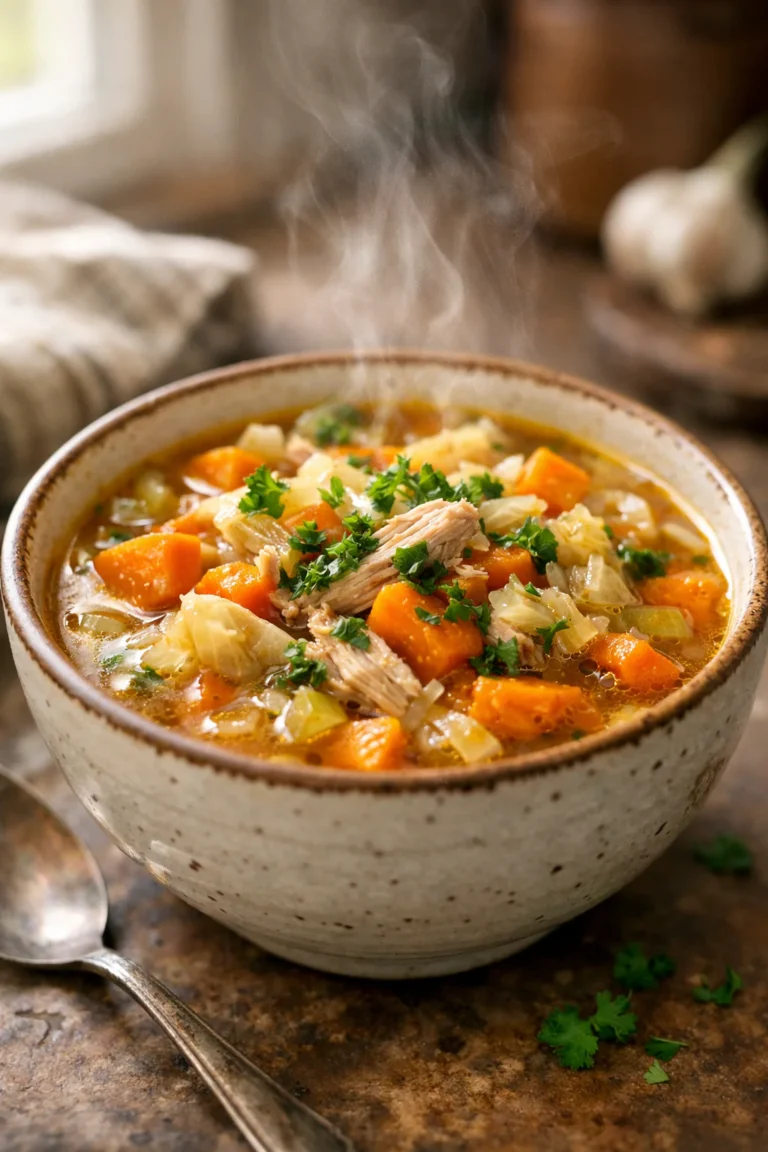
Easy low sodium baked chicken breast for diabetics
Slow-baked lemon thyme chicken breast that is gentle, moist, and low in added salt, perfect for a diabetes-friendly small portion.
The method also works well for meal prep. Cook once, then reheat gently in a skillet with a splash of broth to keep the meat tender.
Ingredients You’ll Need
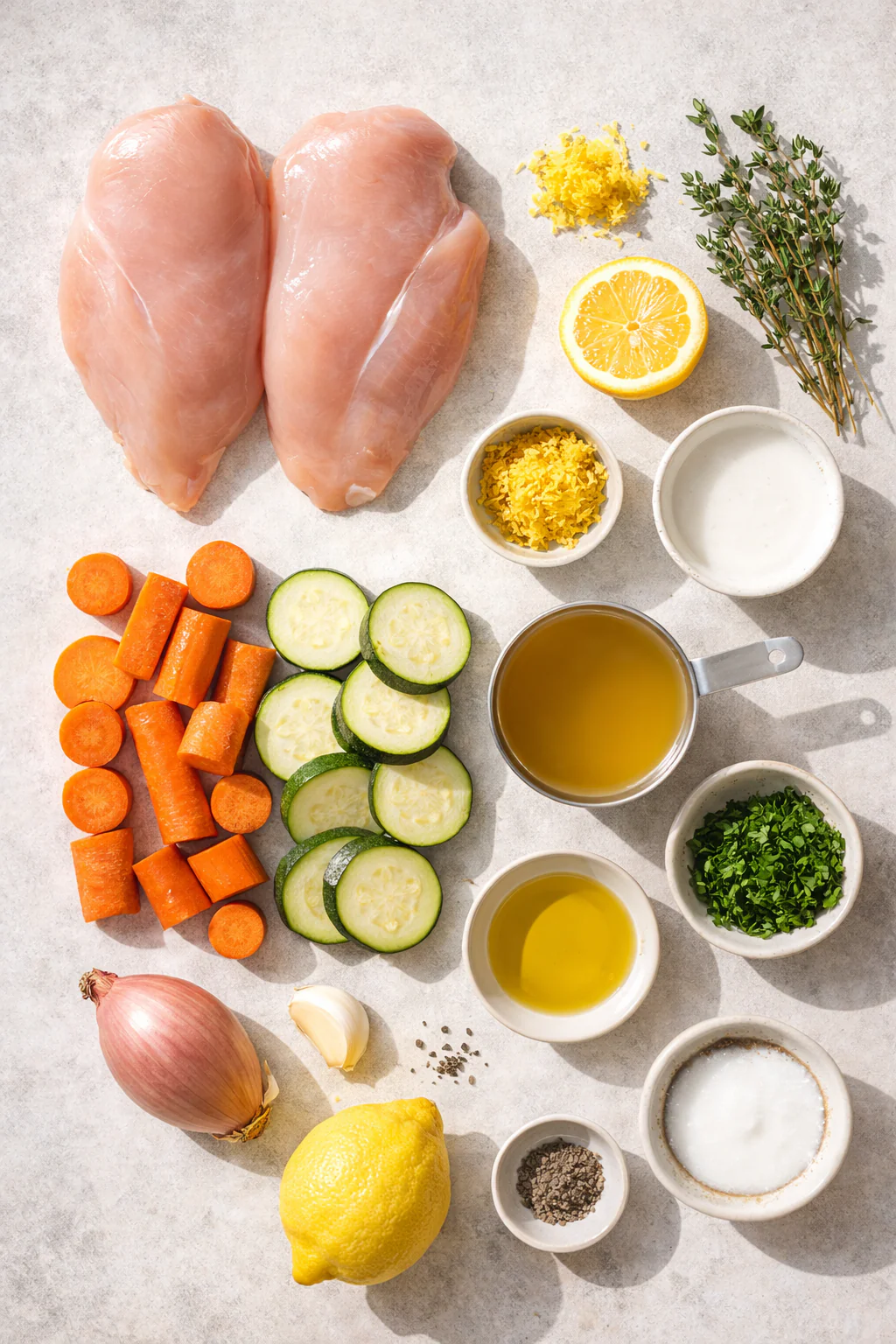
- 10 to 12 ounces boneless skinless chicken breast, one large halved or two small breasts
- 1 small lemon, zested and juiced
- 4 fresh thyme sprigs or 1 teaspoon dried thyme
- 1 small carrot, peeled and cut into 1/4-inch slices
- 1 small zucchini, cut into 1/2-inch rounds
- 1 small shallot or 2 tablespoons finely chopped onion
- 1 clove garlic, minced
- 2 tablespoons low-sodium chicken broth or no-salt vegetable broth
- 1 tablespoon extra virgin olive oil
- 1/4 teaspoon black pepper
- 1/4 teaspoon garlic powder, optional
- 1/2 teaspoon cornstarch mixed with 1 tablespoon cool water, optional for thicker sauce
- Fresh parsley, chopped for garnish, optional
You can serve this chicken with a small side of rice, mashed potatoes, or soft bread if you like.
Step-by-Step Recipe
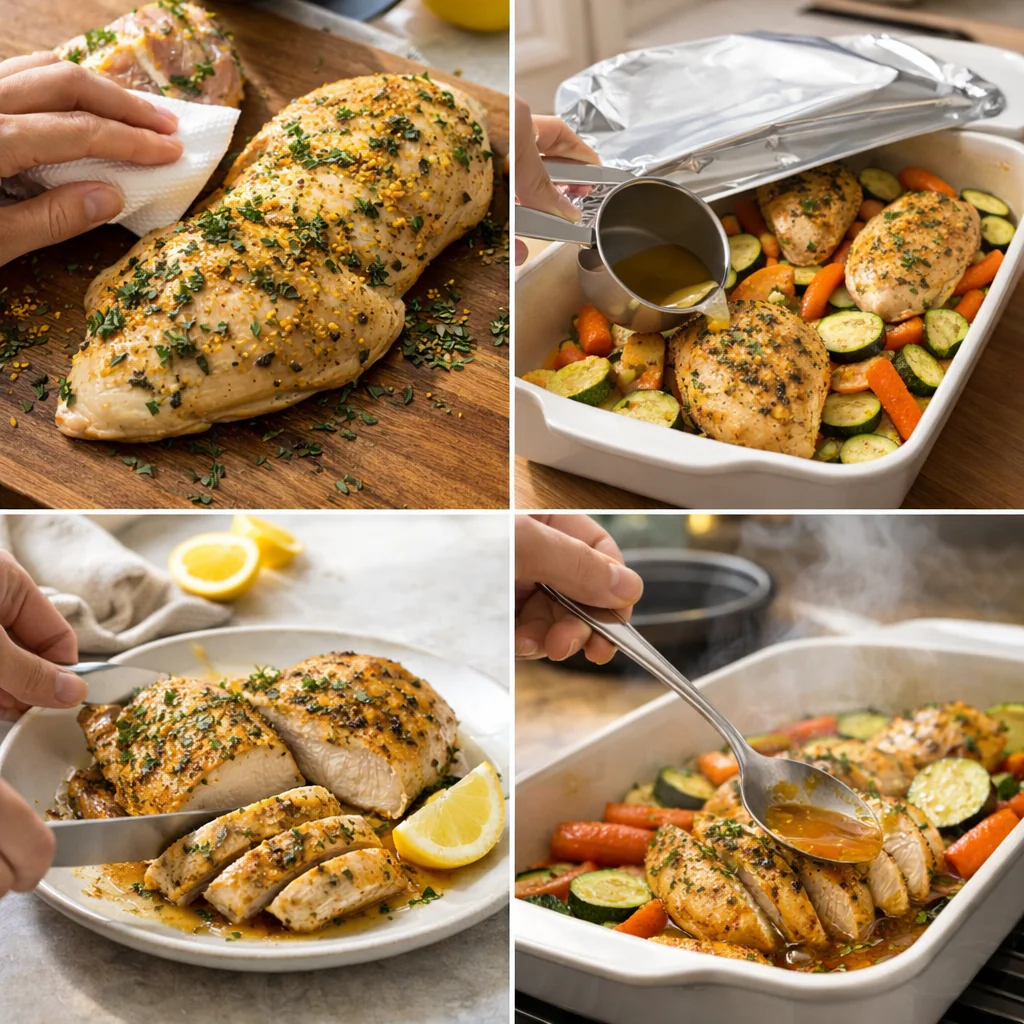
- Preheat the oven to 300 F and lightly oil a small shallow baking dish or ovenproof skillet.
- Pat the chicken dry and rub with olive oil, lemon zest, black pepper, and garlic powder. Place thyme sprigs on or under the chicken and tuck lemon slices on top if you like.
- Arrange the sliced carrot and zucchini around the chicken. Scatter the shallot and garlic among the vegetables. Pour 2 tablespoons of low-sodium broth into the dish to create steam while baking.
- Cover the dish tightly with foil and bake at 300 F for 25 to 35 minutes, or until an instant-read thermometer reads 160 F in the thickest part. Remove foil and bake an additional 5 minutes for light color if desired. Let rest covered for 5 minutes to reach 165 F by carryover heat.
- While the chicken rests, place the baking dish on the stovetop over low heat. Remove thyme sprigs and chicken to a plate. Add a splash more broth and scrape up browned bits. Stir in lemon juice and the cornstarch slurry if using, and simmer gently until slightly thickened to make a no-salt pan sauce.
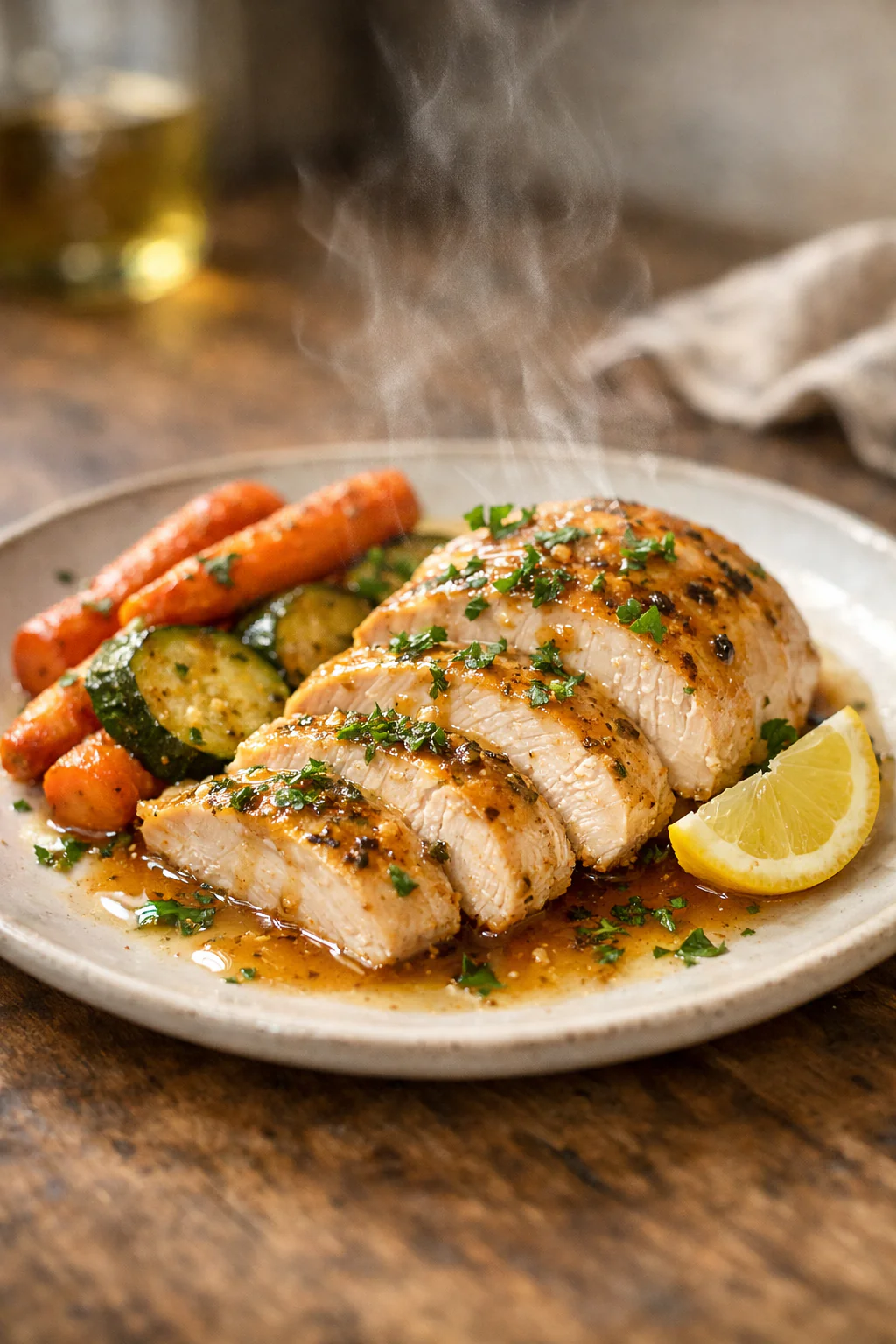
- Spoon the pan sauce and tender vegetables over sliced chicken. Garnish with chopped parsley and a small lemon wedge before serving.
Tips and Easy Variations
Chewing and texture
- Slice the chicken thinly against the grain after resting for softer bites.
- Slow baking at low temperature keeps meat moist and easy to chew.
- Serve with soft vegetables like steamed cauliflower or mashed potatoes for gentle eating.
Lower salt and flavor boosts
- Use low-sodium or no-salt broth and increase lemon and herbs for flavor.
- Fresh thyme, rosemary, or oregano add aroma without added salt.
- Skip the cornstarch for a thinner, lower calorie sauce if desired.
Simple swaps and additions
- Swap thyme for rosemary or oregano for a different herb profile.
- Change vegetables to squash, mushrooms, or soft steamed greens for variety.
- Add a small splash of extra broth when reheating to keep the chicken tender.
Quick notes
- Slice against the grain for easier chewing and better texture.
- Use extra lemon and herbs instead of salt to brighten the dish.
- Reheat gently with a splash of broth to retain moisture.
Storage and Leftovers
Fridge
Cool leftovers quickly and store in an airtight container in the refrigerator for up to 3 days.
Freezer
Freeze cooked chicken in a sealed container for up to 3 months, though texture may be softer after thawing.
Reheating
Reheat gently on low heat with a splash of broth and cover briefly to keep the chicken moist and tender.
Conclusion
Try this slow-baked lemon thyme chicken for an easy low sodium baked chicken breast for diabetics that is gentle, simple, and perfectly portioned for one or two.
The low-temperature method keeps the meat tender and the no-salt pan sauce adds bright flavor without extra sodium, making it a good option for gentle digestion and controlled portions.
FAQ
Can I use frozen chicken?▶
Yes. Thaw fully before slow-baking. Pat the chicken dry and follow the same seasoning and timing once thawed.
What if I do not have a thermometer?▶
Cut into the thickest part to check that juices run clear and there is no pink. A thermometer is best for accuracy but visual and texture checks work if needed.