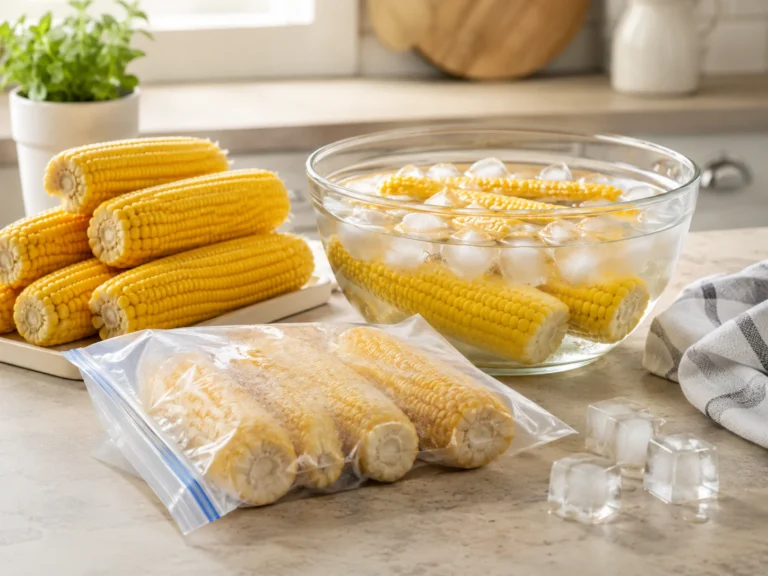

A frozen breakfast sandwich can taste surprisingly fresh if you heat it the right way. The goal is simple: hot in the center, crispy on the outside, and not soggy.
Below are the best methods (microwave, air fryer, oven, toaster oven) with exact steps, plus quick fixes if it comes out rubbery or wet.
Quick Answer (Best Method)
For the best texture, use a two-step reheat: microwave to warm the middle, then crisp the bread.
- Microwave at 60% power for 60–90 seconds (wrapped in a slightly damp paper towel).
- Finish in an air fryer for 2–3 minutes at 170°C / 340°F (or a skillet 1–2 minutes per side).
Before You Reheat (Avoid Soggy Bread)
- If possible, separate the sandwich (bun + egg + meat + cheese) and heat components evenly.
- Remove plastic wrap. Only use paper wrapping if it’s labeled microwave-safe.
- Let it rest 30 seconds after microwaving so the heat finishes spreading.
Best Ways to Reheat a Breakfast Sandwich
Reheating a breakfast sandwich can be done in multiple ways depending on your equipment and time. Below are the top methods to ensure your sandwich is heated evenly without sogginess.
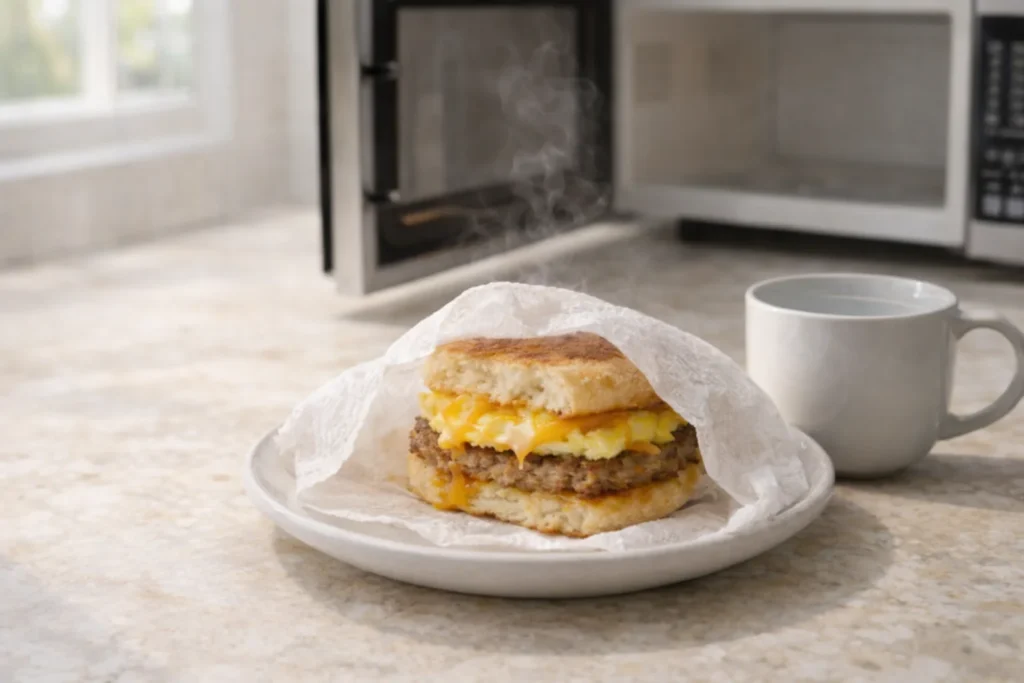
Reheat Frozen Breakfast Sandwich in the Microwave
Best for: fastest option, soft bread
Reheating your breakfast sandwich in the microwave is the quickest and most convenient method, especially when you’re in a rush. To prevent the bread from becoming too dry or the egg from turning rubbery, it’s important to use the right technique.
Steps:
- Wrap the sandwich: Use a slightly damp paper towel to cover your sandwich. This helps trap steam, keeping the bread soft and the fillings moist.
- Microwave on medium power: Set your microwave to 50–70% power rather than full power. This ensures the sandwich heats evenly without creating hot spots or overcooking the egg.
- From frozen: Heat for 1:30 to 2:30 minutes, depending on the size of your sandwich and your microwave wattage.
- From thawed (refrigerated overnight): Heat for 45–75 seconds.
- Rest: After microwaving, let the sandwich sit for 30 seconds. This allows the heat to distribute evenly throughout the fillings.
- Check and adjust: If the center is still cool, add another 15–20 seconds at 50–60% power. Avoid high power, which can make eggs rubbery and bread tough.
Tip: Lower microwave power is key to a perfectly reheated breakfast sandwich. It keeps the egg tender, prevents the cheese from over-melting into a gooey mess, and ensures the sandwich heats evenly from edge to center.
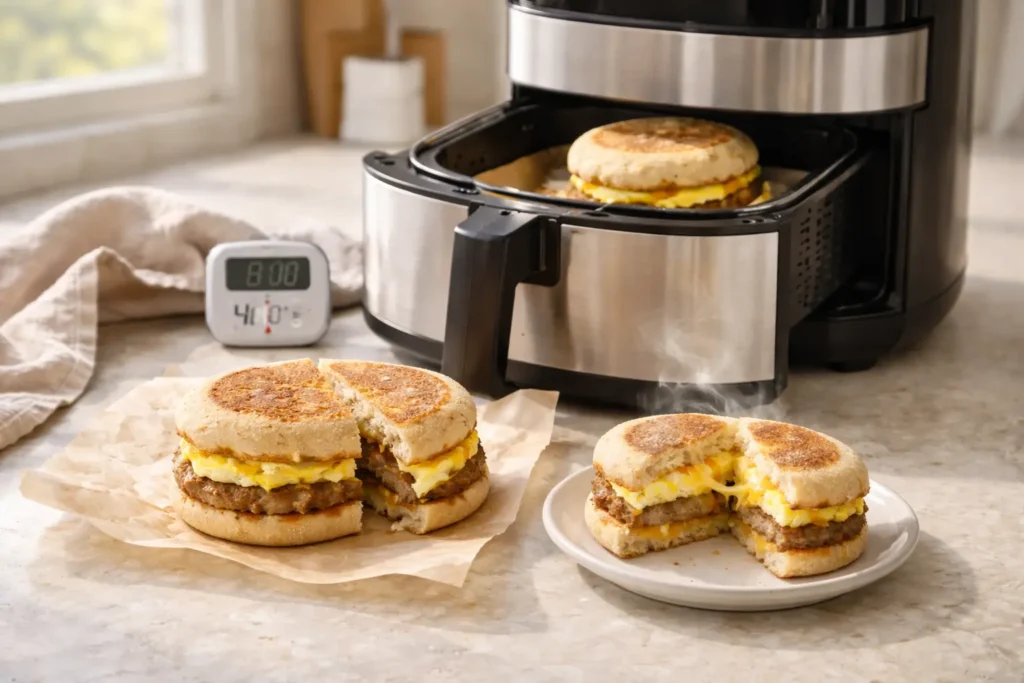
Reheat Frozen Breakfast Sandwich in the Air Fryer
Best for: crispy outside + hot inside
Reheating your breakfast sandwich in the air fryer is ideal for achieving a perfectly crispy exterior while keeping the inside warm and delicious. This method works especially well for sandwiches with eggs, bacon, or sausage.
Steps:
- Preheat the air fryer: Set to 160–170°C (320–340°F).
- Air fry:
- From frozen: Cook for 6–8 minutes.
- Flip the sandwich halfway through. Cook an additional 1–2 minutes if needed to reach desired crispiness.
- Optional tip: If the bread browns too quickly, wrap the sandwich loosely in foil for the first half of cooking, then unwrap to allow the bread to crisp.
Tip: The air fryer gives a golden, crunchy exterior while ensuring the cheese melts evenly and the egg stays tender.
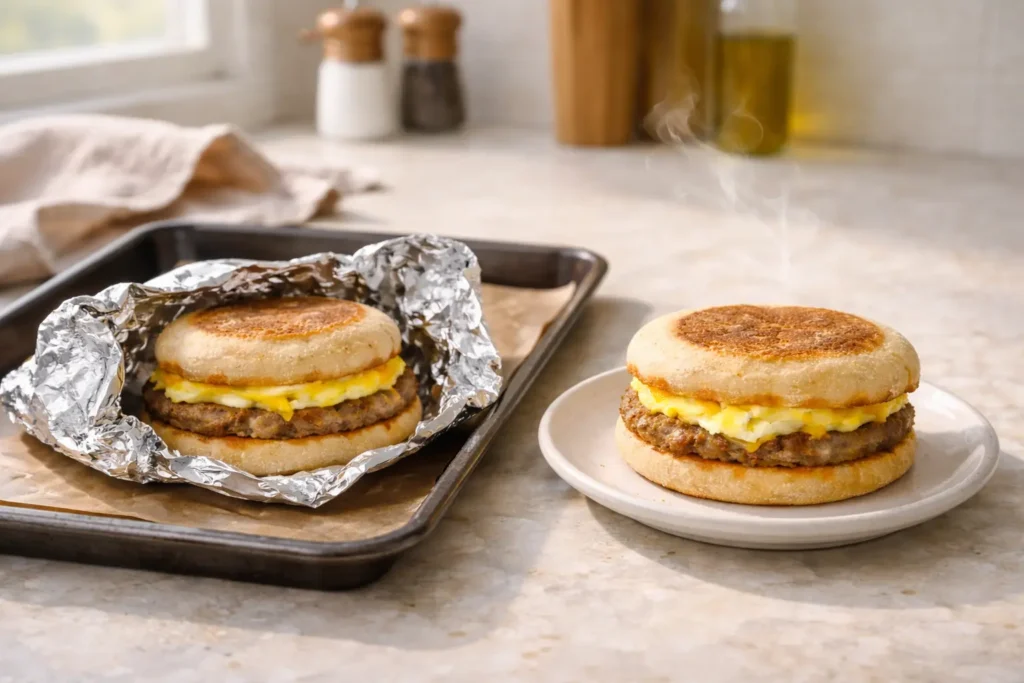
Reheat Frozen Breakfast Sandwich in the Oven
Best for: reheating multiple sandwiches
The oven is perfect when you need to reheat several breakfast sandwiches at once. It provides even heat throughout, keeping the fillings warm while allowing the bread to stay soft or crisped to your liking.
Steps:
- Preheat the oven: Set to 175°C (350°F).
- Wrap the sandwich: Use aluminum foil to retain moisture and prevent the bread from drying out.
- Bake:
- From frozen: Bake for 20–25 minutes.
- From thawed: Bake for 12–15 minutes.
- Crisp the bread: Unwrap the sandwich and bake for an additional 2–3 minutes to get a lightly crispy crust.
Tip: Using foil for the initial baking keeps the sandwich moist, while unwrapping at the end creates a perfect golden finish on the bread.
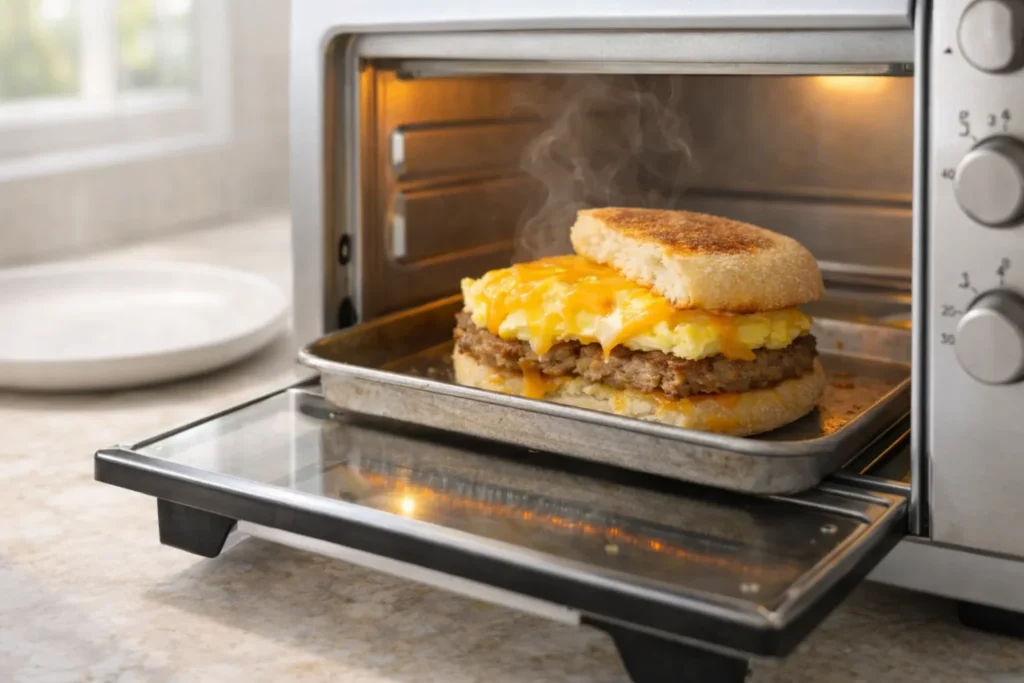
Reheat Frozen Breakfast Sandwich in a Toaster Oven
Best for: crispy bread with less drying
Using a toaster oven is a great way to get crispy bread while keeping the sandwich fillings moist. It’s ideal for single sandwiches or smaller batches.
Steps:
- Preheat the toaster oven: Set to 175°C (350°F).
- Wrap the sandwich: Use aluminum foil to protect the bread and retain moisture.
- Heat:
- From frozen: Heat for 15–18 minutes.
- From thawed: Heat for 10–12 minutes.
- Crisp the bread: Unwrap the sandwich for the last 2 minutes of heating to achieve a golden, crispy exterior.
Tip: Wrapping in foil prevents the bread from drying out, while unwrapping at the end gives a perfect crunch without overcooking the fillings.
How to Know It’s Heated Through
Ensuring your breakfast sandwich is fully heated is key for both taste and food safety. Here’s how to tell if your sandwich is perfectly warmed inside:
- Cheese is melted and the egg is hot: The cheese should be gooey and the egg warm throughout, not lukewarm or cold in the center. This ensures the sandwich tastes fresh and indulgent.
- Meat is steaming: Any bacon, sausage, or ham should be visibly steaming. This is a clear sign that the protein is heated thoroughly and ready to eat.
- Check with a thermometer: For precise heating, insert a food thermometer into the center of the sandwich. Aim for 74°C (165°F) to guarantee the fillings are safely and evenly warmed.
Tip: Letting the sandwich rest for 30 seconds after heating allows the heat to distribute evenly, reducing the chance of cold spots in the middle.
Troubleshooting Common Reheating Issues
Even with the best methods, sometimes your breakfast sandwich may not turn out perfectly. Here’s how to fix common reheating problems and ensure a warm, tasty sandwich every time:
- Soggy bread: If your sandwich becomes soggy, it’s often due to microwaving alone or wrapping too tightly. Try microwaving just to warm the sandwich, then crisp the bread in an air fryer or a hot skillet. Avoid sealed wrapping that traps too much moisture.
- Rubbery egg: Eggs can become rubbery if microwaved at full power. Use 50–70% microwave power and allow the sandwich to rest for 30 seconds after heating to maintain a tender texture.
- Cold center: If the middle of the sandwich remains cold, add an extra 15–30 seconds at 50–60% power, then let it rest for another 30 seconds to distribute the heat evenly.
- Outside browned but inside cold: This usually happens when the heat is too high. Lower the temperature and increase the cooking time. Wrapping the sandwich in foil for the first half of cooking helps the fillings heat evenly while protecting the bread from over-browning.
Tip: Checking the sandwich after each step and adjusting time or power slightly can make a big difference, ensuring every reheated sandwich is perfectly warm and delicious.
FAQ – Reheating Breakfast Sandwiches
Should I thaw a frozen breakfast sandwich first?
Thawing overnight in the fridge ensures even heating and prevents cold spots. If you skip thawing, the sandwich may heat unevenly.
Can I skip thawing and reheat straight from frozen?
Yes, but increase cooking time slightly and check the center to ensure it’s heated through.
Do I need to unwrap a frozen sandwich before reheating?
Remove any plastic wrapping. Aluminum foil can be used in the oven or air fryer, but never in the microwave.
What’s the best way to reheat a breakfast sandwich in the microwave?
Wrap in a slightly damp paper towel, heat at 50–70% power, rest for 30 seconds, and check the center for even warmth.
How long should I microwave a frozen sandwich?
1:30–2:30 minutes at 50–70% power from frozen, then rest. Thawed sandwiches require 45–75 seconds.
How to prevent rubbery eggs in the microwave?
Use lower power (50–70%) and allow a short resting period after heating to keep the eggs tender.
How do I reheat a frozen breakfast sandwich in an air fryer?
Preheat to 160–170°C (320–340°F), cook 6–8 minutes from frozen, flipping halfway. Wrap in foil if the bread browns too fast.
Can I get a crispy sandwich in an air fryer?
Yes, flipping halfway and removing foil at the end gives a crunchy exterior while keeping the inside warm.
How long to reheat in the oven?
From frozen: 20–25 min at 175°C (350°F). Thawed: 12–15 min. Unwrap for the last 2–3 minutes to crisp the bread.
Can I use a toaster oven?
Yes. Heat at 175°C (350°F), wrap in foil initially, then unwrap for 2 minutes at the end for a crispy exterior.
Can I reheat multiple sandwiches at once?
The oven is best for batches; the air fryer works for 1–2 sandwiches at a time.
How to know it’s heated through?
Cheese should be melted, egg hot, and meat steaming. For accuracy, use a thermometer: 74°C / 165°F in the center.
What if the center is still cold?
Add 15–30 seconds at 50–60% microwave power, then let it rest for even heat distribution.
Is it safe to reheat breakfast sandwiches multiple times?
Ideally, reheat only once to maintain quality and ensure food safety.
Why is my bread soggy?
Microwaving alone or wrapping too tightly can cause soggy bread. Crisp in an air fryer or skillet after warming to fix it.
Why is the egg rubbery?
High microwave power or overheating causes rubbery eggs. Use 50–70% power and allow the sandwich to rest for 30 seconds.
Why is the outside browned but inside cold?
Heat may be too high. Lower the temperature, cook longer, and use foil for the first half of reheating to ensure even warmth.
Can cheese over-melt or burn?
Yes, monitor reheating time and use foil or lower microwave power to prevent burning or uneven melting.
Can I separate components before reheating?
Yes, heating eggs, meat, and bread separately allows more even results and prevents overcooking.
How to reheat without drying out the sandwich?
Wrap in foil for oven or toaster oven, or use a damp paper towel for the microwave to maintain moisture.
What’s the fastest method to reheat a sandwich?
The microwave is fastest. For crispiness, combine microwave with air fryer or skillet finishing.