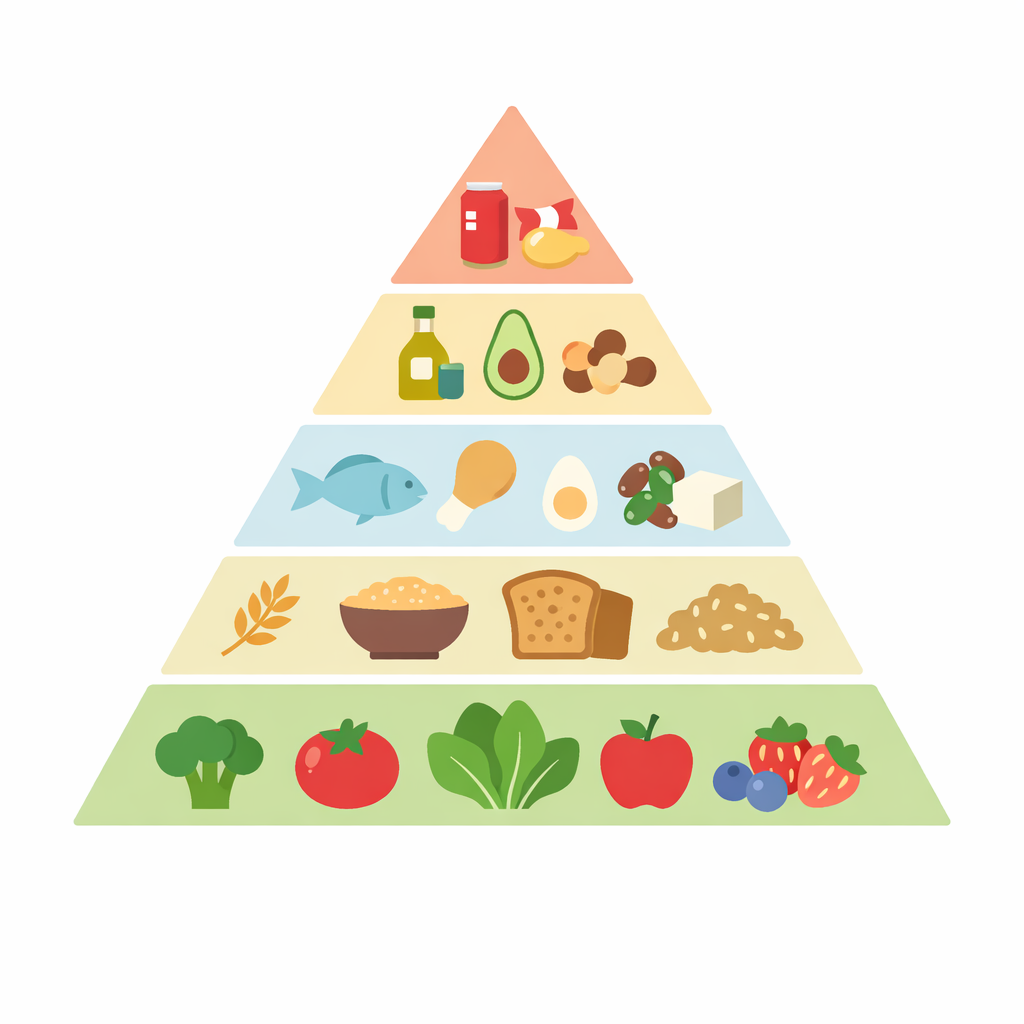
The old food pyramid was a simple guide: lots of grains at the bottom, then fruits and vegetables, then proteins and fats near the top. The 2026 nutritional pyramid shifts that balance. It puts real, minimally processed foods and vegetables at the center, favors whole grains, prioritizes lean and plant proteins, and steers us away from ultra-processed items. If you want a deeper look at how the classic pyramid shaped shopping and cooking habits, see this piece on how the old pyramid affects grocery choices.
What changed — plain and practical
The change is mainly about priority and processing. The 2026 pyramid asks us to build meals around plants and whole foods first, then add proteins and healthy fats. It also calls for less added sugar, less salt, and far fewer ultra-processed foods.
Practically, that means shopping and cooking with slightly different instincts: buy more vegetables and fresh fruit, choose whole grains instead of refined, and include beans, fish, poultry, eggs, dairy, or plant proteins more often. For simple tips on choosing proteins for small households, check these smart protein shopping tips.
Before vs After — what moves up and down
Here’s a clear side-by-side to make choices easier when you shop for one or two people.
- Grains: Before — lots of refined bread & pasta. After — whole grains like oats, brown rice, and whole-wheat pasta take priority.
- Produce: Before — moderate fruit and veg. After — vegetables and fruits become the base of the plate and the main ingredient in meals.
- Proteins: Before — red and processed meats often highlighted. After — lean meats, fish, eggs, beans, and lentils are regular, with plant proteins emphasized.
- Fats: Before — fats were grouped together. After — focus on healthy fats (olive oil, nuts, seeds, avocado) in moderate amounts.
- Ultra-processed foods: Before — more acceptable as convenient staples. After — limited; fresh, simple ingredients are preferred.
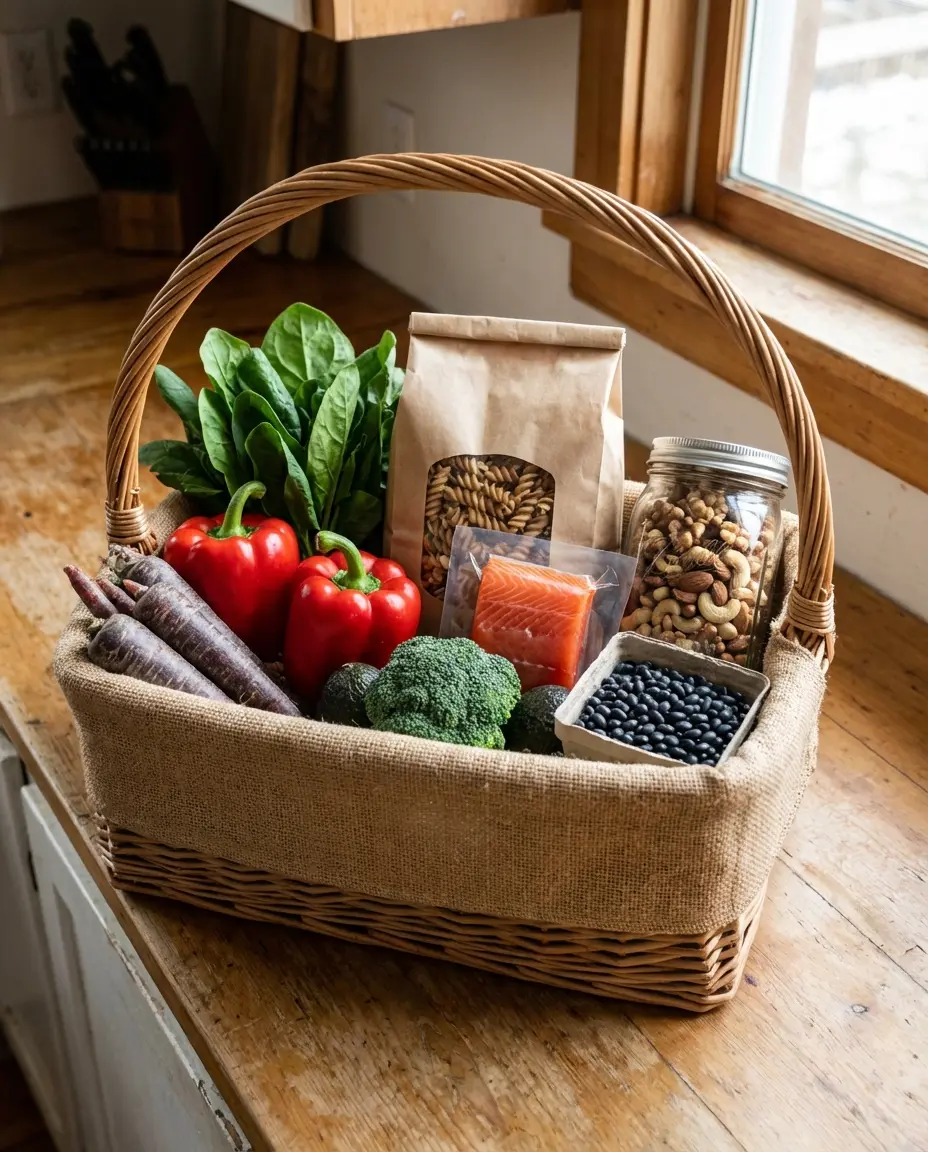
Swap list: easy habit swaps for less waste and better meals
Small swaps make a big difference and keep shopping simple for one or two people.
- White rice -> cook small batches of brown rice or use quick-cooking barley.
- Refined pasta -> whole-wheat or legume pasta (cook half a box, freeze single portions).
- Ready-made meals -> batch-roast a pan of mixed vegetables and use across 2–3 meals.
- Snack bars with added sugar -> a handful of nuts and fresh fruit.
- Large packages of processed meat -> buy smaller portions of fresh chicken, fish, or canned beans and freeze extras.
- Heavy cream sauces -> use a simple olive-oil-and-lemon dressing or a light yogurt sauce.
- Buying fruit for a week -> follow easy fruit storage tips like keeping apples and citrus separate from softer fruits; see these easy fruit buying and storage tips for small households.
Simple meal examples for 1–2 people
- Traditional-style plate: a moderate piece of grilled chicken, a small mound of white rice, and a side of steamed green beans with butter. (Easy and familiar.)
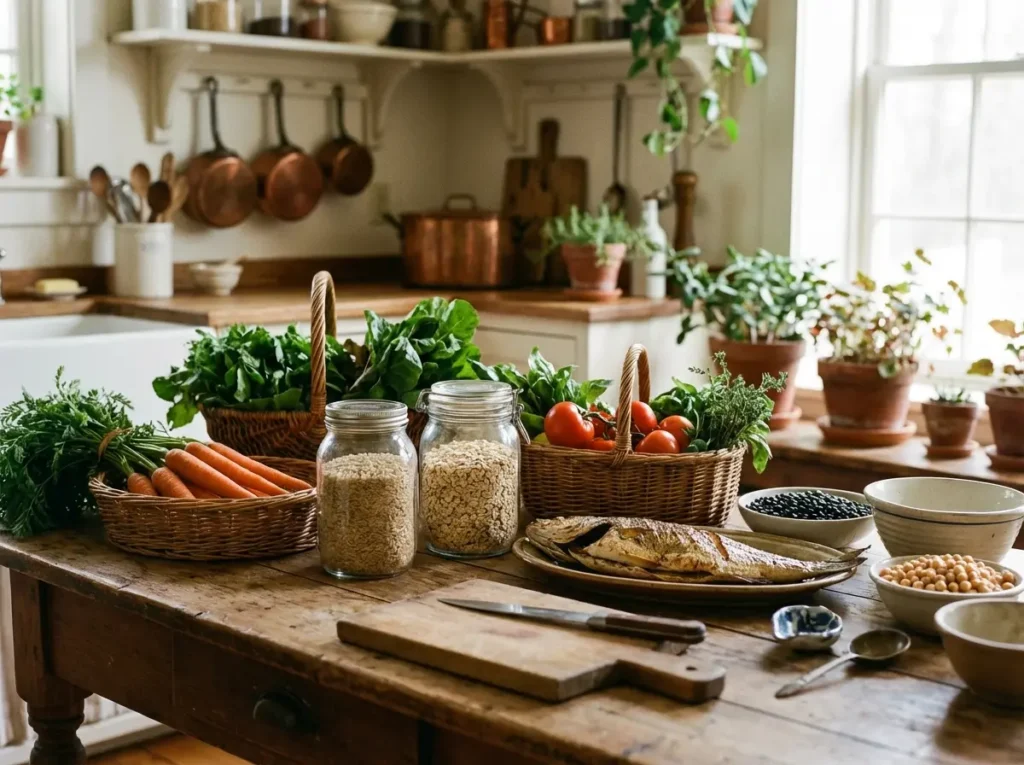
- 2026-inspired plate: a large roasted vegetable bowl (roasted carrots, zucchini, and peppers), a scoop of warm farro or brown rice, a spoonful of chickpeas or flaked salmon, and a drizzle of olive oil and lemon. Leftovers make a quick lunch.
- Simple swap meal: whole-wheat pasta tossed with sautéed spinach, cherry tomatoes, canned white beans, a little garlic, and a splash of olive oil. Makes 2 portions and freezes well in single servings.
- Comfort soup: blended vegetable soup (carrot or butternut), a spoonful of plain yogurt for creaminess, and a slice of whole-grain toast. Cook once, enjoy twice.
- Shop for variety in small amounts. Buy loose vegetables or smaller packs and plan 2–3 meals around them.
- Cook once, eat twice. Roast or simmer extra and store single portions in the fridge or freezer for easy reheating.