Low Sodium Creamy Tuna Noodle Casserole with Peas
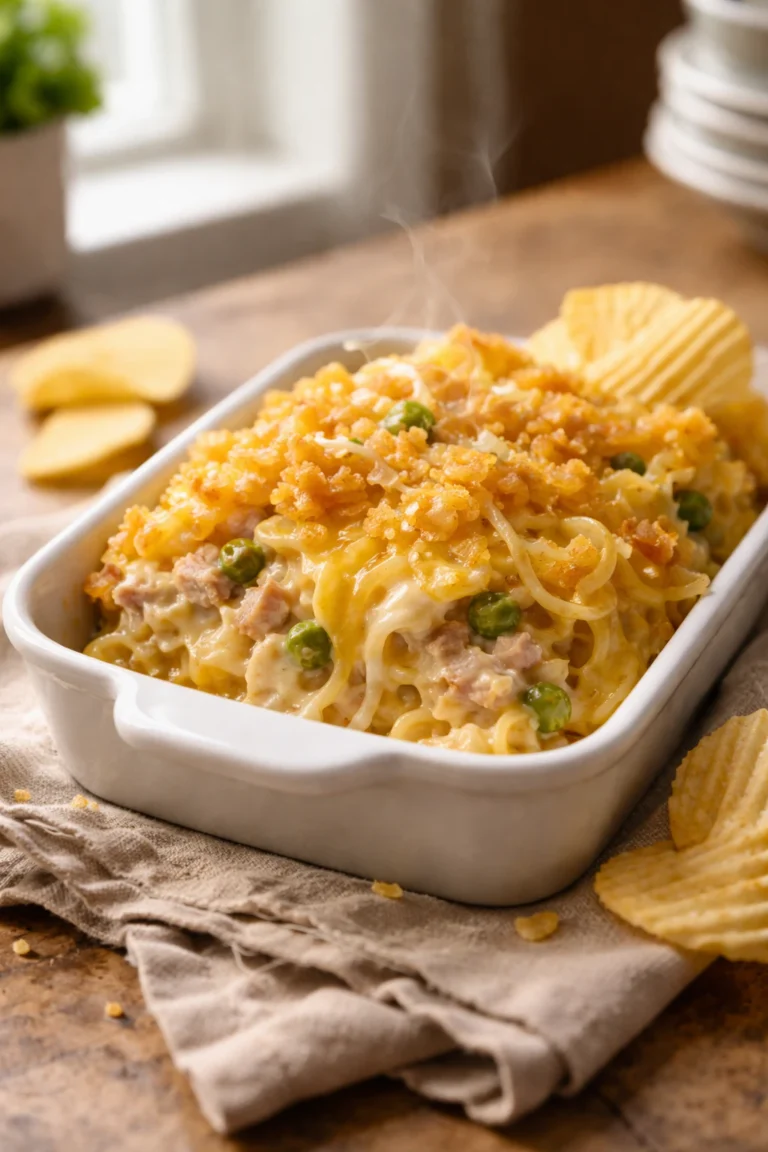
This gentle, small-batch tuna noodle casserole with peas gives you the warm comfort of a classic casserole without extra salt or fuss. It makes 1 to 2 soft, easy-to-eat servings and uses simple supermarket ingredients.
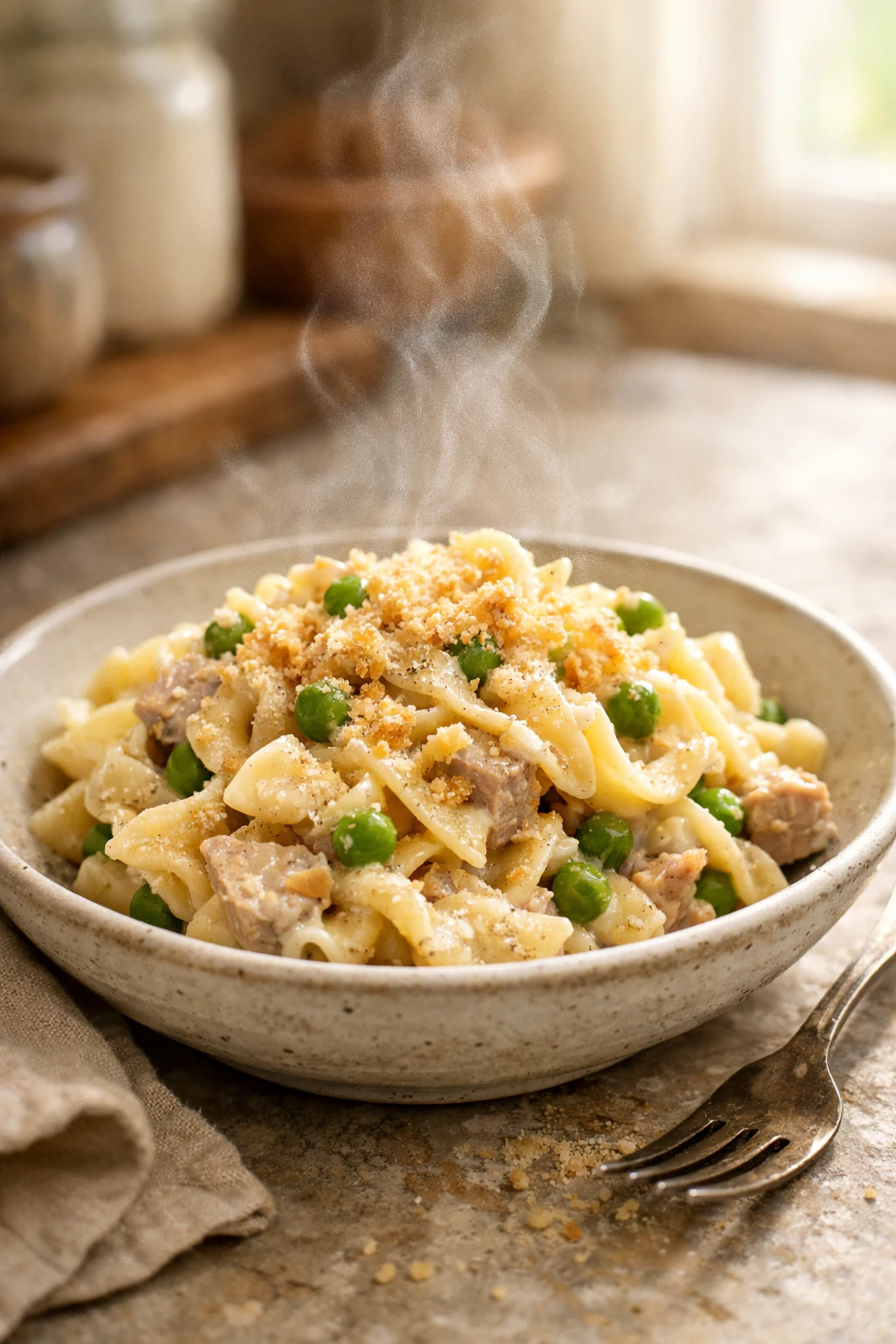
Cooking for one or two can still feel like comfort food. This casserole is scaled down so you do not waste food. The dish finishes in one pan and uses mild flavors that you can adjust easily.
Parts of the recipe are flexible. You can make it creamier, lighter, or easier to chew with small changes. It is a good base for adding soft vegetables or extra protein if you want.
Ingredients You’ll Need
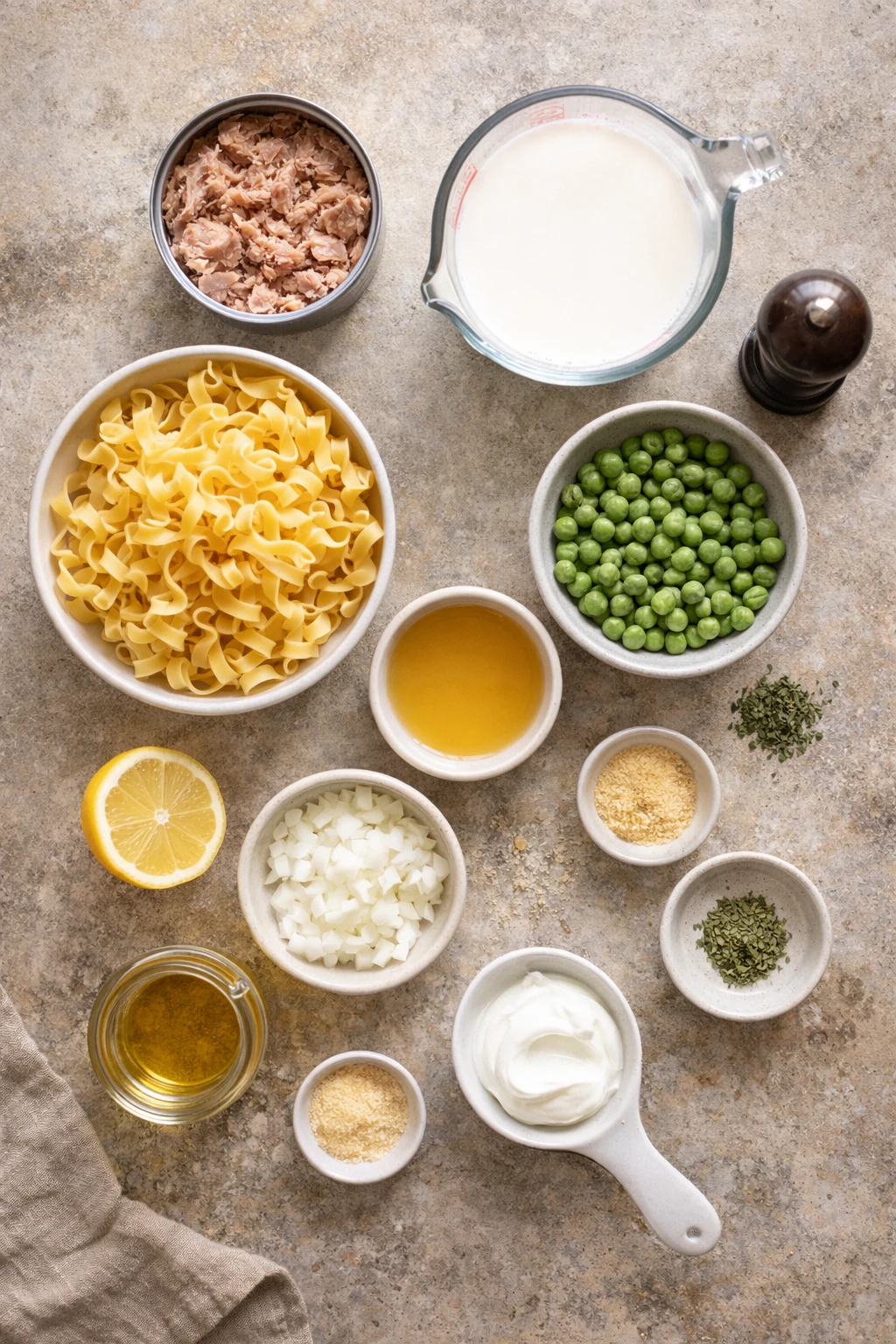
- 1 can (5 oz) low-sodium tuna in water, drained
- 3/4 cup dry small egg noodles or small pasta
- 1/2 cup low-sodium vegetable or chicken broth
- 1/2 cup milk or unsweetened plant milk
- 2 tablespoons plain low-fat Greek yogurt or 2 tablespoons softened low-fat cream cheese
- 1/3 cup frozen peas, thawed
- 1 tablespoon olive oil
- 2 tablespoons finely chopped onion or 1 tablespoon jarred minced onion
- 1/4 teaspoon garlic powder
- 1 teaspoon lemon juice
- 1/4 teaspoon dried parsley or 1 teaspoon fresh chopped
- Freshly ground black pepper to taste
- Optional topping: 2 tablespoons low-sodium breadcrumbs or crushed low-salt crackers
You can serve this creamy tuna casserole with a small side of rice, mashed potatoes, or soft bread if you like.
Step-by-Step Recipe
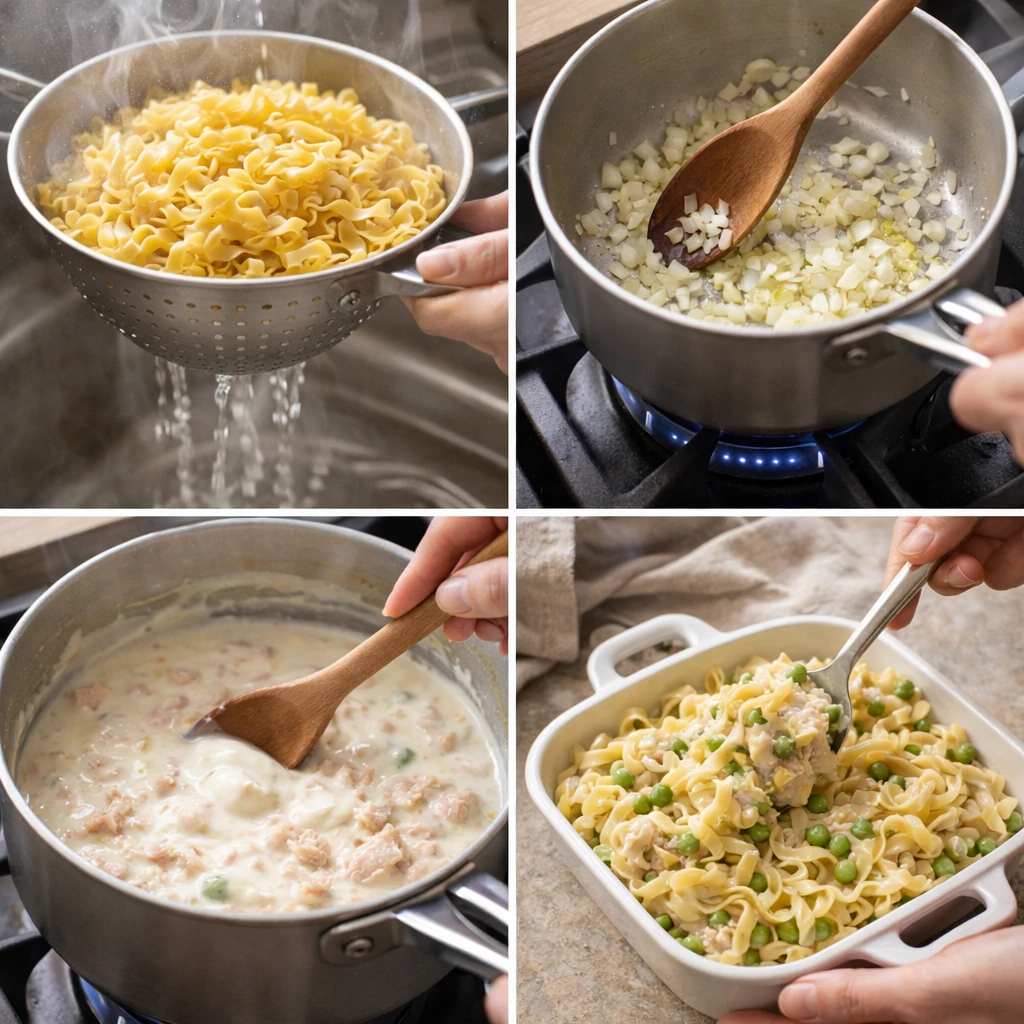
- Preheat oven to 375 F if you plan to brown the top. For softer results, skip the oven step and finish on the stove.
- Cook noodles in a saucepan of boiling water until very tender – 1 to 2 minutes longer than package directions for extra softness. Drain and set aside.
- In the same saucepan, warm olive oil over medium-low heat. Add chopped onion and cook gently until soft, about 3 to 4 minutes. Do not brown.
- Add drained tuna and break into chunks with a spoon. Stir in garlic powder, lemon juice, and parsley.
- Pour in broth and milk. Stir in Greek yogurt or cream cheese until the sauce is smooth. Heat gently until just simmering so the dairy blends well. Taste and add black pepper.
- Fold in cooked noodles and peas. If the mixture seems thick, add a splash more milk to reach a creamy consistency.
- For stove-top serving: Spoon into bowls and serve warm. For a lightly crisp top: transfer to a small ovenproof dish, sprinkle breadcrumbs, and bake at 375 F for 8 to 10 minutes until bubbly. For a tiny crisp finish, broil 1 to 2 minutes but watch closely.
- Let rest 2 minutes. For easier chewing, mash slightly with a fork or press with a spoon to break up noodles and tuna into softer pieces.
Tips and Easy Variations
Make it easier to chew
- Cook the pasta until very soft and mash lightly after mixing
- Add extra milk to make a looser, spoon friendly texture
- Press or mash slightly before serving to break up noodles and tuna
Diet and allergy swaps
- Use unsweetened plant milk and dairy free yogurt for a dairy free version
- Choose gluten free small pasta and breadcrumbs for gluten free needs
- Pick low fat dairy and extra peas to make the dish lighter for digestion
One skillet and texture tips
- Finish everything in a wide skillet to save a dish
- Cook pasta a minute or two under package time if finishing in the skillet
- Boost creaminess by stirring in yogurt or cream cheese off heat
Keep it low sodium
- Choose low sodium tuna and broth to reduce salt
- Use lemon and herbs to add flavor without extra salt
- Avoid adding table salt if your doctor advised limits
Storage and Leftovers
Fridge
Cool leftovers to room temperature and store in an airtight container in the refrigerator for up to 3 days.
Freezer
Freeze without breadcrumbs in a sealed container for up to 1 month. Thaw overnight in the refrigerator before reheating.
Reheating
Reheat gently in a microwave at reduced power or on the stove with a splash of milk to restore creaminess.
Conclusion
Try this low sodium creamy tuna noodle casserole with peas for a simple, comforting meal scaled for one or two. It is soft, easy to digest, and quick to prepare.
With small swaps you can make it gentler to chew or lighter for digestion while keeping the familiar flavors you enjoy.
FAQ
Can I use tuna in oil instead of water packed tuna?▶
Yes. Drain well and rinse to reduce extra oil. Water packed tuna is milder and lower in calories if you prefer that option.
Can I skip the oven step?▶
Absolutely. Serve right from the stove for a softer texture and fewer dishes.
Is canned tuna high in sodium?▶
Some brands are. Choose low sodium or water packed labels and follow your doctor advice about salt limits.
Can I add other vegetables?▶
Yes. Soft cooked carrots, finely chopped cooked spinach, or zucchini work well when cooked until tender.
How do I reheat without drying out the casserole?▶
Reheat gently with a splash of milk and cover while warming to keep moisture. Microwave at reduced power in short bursts, stirring between bursts.