Knowing how to store vegetables in the fridge can help you enjoy crisp salads and easy sides while wasting less. The key is to keep vegetables cold without letting them sit in excess water, and to give each type suitable packaging.
How to Store Vegetables in the Fridge: Quick Answer
Keep most fresh vegetables in a refrigerator at or below 40°F (4°C). Protect leafy greens from excess moisture, keep firm vegetables in suitable bags, and refrigerate cut pieces in covered containers.
- Remove damaged pieces and separate vegetables from any raw meat, seafood, or poultry.
- Store whole vegetables unwashed when practical; rinse them under running water just before use.
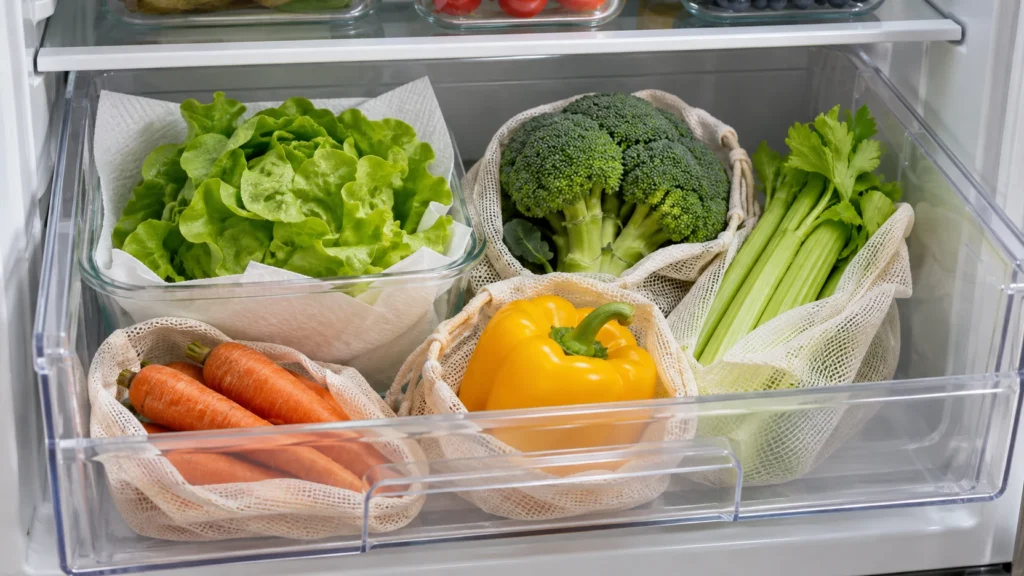
- Put dry leafy greens in a container lined with a clean paper towel, and place carrots, broccoli, celery, and whole peppers in produce bags in the crisper.
- Refrigerate cut or peeled vegetables promptly in covered containers, and check stored produce regularly for spoilage.
Before You Start: Set Up Your Fridge and Produce
- Check the temperature: Set the refrigerator to 40°F (4°C) or below and use an appliance thermometer to check it. Keep vegetables away from spots where they repeatedly freeze, such as directly against a very cold back wall.
- Use the crisper: Crisper drawers help retain humidity so vegetables lose moisture more slowly. If the drawer has a humidity control, a higher setting is generally useful for leafy greens and other vegetables prone to wilting.
- Keep surfaces dry: Excess surface water encourages sogginess and spoilage. If produce is already wet, gently dry it before putting it away. A dry surface is different from a dry environment: many vegetables still benefit from humid crisper air.
- Wash at the right time: Rinse whole vegetables under running water just before preparing or eating them. If you wash them before storage, dry them well first. Do not use soap or detergent on produce.
- Avoid cross-contamination: Keep produce away from raw meat, seafood, and poultry. Store raw animal foods securely below ready-to-eat vegetables so their juices cannot drip onto them.
Best Ways to Store Fresh Vegetables in the Fridge
Different vegetables need different packaging. Leafy greens benefit from a lining that absorbs extra moisture, while sturdy whole vegetables do well in a crisper with room to breathe. Once vegetables are cut, a covered container helps protect them.
You do not need a separate container for every item. For one or two portions, small reusable containers and clean produce bags make it easy to see what you have and use it before it deteriorates.
How to Store Lettuce in a Lined Container (Helps Prevent Sogginess)
Best for: Lettuce and other tender leafy greens
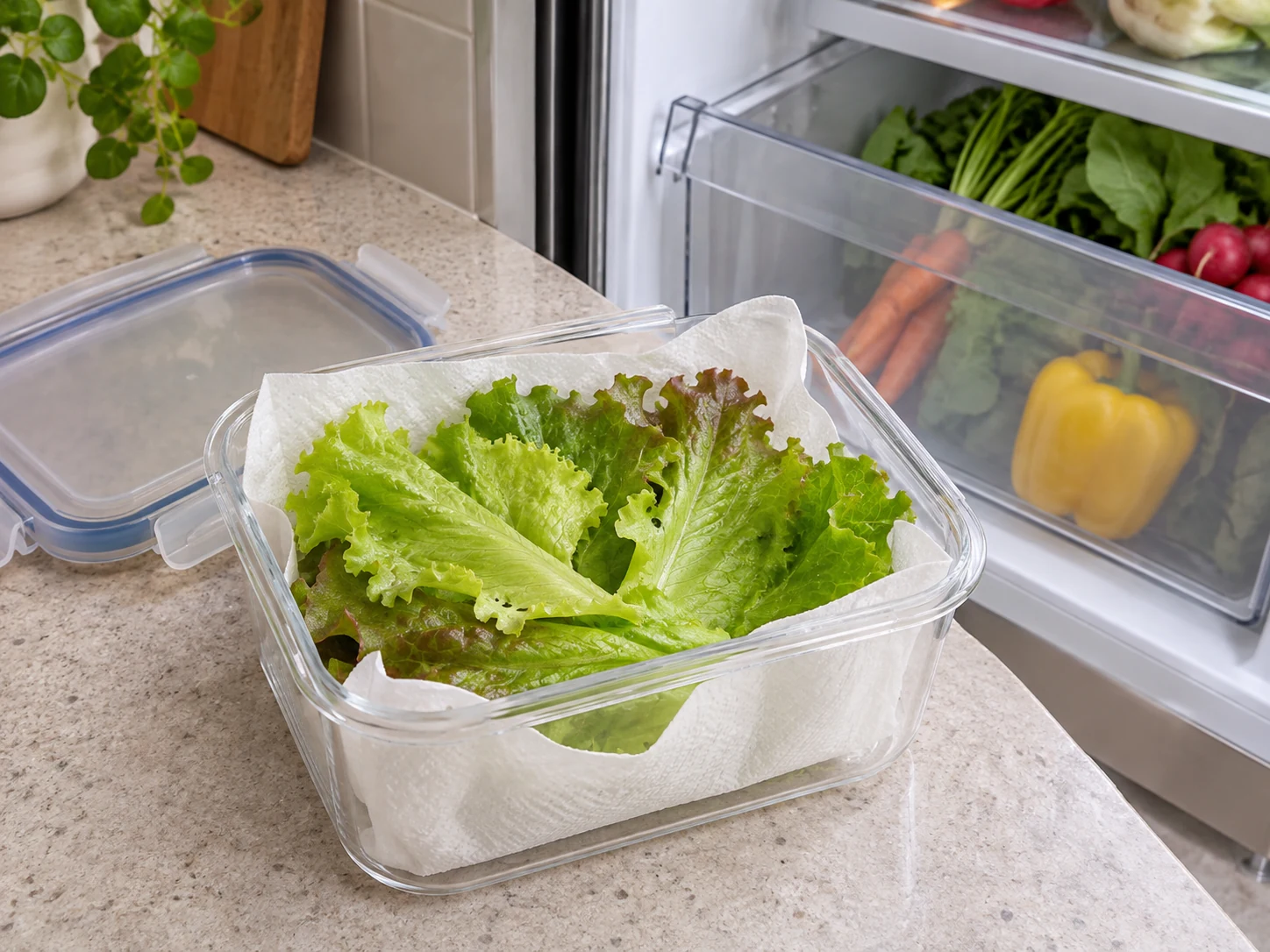
A paper-towel-lined container gives lettuce a humid environment while absorbing excess moisture. Use a container large enough to hold the leaves without crushing them.
Steps:
- Discard any slimy or badly damaged leaves. Leave the remaining lettuce whole or separate it into leaves, depending on how you plan to use it.
- If the leaves are wet or you have washed them, dry them thoroughly with a salad spinner or clean towels.
- Line a clean container with a dry paper towel, add the lettuce loosely, and place another towel on top if the leaves are especially damp.
- Cover the container and place it in the crisper. Replace the paper towel if it becomes wet, and remove any leaves that spoil.
Why This Method Works
The covered container slows moisture loss, while the paper towel absorbs condensation that could leave tender leaves soggy.
Tip: Prewashed greens labeled ready to eat do not need another wash. Keep them in their original package or transfer them with clean hands and utensils.
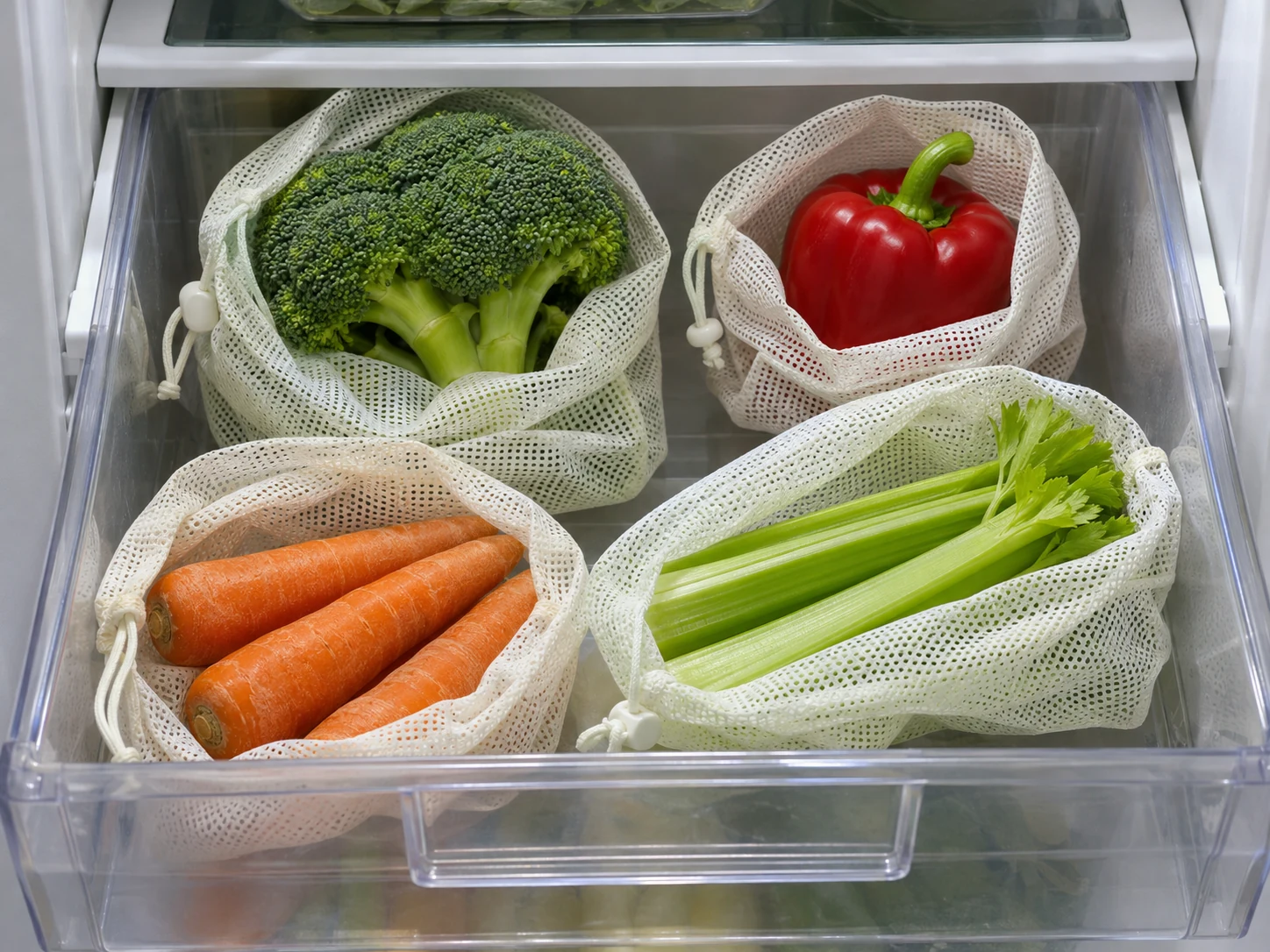
How to Store Whole Vegetables in Crisper Bags (Keeps Them Crisp)
Best for: Carrots, broccoli, celery, and whole bell peppers
Whole firm vegetables benefit from the crisper's humidity, but they should not be packed wet. Use clean produce bags and avoid squeezing delicate broccoli florets or peppers under heavier items.
Steps:
- Remove carrot tops if attached, leaving a short stub, and gently dry any wet surfaces. Keep the vegetables whole and unwashed until you need them when practical.
- Place carrots and celery in clean produce bags, closing them loosely to reduce moisture loss. Put broccoli and whole bell peppers in separate loose or perforated produce bags.
- Arrange the bags in the crisper without packing them tightly. If the drawer has a humidity setting, use the higher setting for these vegetables.
- Check the bags regularly. Remove excess condensation, replace wet packaging, and use vegetables that are beginning to soften first.
Why This Method Works
The drawer and bags slow the loss of moisture that makes vegetables limp. Loose or perforated packaging also helps prevent water from collecting around vegetables.
Tip: Keep whole peppers dry and avoid cutting them until needed. Store carrot tops separately if you plan to use them.
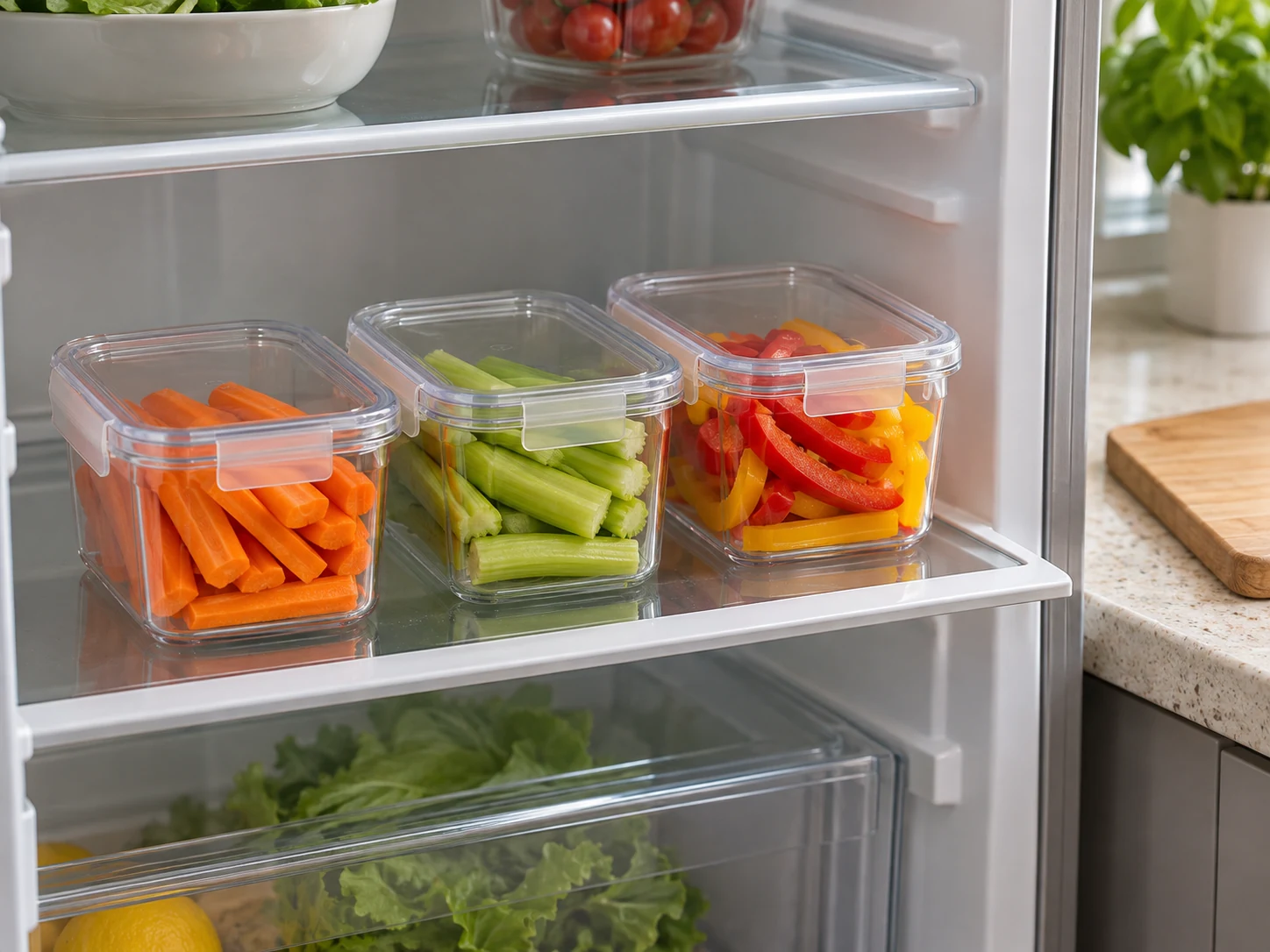
How to Store Cut Vegetables in Covered Containers (Ready for Small Portions)
Best for: Cut carrots, celery, broccoli, and bell peppers
Prepping a small amount ahead makes snacks and meals convenient. Cut surfaces lose moisture and are more exposed to contamination, so use clean tools and refrigerate the pieces promptly.
Steps:
- Wash your hands and clean the cutting board, knife, and container. Rinse the vegetables under running water before cutting; scrub firm produce with a clean produce brush when appropriate.
- Dry the vegetables with a clean towel or paper towel, then cut only the amount you expect to use soon.
- Place the pieces in a clean, covered container. Keep varieties separate if that makes it easier to use them or prevents delicate pieces from being crushed.
- Refrigerate promptly at or below 40°F (4°C). Discard pieces that develop mold, slime, or an off odor rather than tasting them.
Why This Method Works
A covered container protects cut surfaces from drying out and helps keep the pieces separate from other foods. Prompt refrigeration limits bacterial growth.
Tip: A small container is useful for one or two portions and leaves less empty space for pieces to tumble around.
How Long Do Fresh Vegetables Last in the Fridge?
There is no single reliable storage time for all vegetables: freshness when purchased, handling, packaging, and refrigerator temperature all matter. Whole vegetables generally retain quality longer than cut ones. Check produce regularly, follow any package storage instructions, and use older or more delicate items first. Discard vegetables with mold, slime, or an off odor; appearance and smell alone cannot guarantee food is safe.
- How to Store Lettuce in a Lined Container (Helps Prevent Sogginess): Allow a few minutes to sort and pack the greens, plus drying time if they are wet. Check the paper towel and leaves regularly.
- How to Store Whole Vegetables in Crisper Bags (Keeps Them Crisp): Allow a few minutes to trim and bag the vegetables. Inspect them regularly; freshness varies with the produce and fridge conditions.
- How to Store Cut Vegetables in Covered Containers (Ready for Small Portions): Allow several minutes for washing, cutting, and packing. Refrigerate cut vegetables within 2 hours, or within 1 hour if the surrounding temperature is above 90°F (32°C).
Common Problems and Easy Fixes
Why is my lettuce wet and slimy?
- Remove and discard slimy leaves, and discard the entire container if spoilage is widespread.
- Dry sound leaves, use a clean container with a fresh paper towel, and replace the towel whenever it becomes wet.
Why are my carrots or celery limp?
- Moisture loss is a common cause. Store firm vegetables in a clean produce bag in the crisper rather than uncovered on a shelf.
- Slightly limp pieces without signs of spoilage may be more appealing in a cooked dish. Discard them if they are slimy, moldy, or smell off.
Why is there water inside the produce bag?
- Remove the vegetables, dry their surfaces, and replace the wet bag with a clean one.
- Avoid sealing wet broccoli or peppers tightly; use a loose or perforated bag and do not overcrowd the drawer.
Why are vegetables freezing in the fridge?
- Check the refrigerator temperature with an appliance thermometer and adjust the setting while keeping it at or below 40°F (4°C).
- Move vegetables away from the cold back wall or air vents. Previously frozen lettuce and peppers may be soft after thawing and are often better suited to cooking.
Frequently Asked Questions About Storing Vegetables in the Fridge
Should I wash vegetables before putting them in the fridge?
For many whole vegetables, it is simplest to wash them under running water just before use. If you wash them first, dry them thoroughly before storage so excess water does not collect. Wash produce before cutting it, even if you plan to peel it.
Which vegetables should be stored outside the refrigerator?
Store whole potatoes, sweet potatoes, onions, garlic, and hard winter squash in a cool, dry, well-ventilated place rather than the fridge. Keep potatoes and onions separate. Whole tomatoes are generally best kept at room temperature for flavor; refrigerate them after cutting.
Should vegetables go in the high- or low-humidity drawer?
A high-humidity setting is generally helpful for leafy greens and vegetables that wilt, including carrots, celery, and broccoli. If your fridge has only one drawer or no controls, use it for vegetables and manage moisture with suitable bags and containers.
Can I store vegetables and fruit together?
Separate them when practical. Some fruits release ethylene, a natural gas that can speed deterioration in sensitive vegetables. A separate fruit drawer or shelf can help protect lettuce and broccoli while also making produce easier to organize.
Do carrots need to be stored in water?
No. Whole carrots can be stored in a produce bag in the crisper without water. Cut carrot sticks can also be kept in a clean, covered container. Avoid leaving them wet in a container with pooled water.
Can I keep bell peppers in a sealed container?
Cut bell peppers belong in a clean, covered container in the refrigerator. For whole peppers, a loose or perforated produce bag in the crisper is a simple choice; dry the peppers first if their surfaces are wet.
Do I need to rinse bagged lettuce labeled ready to eat?
No. Greens labeled ready to eat or prewashed do not need another rinse. Use clean hands and utensils when serving them, and follow the package storage instructions.
Can I cut mold off a vegetable and eat the rest?
For firm produce with low moisture, such as a firm bell pepper or carrot, small mold spots can be cut away at least 1 inch around and below the spot, keeping the knife out of the mold. Discard soft or watery moldy produce, as well as vegetables with widespread mold or other spoilage.
How long can cut vegetables sit out?
Refrigerate cut or peeled vegetables within 2 hours. If the surrounding temperature is above 90°F (32°C), refrigerate them within 1 hour. Discard them if they have been left out longer.
Want to make your storage setup more practical? Consider which vegetables you buy most, how much fridge space you have, and whether you prefer to prep one or two portions ahead.
With a cold fridge, suitable packaging, and regular checks, you can keep vegetables appealing for longer and make it easier to use what you buy.