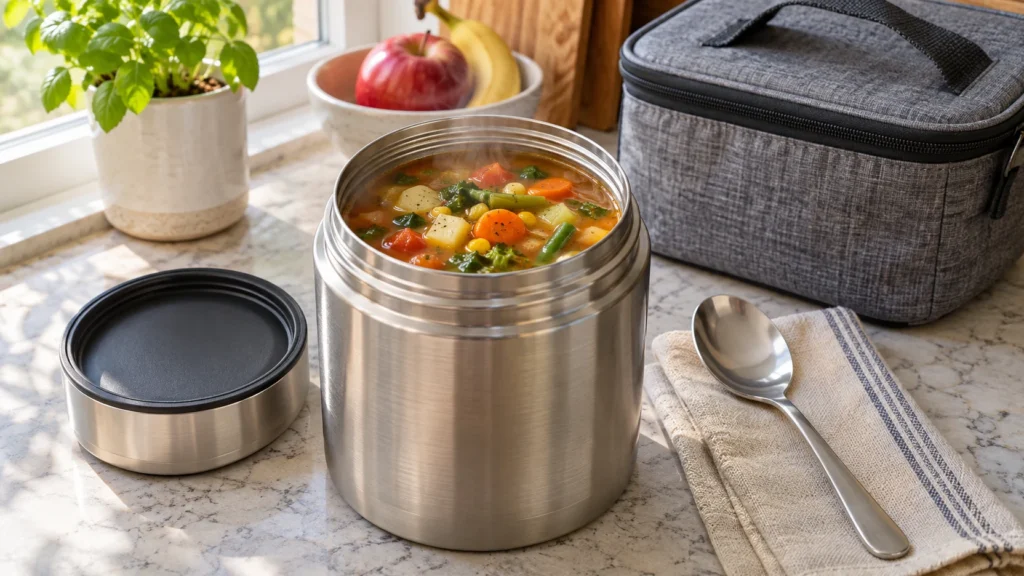
A hot soup lunch does not have to depend on a microwave. A properly preheated insulated food jar can carry one serving from your kitchen to the lunch table, but the soup still needs to stay at a safe temperature.
How to Keep Soup Hot for Lunch: Quick Answer
Preheat a food-safe insulated jar, fill it with thoroughly heated soup, and keep it closed until lunch. Check the soup with a clean food thermometer before eating.
- Fill the clean jar with hot water and let it warm while you heat the soup; follow the manufacturer's directions.
- Heat the soup thoroughly, stirring as needed. Reheat leftovers to at least 165°F (74°C).
- Empty the warming water, immediately add the hot soup, and leave the headspace recommended by the jar manufacturer.
- Seal the jar securely and carry it upright, keeping it closed until you are ready to eat.
- At lunch, check that the soup is still at least 140°F (60°C). If it is cooler and you cannot establish that it has been below that temperature for less than two hours, discard it.
Before You Start: Choose and Prepare Your Container
- Use a suitable container: Choose a food-safe vacuum-insulated jar or flask approved by its manufacturer for hot foods. A wide mouth makes chunky soup easier to fill, eat, and clean.
- Match the size to lunch: A container close to the size of your serving leaves less empty space to warm. Do not fill past the manufacturer's limit or force the lid onto an overfilled jar.
- Start with safe soup: Keep perishable soup refrigerated until you are ready to heat it. Use leftovers that were promptly refrigerated and are still within a safe storage period.
- Check the lid: Make sure the seal is clean, intact, and properly seated. Follow the manufacturer's instructions for hot contents; do not assume every bottle or lid is designed for them.
- Plan a temperature check: Pack a clean food thermometer if you need to verify the soup at lunch. The container's advertised heat-retention time is not a guarantee that your particular serving will stay food-safe.
Best Ways to Keep Soup Hot for Lunch
A wide-mouth insulated food jar is the most versatile choice for a single serving, especially when soup contains beans, vegetables, noodles, or other pieces. It can double as your bowl.
For a smooth, pourable soup, a hot-food-rated vacuum flask is another useful option. Both methods work best when you preheat the container and fill it immediately after heating the soup.
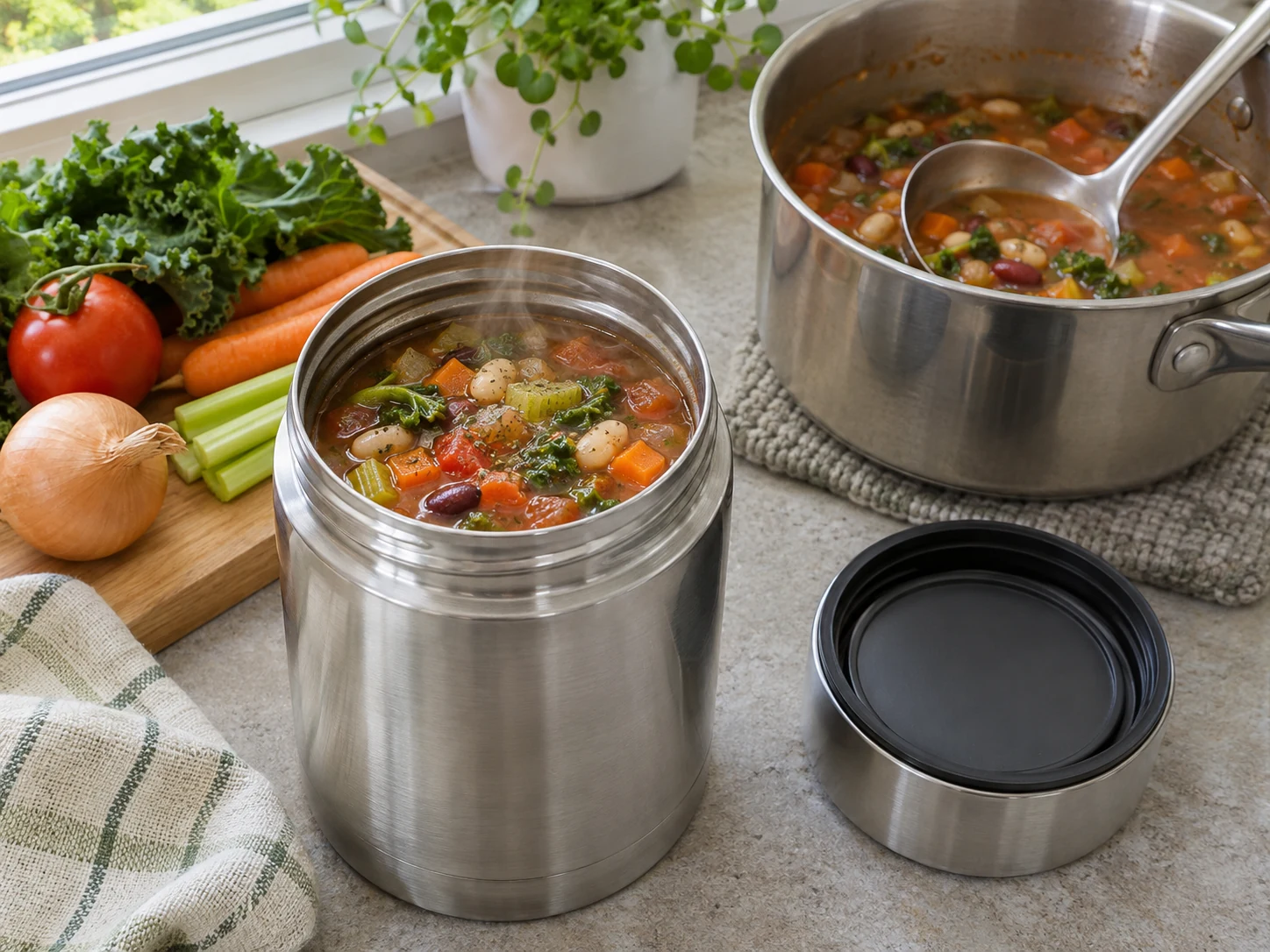
How to Pack Soup in a Wide-Mouth Food Jar (Best for Chunky Soup)
Best for: One serving of chunky or smooth soup eaten directly from the container
A wide-mouth jar gives pieces of food room to move and makes it easier to reach the bottom with a spoon. Use a jar approved for hot food, with a lid that seals securely.
Steps:
- Pour hot water into the clean jar to preheat it. Let it stand for about 5 to 10 minutes, or as directed by the manufacturer. Use boiling water only if the container instructions permit it.
- Meanwhile, heat the soup in a saucepan, stirring so the liquid and solid pieces heat evenly. Bring leftover soup to at least 165°F (74°C), checking with a food thermometer.
- Pour out the warming water. Immediately ladle the hot soup into the jar, leaving the headspace specified by the manufacturer.
- Wipe the rim if needed, fit the seal correctly, and close the lid securely without overtightening. Keep the jar upright in your bag.
- Leave the jar closed until lunch. Stir the soup and check its temperature with a clean thermometer before eating; it should be at least 140°F (60°C).
Why This Method Works
Preheating reduces the heat the container absorbs from the soup. Vacuum insulation then slows heat loss, while a closed lid limits the escape of hot air and steam. The starting temperature, amount of soup, container, and time in transit all affect the result.
Tip: If the soup is very thick, stir it well during heating and check both the liquid and a substantial piece for an even temperature.
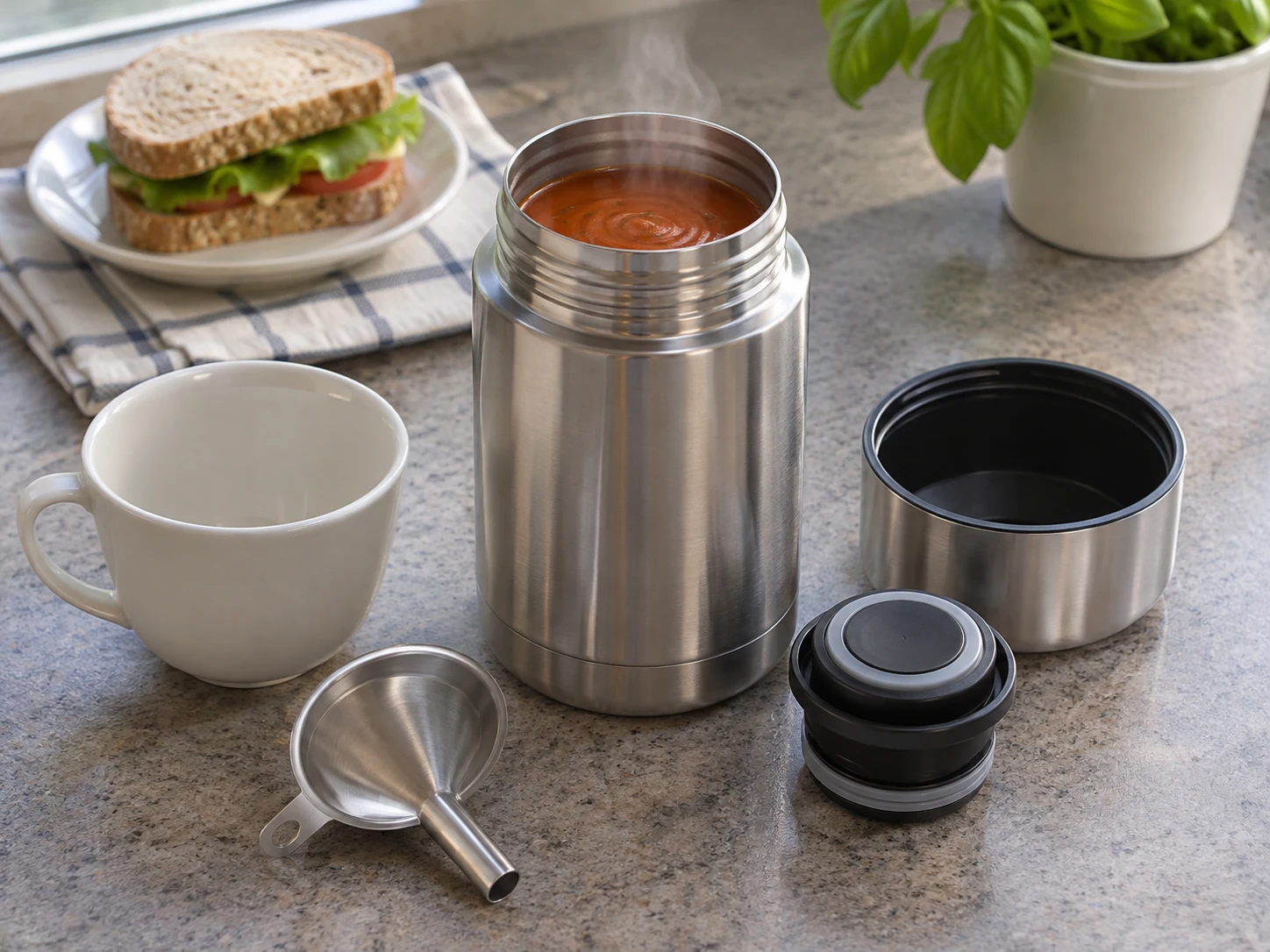
How to Pack Pourable Soup in a Vacuum Flask (Easy to Pour)
Best for: Smooth, pourable soup in a flask rated for hot food
A vacuum flask can be convenient when you want to pour soup into a cup at lunch. Choose a model the manufacturer approves for hot food, and use a soup thin enough to pour and clean out easily.
Steps:
- Preheat the clean flask with hot water for about 5 to 10 minutes, following its instructions. Check that the stopper and seal are clean and in good condition.
- Heat the smooth soup in a saucepan, stirring frequently. Reheat leftovers to at least 165°F (74°C), and check with a food thermometer.
- Empty the flask and carefully pour in the soup. A funnel can help if the opening is narrow; leave the headspace specified by the manufacturer.
- Close the stopper and lid as directed, then carry the flask upright. Avoid opening it to check the soup before lunchtime.
- At lunch, carefully pour the soup into a clean cup or bowl. Stir and check that it is at least 140°F (60°C) before eating.
Why This Method Works
The preheated vacuum flask slows heat loss during the trip, and a smooth soup can be poured without pieces blocking a narrow opening. Heat retention still depends on the flask, portion, and length of the wait.
Tip: Skip large pieces, rice, and long noodles in a narrow-neck flask; they can be difficult to pour out and clean away.
How Long Can Soup Stay Hot for Lunch?
There is no dependable universal time: insulation quality, container size, starting temperature, soup thickness, and the wait before lunch all matter. Check the soup with a clean thermometer when you open it. Hot-held soup should be at least 140°F (60°C). If it has fallen below that temperature, the relevant safety limit is how long it has spent below it, not how long it has been packed overall.
- How to Pack Soup in a Wide-Mouth Food Jar (Best for Chunky Soup): Allow roughly 5 to 10 minutes to preheat the jar, plus the time needed to heat the soup. Heat retention varies by container and serving size.
- How to Pack Pourable Soup in a Vacuum Flask (Easy to Pour): Allow roughly 5 to 10 minutes to preheat the flask, plus soup-heating time. Check the manufacturer's guidance, but verify your own lunch temperature.
Common Problems and Easy Fixes
Why is my soup lukewarm at lunch?
- Next time, preheat the container and fill it immediately with thoroughly heated soup. Choose a container closer to the size of your serving.
- Keep the lid closed during the trip. If the soup is below 140°F (60°C) and you cannot verify that it has been below that temperature for less than two hours, discard it rather than tasting it.
Why did the lid leak?
- Check that the gasket is clean, undamaged, and seated correctly. Wipe soup off the rim before closing.
- Leave the manufacturer's recommended headspace, close the lid as directed, and carry the container upright.
Why are the noodles or vegetables too soft?
- Choose sturdier ingredients or cook them slightly less before adding them to soup that will stay hot for several hours.
- Pack shelf-stable crunchy toppings separately and add them just before eating.
Why is soup stuck inside the flask?
- Use a wide-mouth food jar for chunky or thick soup; reserve a narrow flask for smooth, pourable soup.
- Wash the container promptly with warm, soapy water and a suitable bottle brush. Clean removable seals according to the manufacturer's instructions.
Frequently Asked Questions About Keeping Soup Hot for Lunch
Does the soup need to be boiling when I pack it?
Not necessarily. Reheat leftover soup to at least 165°F (74°C), stir it well, and transfer it promptly into the preheated container. A hotter starting temperature can help, but boiling may affect texture and is not a substitute for checking the soup at lunch.
Can I put cold soup in an insulated jar and expect it to heat up?
No. Insulation slows temperature change; it does not heat the contents. Heat the soup first, then pour it into a preheated jar.
Can an insulated lunch bag keep soup safely hot on its own?
Do not rely on a lunch bag alone for hot holding. An insulated food jar is designed to retain heat more effectively; a bag may add protection during the trip but does not guarantee a safe serving temperature.
What if the soup is below 140°F (60°C) at lunch?
If you know it has been below 140°F (60°C) for less than two hours, eat it promptly or reheat it to 165°F (74°C) if you have a suitable appliance. If the time below that temperature is unknown or has reached two hours, discard it. In surroundings above 90°F (32°C), use a one-hour limit.
Can I judge whether soup is safe by tasting it?
No. Unsafe food may smell, look, and taste normal. Use a clean food thermometer and keep track of time; do not taste soup that may have been held unsafely.
Which soups work best in an insulated food jar?
Both smooth and chunky soups work in a wide-mouth jar. Bean, vegetable, and blended soups are convenient choices. Delicate noodles and vegetables may soften as they sit hot, so consider their texture when planning lunch.
Can I add cold cheese or cream before packing?
Cold additions lower the soup's temperature. For more reliable hot holding, heat perishable additions with the soup before packing. Alternatively, keep them safely cold in a separate container and add them just before eating.
How full should I fill the jar?
Use a jar sized close to your portion, but follow its fill limit and leave the recommended headspace. Overfilling can interfere with the lid or cause hot soup to spill.
How should I clean the jar after lunch?
Empty it promptly and wash the jar, lid, and accessible seal with warm, soapy water. Use a brush for narrow spaces, rinse well, and let the parts dry completely. Check the manufacturer's instructions before removing seals or using a dishwasher.
To refine your lunch plan, consider the type of soup, the size of your insulated container, and how long it must travel before you eat. A thermometer check at your usual lunchtime will show whether that particular setup keeps the soup hot enough.
A preheated, properly sealed container makes a convenient one-person soup lunch without a microwave. Start with thoroughly heated soup, minimize opening the lid, and check the serving temperature for both comfort and safety.