The best way to store bread depends on its ingredients, crust, and how quickly you plan to eat it. A cool counter works for many loaves, while the freezer is useful for keeping a few slices on hand without waste.
How to Store Bread: Quick Answer
For ordinary bread without perishable fillings, cool it completely and choose packaging that suits the crust. Keep what you expect to use soon at room temperature, and freeze the rest before it goes stale.
- Check the package for storage directions and separate any bread with perishable fillings.
- Let freshly baked bread cool completely before sealing it to prevent trapped moisture.
- Keep soft bread in a closed food-safe bag or container in a cool, dry place; use paper for a crusty loaf you plan to eat soon.
- Slice extra bread, wrap it well, and freeze it in portions. Discard the whole loaf or package if you see mold.
Before You Start: Choose the Right Storage
- Check the ingredients: Plain sandwich loaves, rolls, and crusty bread are generally suitable for room-temperature storage. Bread with cream, custard, meat, or other perishable fillings needs refrigeration; follow the package directions.
- Cool homemade bread: Put a freshly baked loaf on a rack until completely cool. Sealing it while warm traps condensation, which can soften the crust and encourage mold.
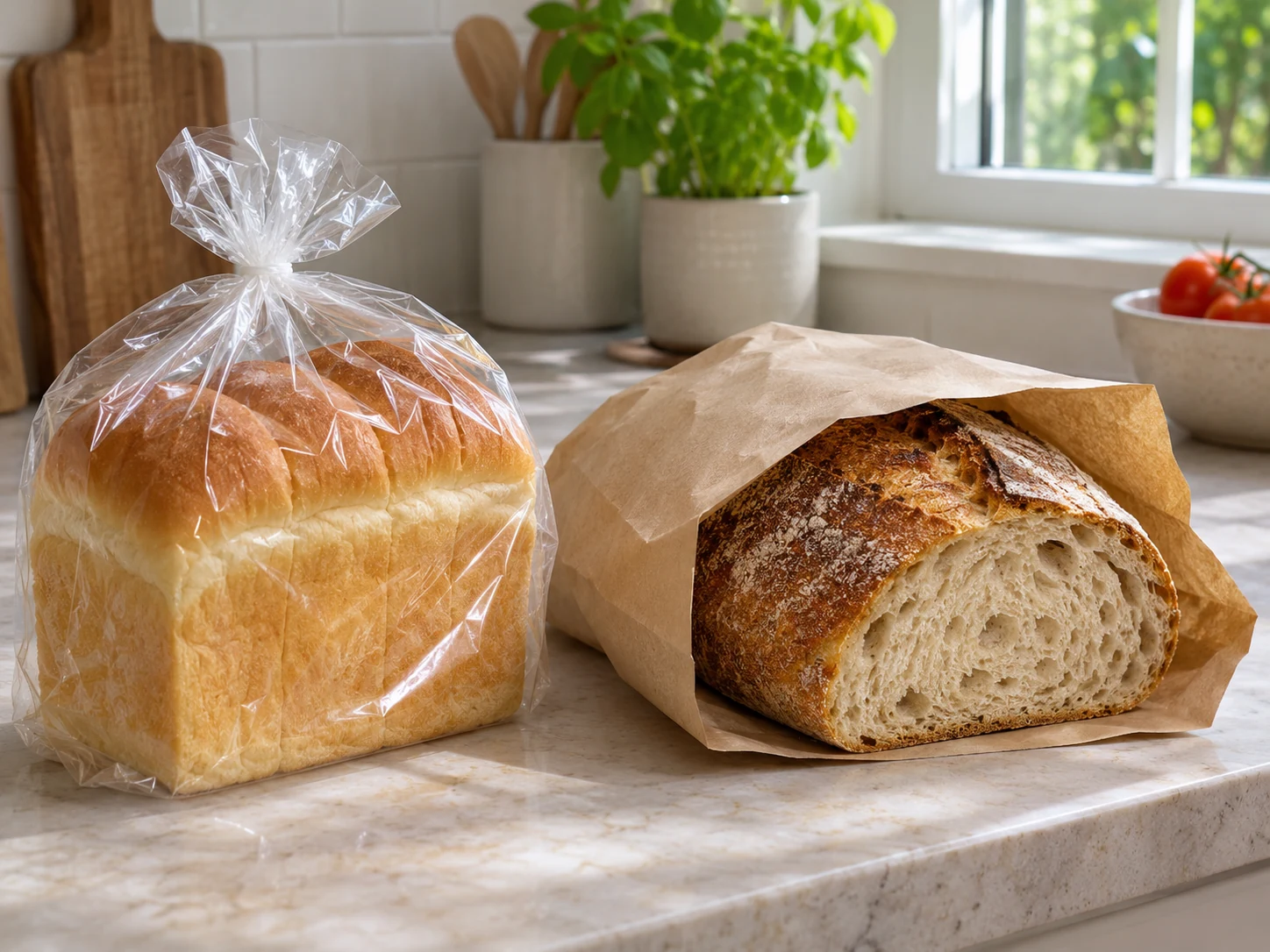
- Match the wrapper to the loaf: A closed plastic bag helps soft bread retain moisture. Paper lets a crisp crust breathe, but the loaf will dry out faster.
- Pick a cool, dry spot: Keep bread away from direct sun, the stove, and damp areas. Heat and moisture can make room-temperature storage less effective.
- Plan for small portions: Set aside only what you expect to use soon. Freeze the rest while it is still fresh rather than waiting until it is dry or nearing spoilage.
Best Ways to Store Bread
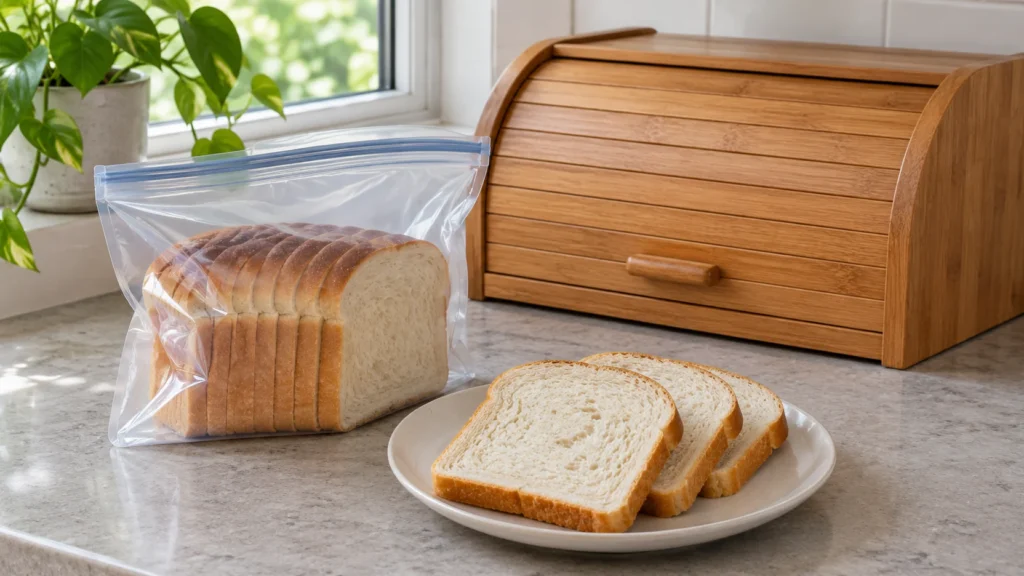
The counter and a bread box are convenient for bread you will use soon. Both are room-temperature options; a bread box gives the loaf a dedicated, sheltered place rather than dramatically changing its storage life.
The refrigerator is mainly useful when the bread contains perishable ingredients or the label requires it. For longer storage of ordinary bread, the freezer usually protects texture better.
How to Store Bread on the Counter (Everyday Convenience)
Best for: Soft sandwich bread and small amounts you plan to eat soon
A cool counter or pantry shelf is a practical place for ordinary bread. Store-bought sandwich bread can usually stay in its original bag if the bag is intact and closes securely.
Steps:
- Cool homemade bread completely on a rack before putting it away.
- Leave soft bread in its original bag, or transfer it to a clean food-safe bag. Press out excess air without crushing the loaf and close the bag.
- For a crusty loaf you plan to eat soon, use a paper bag or place it cut-side down on a clean board. Expect it to dry faster than bread in plastic.
- Place the bread in a cool, dry spot away from sunlight and cooking heat.
- Check it before eating. Freeze any extra while it is still fresh.
Why This Method Works
A closed bag slows moisture loss, keeping a soft loaf from drying quickly. Paper allows moisture to escape, which helps preserve a crisp crust for the short term.
Tip: Keep crumbs out of the bag when possible, and use clean utensils so you do not introduce extra moisture or food residue.
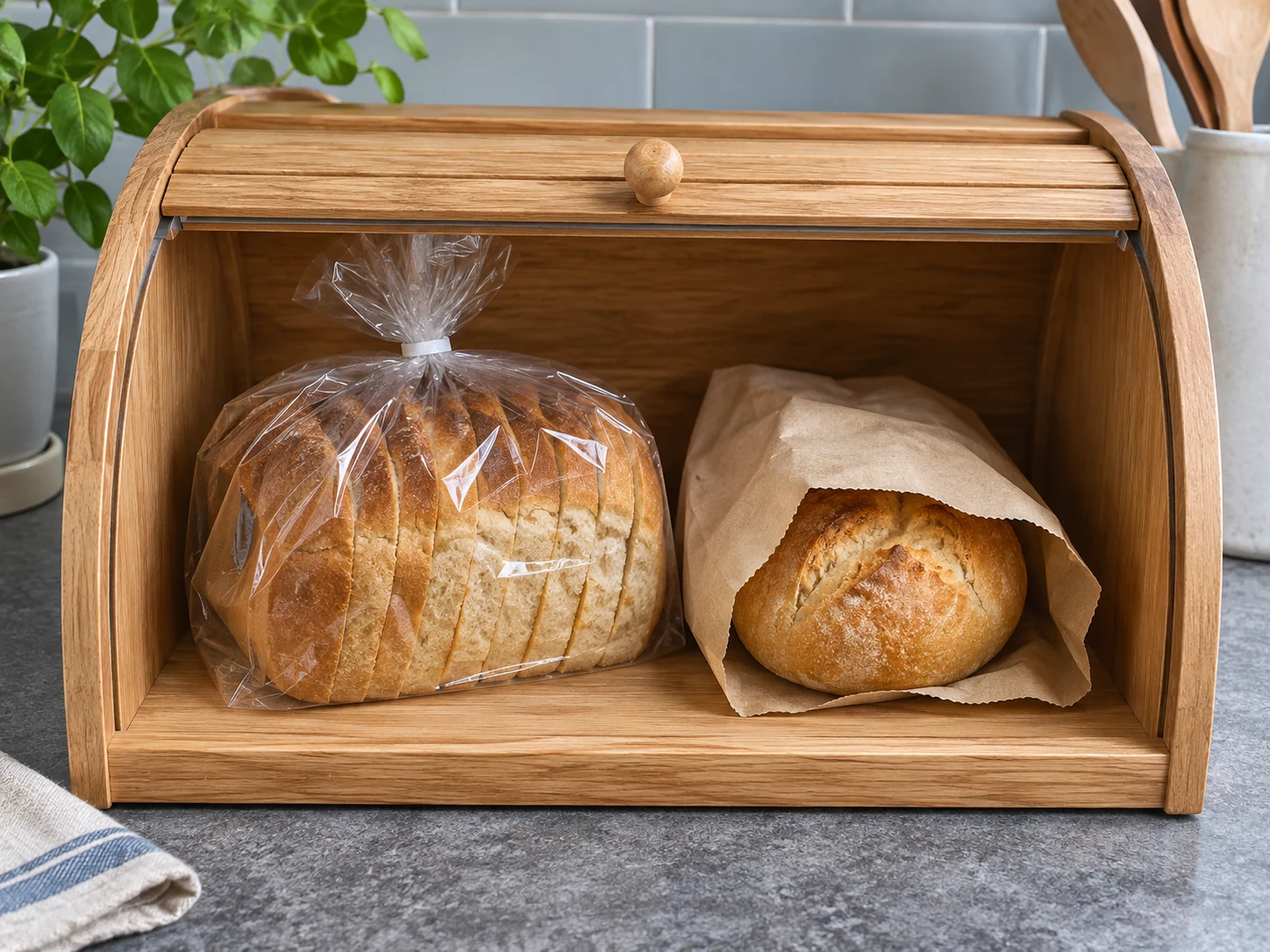
How to Store Bread in a Bread Box (A Sheltered Spot)
Best for: Keeping frequently used bread together and away from kitchen light
A bread box keeps loaves off the open counter and can offer a little airflow. It is not airtight, so the wrapper still matters, especially for soft or sliced bread.
Steps:
- Make sure the bread box is clean and completely dry.
- Cool freshly baked bread before placing it inside.
- Keep soft or sliced bread in a closed bag. For a crusty loaf you will eat soon, use a paper bag or place the loaf cut-side down.
- Put the bread box in a cool part of the kitchen, away from direct sun and the stove.
- Remove crumbs regularly, and wash and dry the box if you find moisture or spoiled bread.
Why This Method Works
The box shields bread from light and provides a designated storage area. The bag controls moisture around the loaf, while the box helps keep the surrounding space orderly.
Tip: Avoid crowding the box with warm food. If condensation appears inside, dry the box and let the bread cool fully before storing it again.
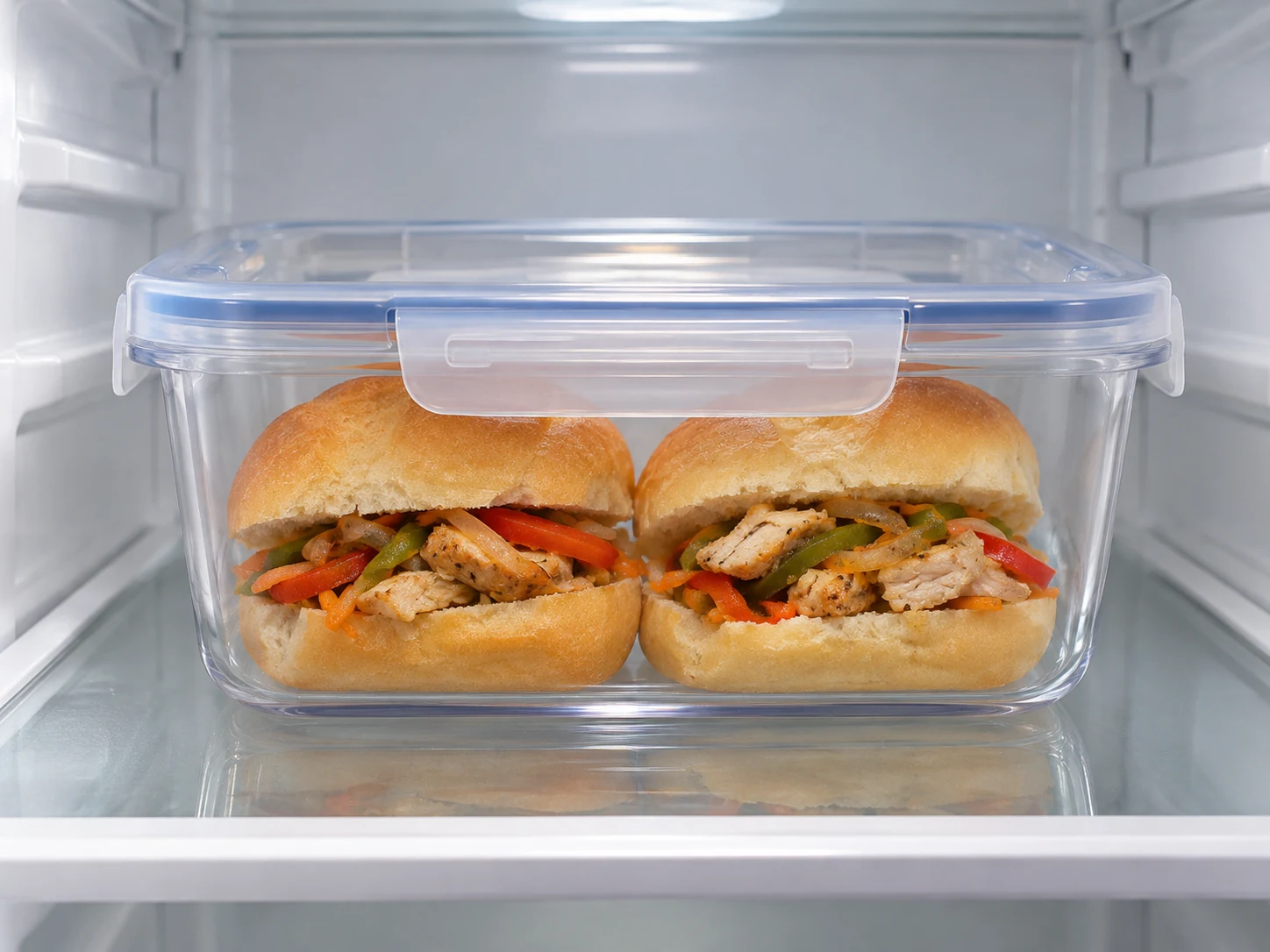
How to Store Bread in the Refrigerator (For Perishable Fillings)
Best for: Bread with fillings that require refrigeration
The refrigerator is not usually the best choice for plain bread: it can make the crumb stale more quickly than room-temperature storage. Use it when the filling or package directions call for refrigeration, not as a substitute for freezing a plain loaf.
Steps:
- Check the label or identify any perishable filling, such as cream, custard, or cooked meat.
- Place the bread in a closed food-safe container or wrap it securely to limit drying and contact with other foods.
- Keep it in a refrigerator at 40°F (4°C) or below.
- Follow the product's storage and use-by directions. If perishable filled bread has been above 40°F (4°C) for more than 2 hours, discard it; shorten that limit to 1 hour if the temperature is above 90°F (32°C).
- Take out only the portion you need and return the rest to the refrigerator promptly.
Why This Method Works
Refrigeration slows the growth of harmful bacteria in perishable fillings. It is a safety measure for those foods, though it does not keep plain bread soft as well as freezing generally does.
Tip: Keep refrigerated bread away from strong-smelling foods and close its container well. Toast plain slices if they have become firm, but do not use heat to rescue spoiled bread.
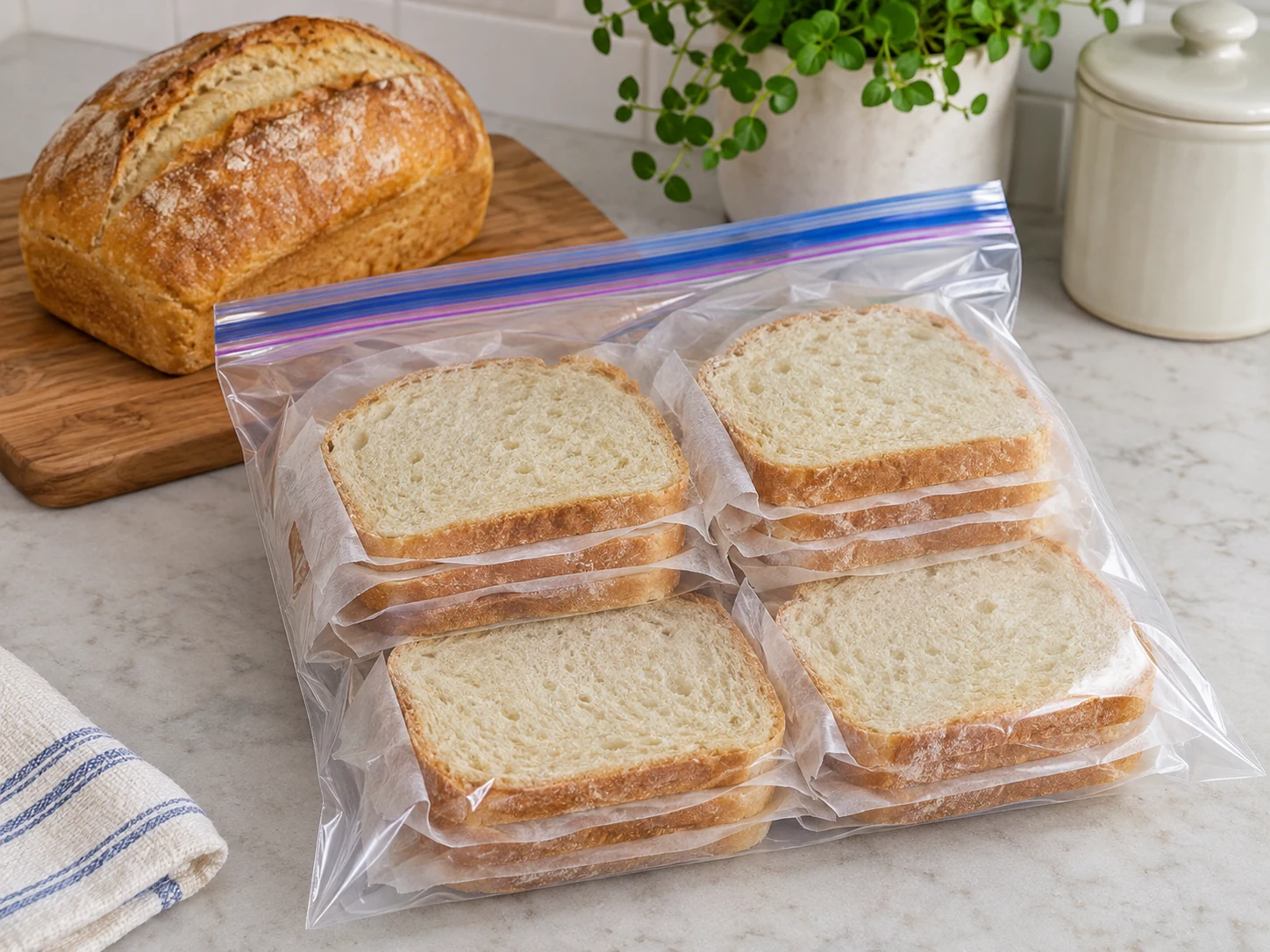
How to Store Bread in the Freezer (Less Waste)
Best for: Extra slices, small households, and bread you will not use soon
Freezing is a useful way to keep ordinary bread for later. Slicing first lets you take one or two portions without thawing the whole loaf.
Steps:
- Start with fresh bread and let a homemade loaf cool completely.
- Slice the loaf if you expect to use it a little at a time. Separate slices with small pieces of parchment if they tend to stick.
- Divide the bread into useful portions. Wrap each portion snugly, then place it in a freezer bag or freezer-safe container.
- Press excess air from the bag, seal it, and label it with the type of bread and date. Keep the freezer at 0°F (-18°C) or below.
- Toast individual slices from frozen, or thaw a wrapped portion at room temperature. Thaw bread with perishable fillings in the refrigerator instead.
Why This Method Works
Freezing slows the changes that make bread stale, while close wrapping reduces moisture loss and freezer burn. Small portions mean less handling and less need to thaw bread you will not eat.
Tip: If slices freeze together, gently separate them with a utensil rather than forcing them apart with your hands near a blade.
How Long Does Bread Stay Fresh?
There is no single freshness window for every loaf. Ingredients, preservatives, moisture, packaging, and room conditions all affect how quickly bread dries or molds. Follow package directions, check bread before use, and freeze extra bread while it is still fresh. Frozen storage maintains quality best when wrapping is tight, although texture can gradually decline.
- How to Store Bread on the Counter (Everyday Convenience): About 1 to 2 minutes to package a cooled loaf; use the bread promptly and check its condition.
- How to Store Bread in a Bread Box (A Sheltered Spot): About 1 to 2 minutes after the bread has cooled, plus occasional cleaning.
- How to Store Bread in the Refrigerator (For Perishable Fillings): About 1 to 2 minutes to package; follow the filling's or product's storage guidance.
- How to Store Bread in the Freezer (Less Waste): About 5 to 10 minutes to slice and package a loaf; thawing depends on the portion size and room conditions.
Common Problems and Easy Fixes
Why is my bread dry and firm?
- Check that the bag or container closes fully. Transfer bread from a torn wrapper to a clean food-safe bag.
- Toast firm, unspoiled slices or use them for breadcrumbs. Freeze the next loaf in portions before it starts to stale.
Why is the crust soft instead of crisp?
- A sealed plastic bag traps moisture. For a crusty loaf you plan to eat soon, try a paper bag instead.
- If the bread is otherwise sound, warm it briefly in an oven to refresh the crust. Time varies with loaf size and oven; check it often.
What should I do if I see mold?
- Discard the entire loaf or package. Do not cut off the visible spot or sniff the bread; mold can spread below the surface.
- Clean and dry the bread box or storage area before adding another loaf.
Why is there moisture inside the bag?
- Homemade bread may have been wrapped while warm. Let the next loaf cool completely on a rack before sealing it.
- Move bread away from heat and damp areas. Check the loaf for spoilage rather than assuming a wet bag is harmless.
Why do my frozen slices taste dry?
- Wrap portions more snugly and remove excess air from the freezer bag to reduce moisture loss.
- Use smaller portions so the remaining bread stays sealed. If the bread has freezer burn but shows no spoilage, try it toasted; the issue is primarily quality.
Frequently Asked Questions About Storing Bread
Is it better to store bread in the fridge or on the counter?
For plain bread you will eat soon, a cool, dry counter generally preserves texture better. Refrigerate bread with perishable fillings or when the package says to do so. Freeze extra plain bread instead of refrigerating it for longer storage.
How should I store homemade bread?
Let it cool completely first. Keep a soft loaf in a closed food-safe bag, or use paper for a crusty loaf you plan to eat soon. Homemade bread may not contain the preservatives used in some store-bought loaves, so check it regularly and freeze extra portions early.
Can I leave bread in its store-bought bag?
Yes, if the bag is clean, intact, and closes securely. Press out excess air without squashing the bread. If the bag tears, transfer the loaf to another food-safe bag or container.
Does a bread box prevent mold?
No. A bread box provides a sheltered place, but it cannot guarantee that bread will stay mold-free. Keep the box clean and dry, cool bread before storage, and check the loaf before eating.
Should I store a crusty loaf in plastic or paper?
Paper is useful when you want to preserve a crisp crust for a loaf you will eat soon, though the bread dries faster. Plastic keeps the crumb softer but also softens the crust. For longer storage, wrap and freeze the loaf.
Can I freeze a whole loaf?
Yes. Cool it completely, wrap it snugly, and place it in a freezer bag or freezer-safe container. For one or two portions at a time, slicing before freezing is more convenient and avoids thawing the whole loaf.
Can I toast bread straight from the freezer?
Yes. Put individual frozen slices in a toaster or toaster oven and use its frozen setting if available. Toasting time varies with slice thickness and appliance, so check the bread and adjust as needed.
Is stale bread the same as moldy bread?
No. Stale bread has lost its fresh texture and may be safe to use if it has no signs of spoilage. Moldy bread must be discarded in full; removing the visible mold is not enough.
Can I store bread in a cupboard?
Yes, if the cupboard is cool, dry, and away from heat sources. Use suitable packaging and keep bread clear of damp areas. A cupboard above a stove may be too warm for reliable storage.
To choose the most useful approach, consider what kind of bread you have, whether it has a perishable filling, and how much you expect to eat soon.
Keep everyday bread protected from heat and moisture, and freeze extra slices while they are fresh. A little planning helps preserve texture and cuts down on waste.