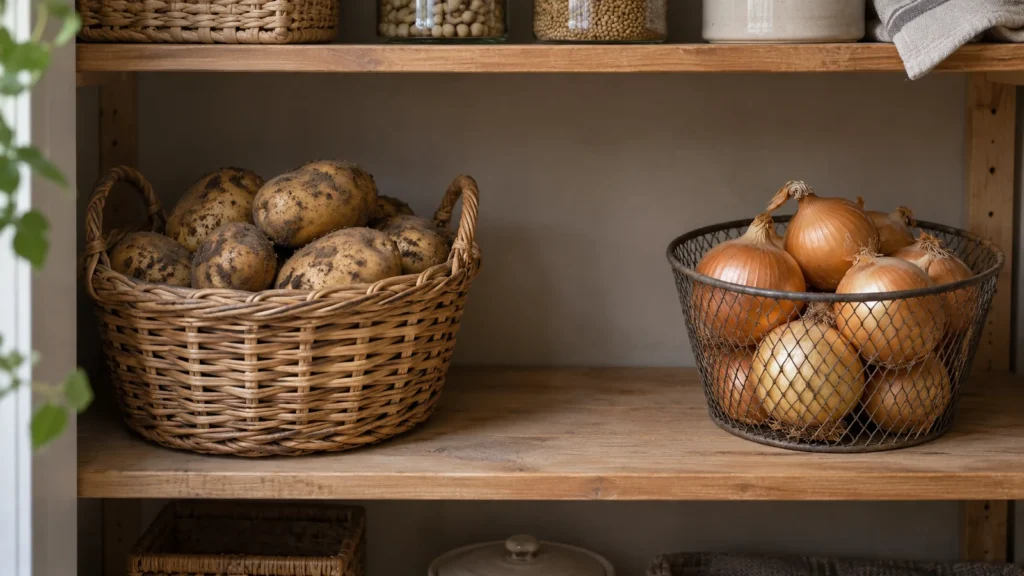
Potatoes and onions are convenient staples, but they do not belong in the same bin. A little separation, good airflow, and a suitable spot can help both stay in good condition.
How to Store Potatoes and Onions: Quick Answer
Keep whole, raw potatoes and dry bulb onions in separate ventilated containers. Choose a cool, dry spot, protect potatoes from light, and check both regularly for damage or spoilage.
- Sort through the vegetables and use any sound, slightly damaged ones first. Discard any that are moldy, slimy, or rotten.
- Put potatoes in a breathable basket, paper bag, or cardboard box that blocks light while allowing air to circulate.
- Place whole dry onions in a separate mesh bag, basket, or other ventilated container.
- Keep both containers in a cool, dry area away from direct sunlight, the stove, and other heat sources. Leave space between them.
- Check the containers regularly and promptly remove anything that is soft, leaking, moldy, or giving off a bad smell.
Before You Start: Choose the Right Spot
- Keep them separate: Potatoes and onions have different storage needs. Storing them in separate containers also helps keep moisture from one group from collecting around the other.
- Look for a cool place: For potatoes, a dark place around 45–50°F (7–10°C) is a useful target when available. A cool, dry, well-ventilated place also suits whole dry onions. An ordinary room-temperature pantry is a practical alternative if you do not have a cooler space.
- Check for airflow: Choose baskets, mesh bags, or ventilated boxes rather than sealed plastic bags. Avoid packing the containers so tightly that air cannot move around the vegetables.
- Leave them unwashed: Store potatoes dry and wash them just before cooking. If a potato or onion is already damp, let its surface dry before putting it away.
- Know which onions you have: These storage methods are for whole, unpeeled dry bulb onions, such as yellow onions. Green onions and peeled or cut onions need refrigeration.
Best Ways to Store Potatoes and Onions
Use one method for potatoes and another for onions, even if both containers fit on the same pantry shelf. The main difference is that potatoes need protection from light, while onions particularly benefit from dry, open storage.
You do not need a root cellar or special equipment. A shaded cupboard or pantry can work for small quantities, provided it stays reasonably cool and allows some air circulation.
How to Store Potatoes in a Dark, Ventilated Container (for Firmness)
Best for: Whole, unwashed raw potatoes
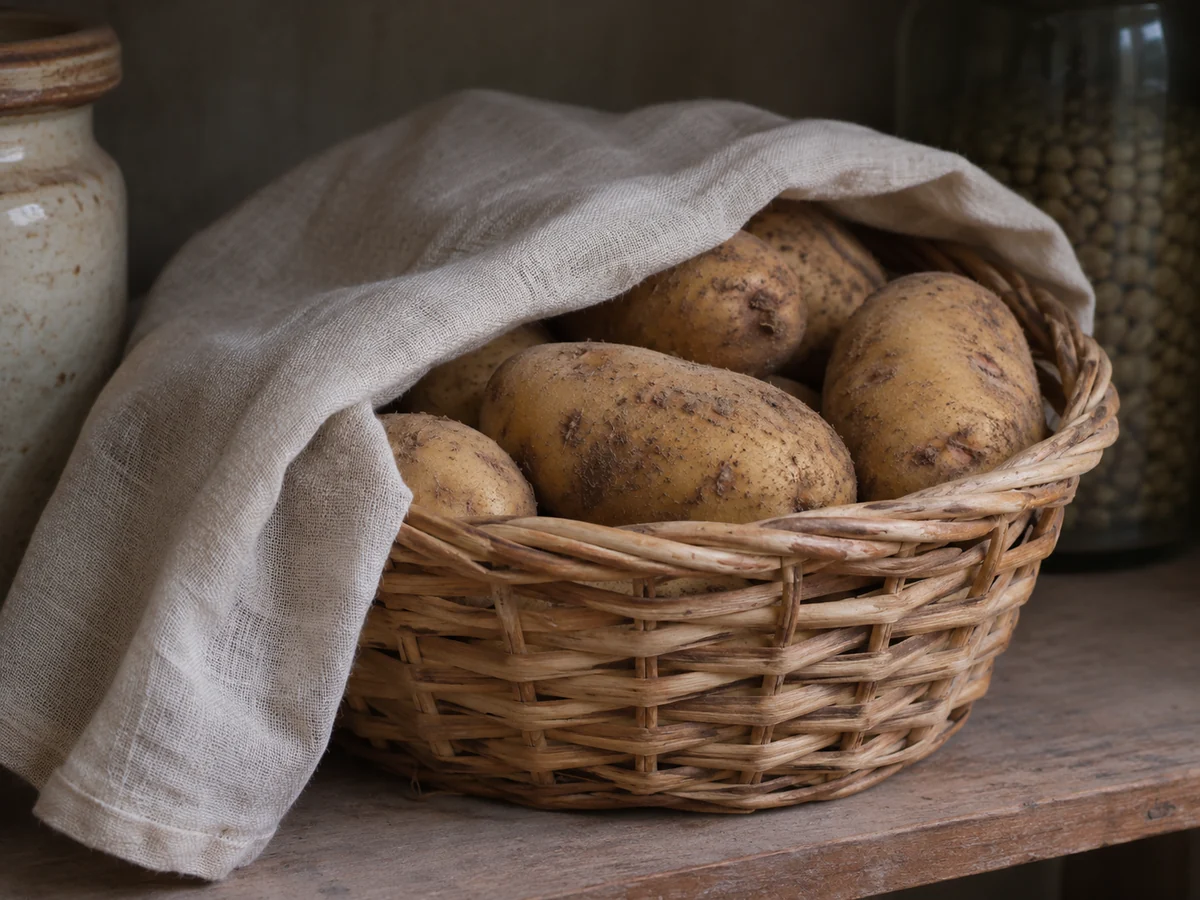
A breathable container in a dark spot helps protect potatoes from light and trapped moisture. For one or two portions, a small paper bag or basket is usually enough.
Choose a pantry, cupboard, or cool basement shelf away from the oven and direct sun. If the only available spot is at ordinary room temperature, buy a manageable amount and check it often.
Steps:
- Sort the potatoes. Set aside firm ones with minor cuts or bruises to use soon, and discard any that are rotten or moldy.
- Leave the skins unwashed for storage. Gently brush off loose soil if needed, without scrubbing the potatoes.
- Place the potatoes in a paper bag, ventilated box, or basket. If using an open basket, loosely cover it with a breathable cloth to block light without sealing it.
- Put the container in a dark, cool place, ideally around 45–50°F (7–10°C), if available. Keep it separate from the onion container.
- Check regularly for green skin, sprouts, soft spots, or leaking potatoes. Remove affected potatoes so you can inspect the rest.
Why This Method Works
Darkness helps prevent greening, while ventilation reduces trapped moisture. Cooler storage can slow changes in texture and sprouting compared with a warm kitchen.
Tip: A closed paper bag should not be packed tight. Fold the top loosely so the potatoes are shaded but the bag is not airtight.
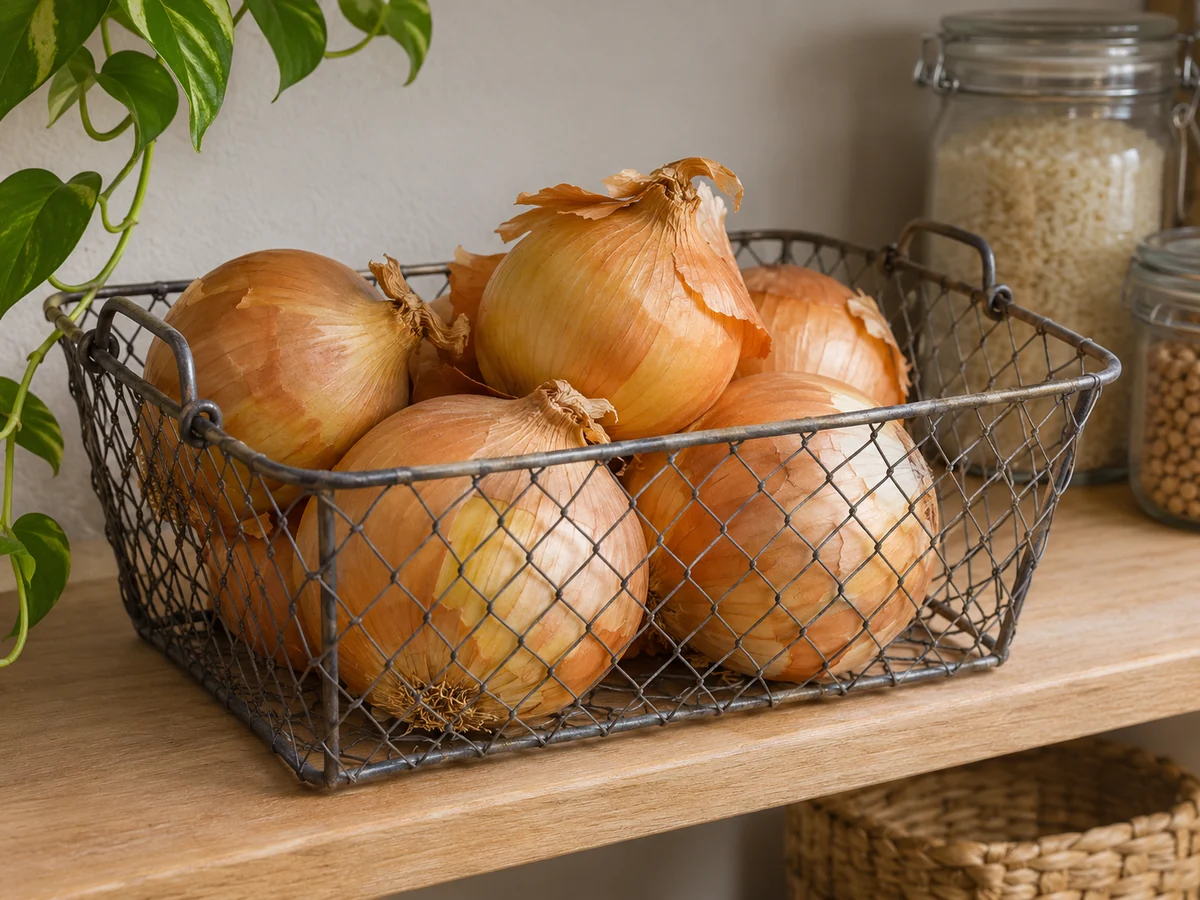
How to Store Onions in a Ventilated Container (for Dry Skins)
Best for: Whole, unpeeled dry bulb onions
Whole yellow, white, and red dry onions are best kept in a dry place with plenty of airflow. A mesh bag or open basket makes it easy to see when an onion needs attention.
In a small kitchen, use a separate shelf basket or hang a mesh bag away from the stove and sink. Keep it apart from your potatoes rather than combining them in one container.
Steps:
- Choose whole onions with dry outer skins. Set aside any sound onions with minor surface damage to use first.
- Remove any sealed plastic wrapping and place the onions in a mesh bag, open basket, or ventilated bin.
- Keep the container in a cool, dry, well-ventilated place away from heat and direct sun. Leave space around it rather than pushing it into a crowded corner.
- Store the onions separately from potatoes. If they share a shelf, use two containers with space between them.
- Check regularly and discard onions that become moldy, slimy, rotten, or unpleasant-smelling.
Why This Method Works
Airflow helps the papery outer skins stay dry. A cool location away from heat also helps preserve quality, while a separate container makes spoilage easier to spot.
Tip: Do not put whole dry onions in a sealed bag or a damp cabinet under the sink. If you cut or peel an onion, refrigerate it instead.
How Long Do Potatoes and Onions Last?
There is no single reliable storage time for every bag of potatoes or onions. Freshness at purchase, variety, temperature, moisture, and handling all affect quality. Check them regularly rather than relying on a calendar: use sound items with minor damage first and discard those showing signs of rot or mold. Warm kitchens can shorten the time they stay firm and dry, so buying smaller amounts may be more practical.
- How to Store Potatoes in a Dark, Ventilated Container (for Firmness): Check regularly and use damaged potatoes first. Storage life varies with the variety, initial condition, temperature, and humidity.
- How to Store Onions in a Ventilated Container (for Dry Skins): Check regularly and use onions with minor damage first. How long they remain in good condition depends on their variety, freshness, and storage conditions.
Common Problems and Easy Fixes
Why are my potatoes turning green?
- Light exposure can cause greening. Move the remaining potatoes to a darker container or location.
- Do not eat green portions. If greening is extensive, discard the potato.
My potatoes are sprouting. Can I still use them?
- If a potato is still firm and has only small sprouts, remove the sprouts and any green areas before cooking.
- Discard potatoes that are shriveled, very soft, extensively sprouted, or extensively green.
Why are my onions getting damp or moldy?
- Move sound onions to a dry, ventilated basket or mesh bag, and keep them away from a damp sink cabinet.
- Discard moldy, slimy, or rotten onions. Check neighboring onions and clean and dry the container before returning sound ones.
I only have one small pantry shelf. What should I do?
- Use two small containers with space between them: a light-blocking, breathable one for potatoes and a mesh basket for onions.
- If the shelf is warm or crowded, buy smaller quantities and look for another dry, shaded spot away from appliances.
Frequently Asked Questions About Storing Potatoes and Onions
Can you store potatoes and onions together?
Keep them in separate containers rather than mixing them in one bag or bin. They can share a cool, dry shelf if there is space around each container and the potatoes are protected from light.
What is the best container for potatoes?
A paper bag, ventilated cardboard box, or breathable basket works well. It should block light while allowing some air circulation. Avoid an airtight plastic bag, especially if the potatoes are damp.
What is the best container for onions?
Use a mesh bag, wire basket, or other open, ventilated container for whole dry onions. It should let air reach the papery skins and make it easy to check for soft or moldy onions.
Should potatoes be refrigerated?
For best quality, whole raw potatoes are usually kept in a cool, dark, ventilated place rather than a standard refrigerator. Refrigerator temperatures can affect their texture and cooking qualities. If your kitchen is warm and you have no cooler storage, buy smaller quantities and check them often.
Should whole onions be refrigerated?
Whole, unpeeled dry onions generally keep best in a cool, dry, ventilated place. Refrigerate onions once they are peeled or cut, keeping them in a clean covered container or sealed bag.
How should I store a cut onion or cut potato?
Refrigerate both promptly at 40°F (4°C) or below. Keep cut onion in a covered container or sealed bag. Put cut raw potato in a covered container of cold water to limit browning, refrigerate it, and use it promptly. Drain it before cooking.
Do potatoes need to be kept in the dark?
Yes. Light can cause potatoes to turn green, so choose a dark cupboard or use a breathable container that blocks light. Avoid eating green portions, and discard a potato if it is extensively green.
Can I store potatoes or onions under the sink?
Usually, a different location is better. Under-sink cabinets can be damp or contain cleaning products, and leaks may be hard to notice. Choose a dry, ventilated spot away from household chemicals instead.
How can I tell when an onion has gone bad?
Discard it if it is moldy, slimy, rotten, or has an unpleasant odor. A loose, dry outer skin alone is normal. Check the onions stored nearby and clean and dry the container if anything has leaked.
Can green onions be stored with dry bulb onions?
Green onions are more perishable and need refrigeration, unlike whole dry bulb onions. Keep them in the refrigerator and use them while they are still fresh and sound.
To choose the most useful setup for your kitchen, consider how warm your storage area gets, whether you have a dark shelf, and how many potatoes and onions you typically buy.
Separate breathable containers and regular checks are the essentials. With a suitable spot and manageable quantities, you can protect quality and waste less.