Low sodium asparagus recipe for heart health
Bright asparagus can be a gentle, flavorful base for small meals that support heart health. This simple skillet recipe keeps salt low while boosting taste with lemon, herbs, and yogurt.
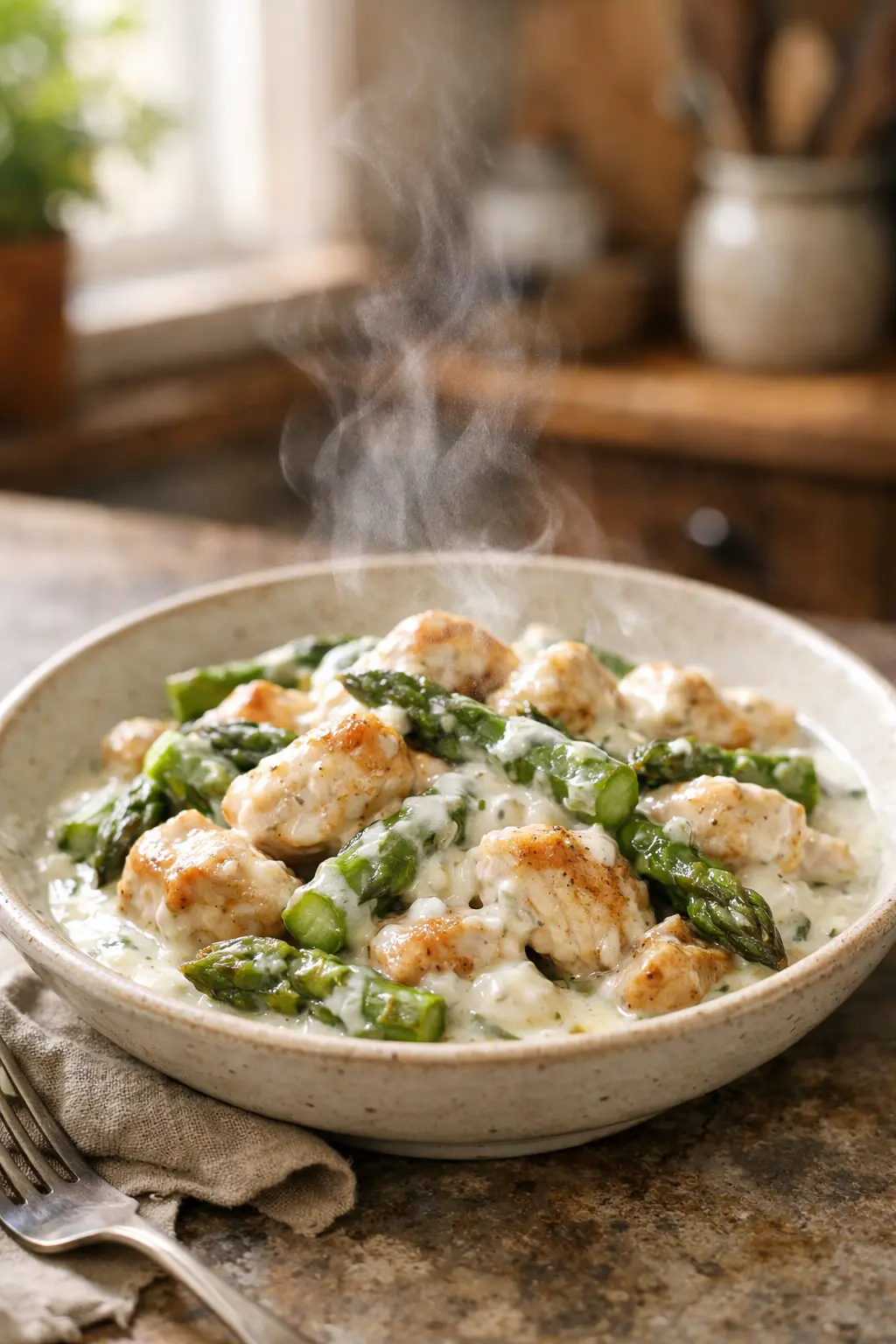
You can easily adjust the texture – cook the asparagus until very soft or shred the cooked chicken for an even gentler bite. Small changes let you match your appetite and digestion needs.
Ingredients You’ll Need
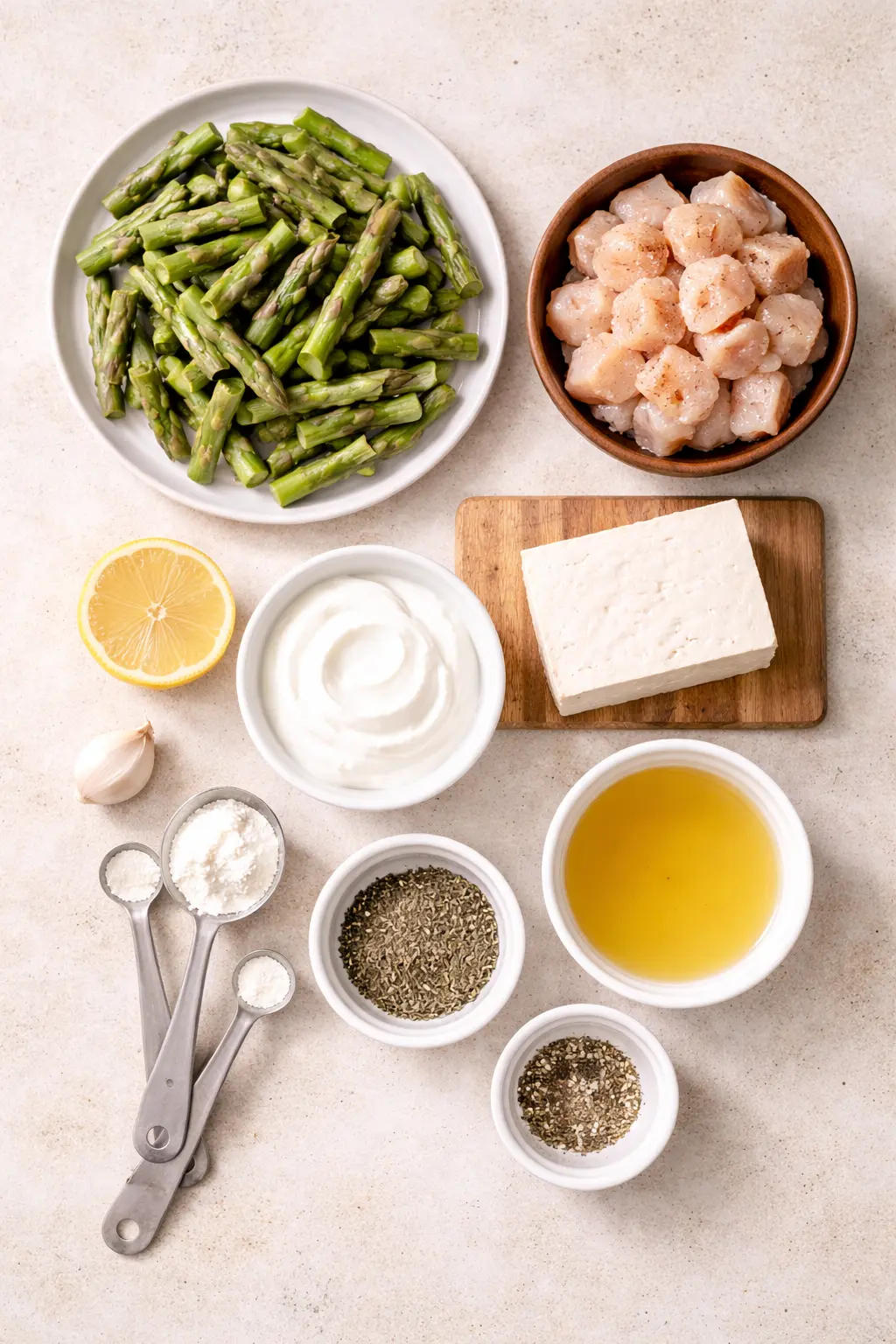
- 8 ounces asparagus, woody ends trimmed and cut into 1 to 2 inch pieces
- 8 ounces boneless skinless chicken breast cut into 1 inch pieces or firm tofu for a vegetarian option
- 1/3 cup plain yogurt, 1/4 cup low-sodium broth, 1 tablespoon lemon juice, and 1 tablespoon olive oil
You can serve this creamy asparagus and chicken skillet with a small side of rice, mashed potatoes, or soft bread if you like.
Step-by-Step Recipe

- Season the chicken pieces lightly with black pepper. Heat olive oil in a medium skillet over medium heat and brown the chicken 3 to 4 minutes until nearly cooked through, then remove to a plate.
- Sauté minced garlic 20 to 30 seconds in the same skillet, add asparagus and cook 3 to 5 minutes until starting to soften. Pour in low-sodium broth and lemon juice and scrape up any browned bits, then return the chicken and reduce heat to low.
- Whisk a little warm broth into the yogurt so it blends smoothly, stir the yogurt into the skillet and add the cornstarch slurry if you want a thicker sauce. Warm gently 2 to 3 minutes without boiling, taste and add a small pinch of salt only if needed, finish with dried thyme or oregano and serve warm.
Tips and Easy Variations
Texture and chewing
- Cut asparagus into smaller pieces and cook longer until very tender for easier chewing.
- Shred cooked chicken with two forks to create softer, smaller bites.
- Steam asparagus briefly before sautéing to reduce total cook time and soften fibers.
Vegetarian and swaps
- Use extra-firm tofu pressed and cubed as a protein swap; cook until golden then continue with the recipe.
- Try zucchini or mushrooms in place of chicken for a lighter vegetable-forward dish.
- Choose plain dairy-free yogurt like soy or coconut yogurt to make the dish dairy free.
Flavor without salt
- Use lemon juice, garlic, and fresh herbs to brighten flavor without adding sodium.
- Pick unsalted or low-sodium broth and avoid adding extra salt unless your doctor advised it.
- Finish with fresh parsley or basil for a bright, fresh note instead of more salt.
Quick cooking reminders
- Warm yogurt slowly and avoid rapid boiling to reduce curdling risk.
- Use unsalted broth to control sodium and add flavor with herbs and lemon.
- Add salt only if advised by your doctor and taste before seasoning.
Storage and Leftovers
Fridge
Refrigerate leftovers in an airtight container for up to 3 days.
Freezer
Yogurt-based sauces do not freeze well, so avoid freezing leftovers.
Reheating
Reheat gently in a skillet over low heat with a splash of water or broth to loosen the sauce.
Conclusion
Try this recipe to enjoy low sodium asparagus recipes for heart health in a simple, small-portion meal.
It is gentle, flavorful, and easy to adjust for softer textures or lower salt to suit your digestion and health needs.
FAQ
Can I use frozen asparagus?▶
Yes. Thaw and pat dry, then reduce sauté time since frozen asparagus softens quickly.
Is there a dairy-free option?▶
Use a plain unsweetened dairy-free yogurt like soy or coconut yogurt, and warm gently as with regular yogurt to avoid separation.