Salmon & White Bean Ragout — heart-healthy salmon recipes
This soft, fiber-rich ragout pairs tender salmon with creamy white beans, kale, and pearl barley. It’s mild on the stomach, easy to chew, and made for one or two servings—comfort food that supports heart-healthy salmon recipes with simple pantry ingredients.
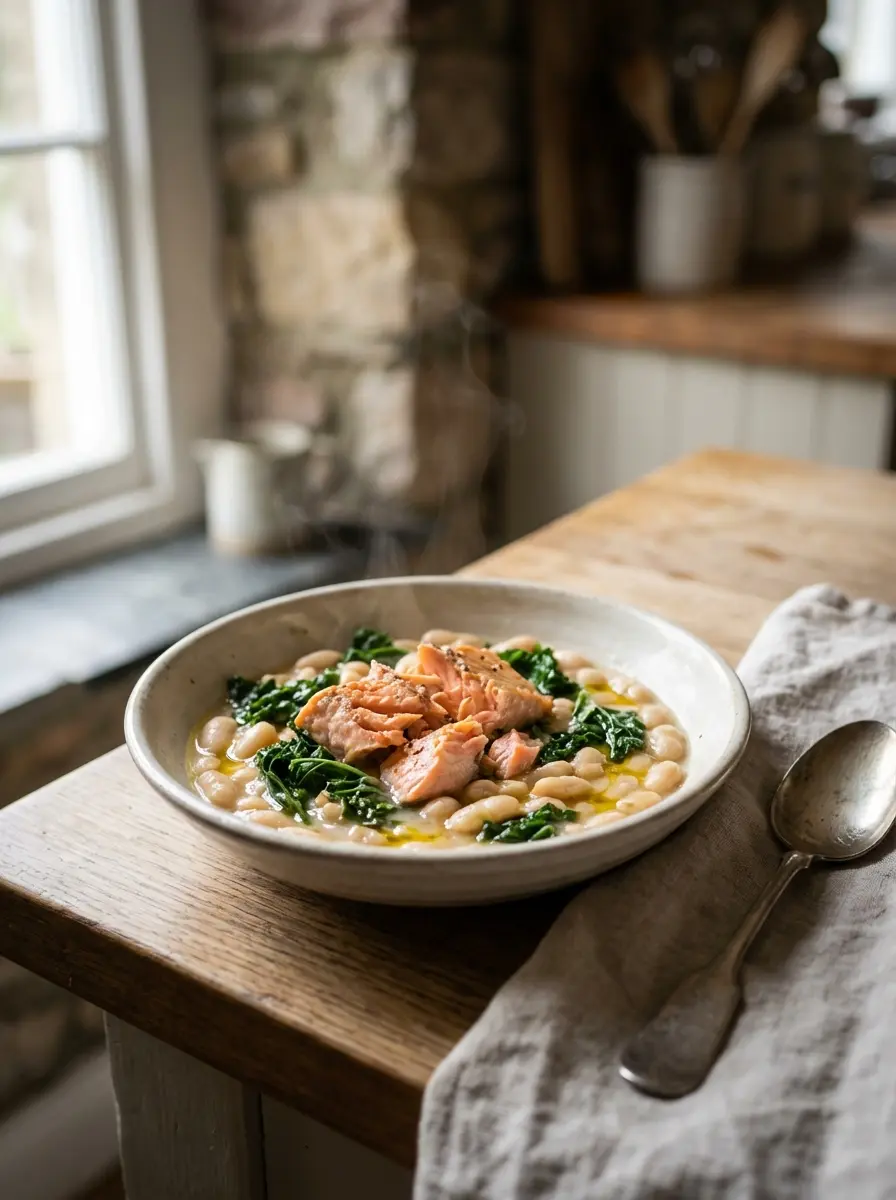
This recipe is convenient because it cooks in one pan and yields gentle textures. The white beans and barley add soluble fiber and a creamy body so the salmon can be flaked into soft pieces instead of served as a firm steak.
Portions are small and flexible. You can double the ingredients for extra meals, or scale down for a single serving. Cleanup is minimal—just one skillet and a lid.
Ingredients You’ll Need
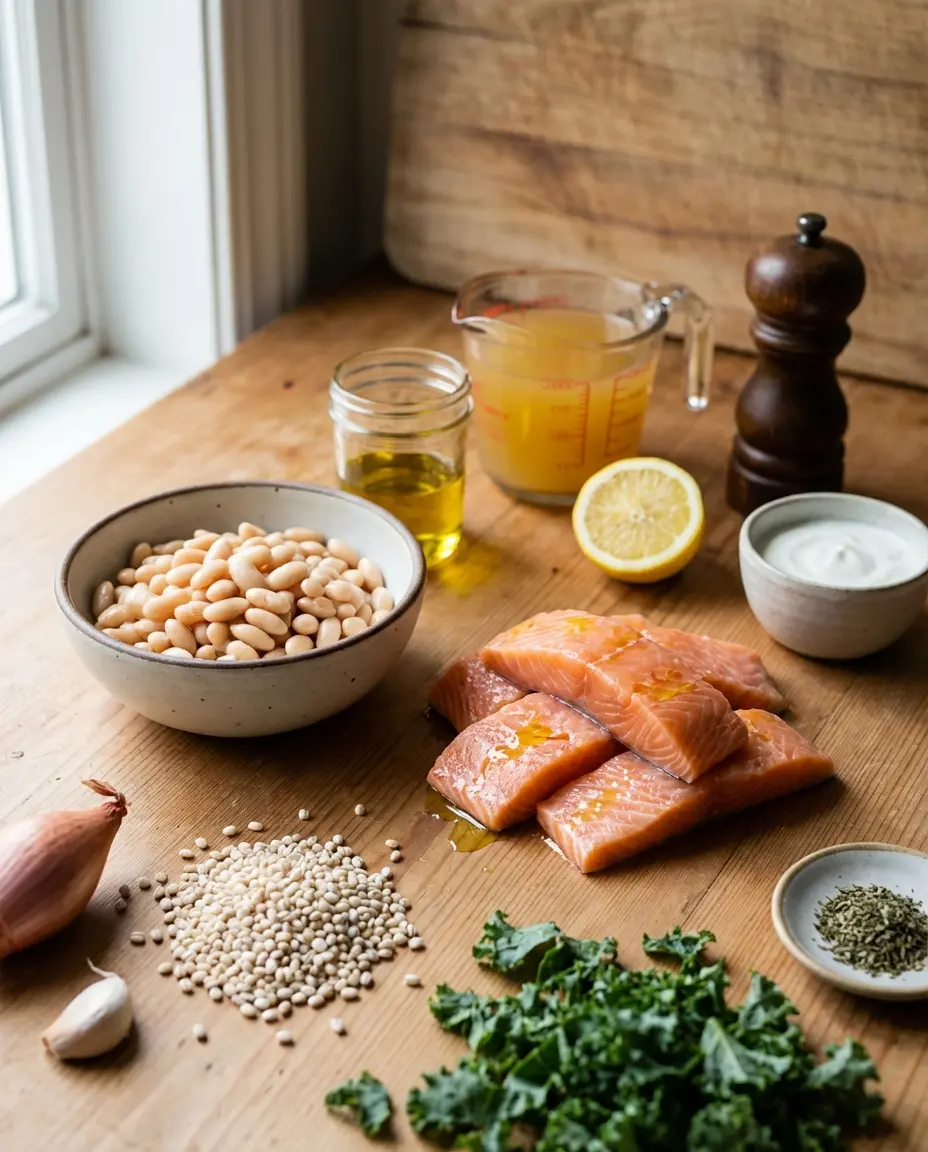
- 1/3 cup pearl barley (or quick-cooking barley)
- 1 tablespoon olive oil
- 1 small shallot or 1/4 small onion, finely chopped
- 1 garlic clove, minced (optional—skip if sensitive)
- 1/2 teaspoon dried thyme (or 1 teaspoon fresh)
- 1/2 cup low-sodium vegetable or chicken broth
- 1 (14 oz) can low-sodium white beans (cannellini or Great Northern), drained and rinsed
- 3–4 cups chopped kale, stems removed and leaves thinly sliced
- 8 oz skinless salmon fillet (one small fillet), cut into 2–3 large pieces
- Juice of 1/2 lemon
- Freshly ground black pepper, to taste
- Optional: 1 tablespoon plain Greek yogurt or soft ricotta for extra creaminess (use plant-based if preferred)
You can serve this ragout with a small piece of soft whole-grain bread, mashed potato, or extra barley if you like.
Step-by-Step Recipe
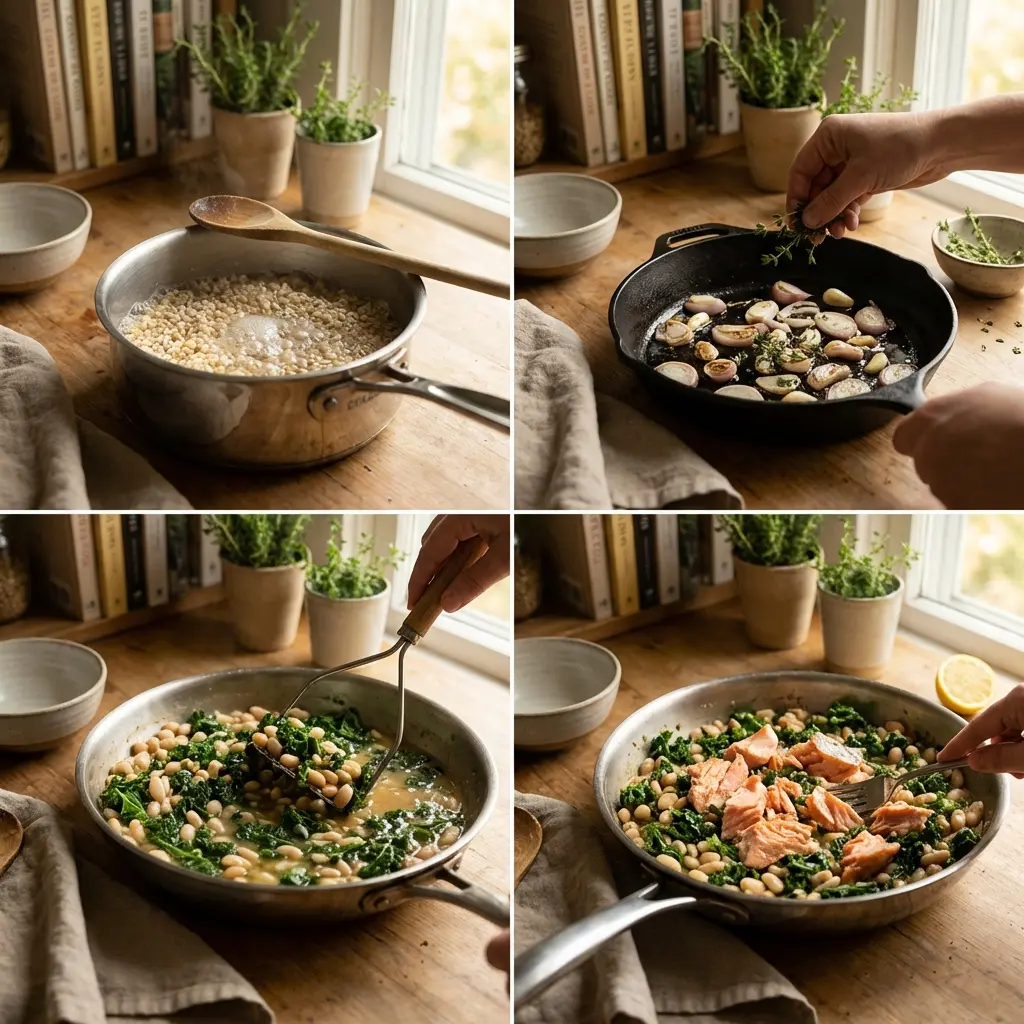
- Rinse the barley and combine with 1 cup water in a small saucepan. Bring to a simmer, cover, and cook 20–30 minutes (or according to package) until tender and mostly absorbed. For quick-cooking barley, follow package directions (about 10–12 minutes).
- While the barley cooks, heat the olive oil in a medium skillet over medium heat. Add the shallot and cook 2–3 minutes until softened. Add garlic and thyme, cook 30 seconds more.
- Add the broth and warm through. Stir in the drained white beans and gently mash about 1/3 of the beans with the back of a spoon to make a creamy base. Add the chopped kale and a splash of water if the pan seems dry. Cover and cook 3–5 minutes until kale is tender.
- Nestle the salmon pieces into the bean-and-kale mixture, skin removed. Spoon some of the liquid over the fish, reduce heat to low, cover, and poach gently 6–8 minutes until the salmon is opaque and flakes easily. Cooking time varies by thickness—aim for tender, just-cooked fish.
- Flake the salmon gently into large pieces with a fork. Stir in the cooked barley, lemon juice, and yogurt or ricotta if using. Season with black pepper and, only if desired, a small pinch of salt. Serve warm.
Tips and Easy Variations
Make it easier to chew
- Remove the salmon skin before cooking and poach gently for softer fish.
- Mash more of the beans to create a softer, stewy texture.
- Flake the salmon into small pieces for easy chewing and gentle bites.
Lighten for digestion
- Use less oil and skip the yogurt to reduce fat if desired.
- Add extra broth or water to thin the ragout for a more soupy consistency.
- Cook kale until very tender or swap it for spinach for an even softer leaf.
Swaps and flavor ideas
- Reduce sodium by using low-sodium broth and canned beans labeled low-salt.
- Swap protein: use firm white fish (tilapia, cod) or firm tofu for a plant-forward version.
- Add a teaspoon Dijon and chopped dill, or try a lemon-dill fillet variation for brightness.
Quick gentle-eating tips
- Remove skin and flake the fish for softer bites.
- Mash or blend one-third of the beans for extra creaminess.
- Rely on lemon and herbs for flavor instead of adding more salt.
Storage and Leftovers
Fridge
Cool leftovers quickly and store in an airtight container in the fridge for up to 2 days.
Freezer
Do not freeze cooked salmon ragout; the fish can become dry and change texture when thawed.
Reheating
Reheat gently on the stovetop over low heat with a splash of broth, or microwave in short bursts until warm to preserve tenderness.
Conclusion
Give this Salmon & White Bean Ragout a try—it’s a simple, gentle, small-portion meal that follows the Nutritional Pyramid 2026–2030 by centering vegetables, whole grains, lean protein, and healthy fats.
It’s an easy way to enjoy heart-healthy salmon recipes with minimal fuss and comforting textures that suit sensitive mouths and small appetites.
FAQ
Can I use frozen salmon?▶
Yes—thaw frozen salmon in the fridge overnight for best results, or cook from slightly frozen and add a few extra minutes. Check that the fish is opaque and flakes easily to ensure it stays tender.
Is barley essential?▶
No. You can swap in cooked brown rice, soft polenta, or extra mashed white beans for a similar texture and whole-grain fiber depending on preference and chewing ability.