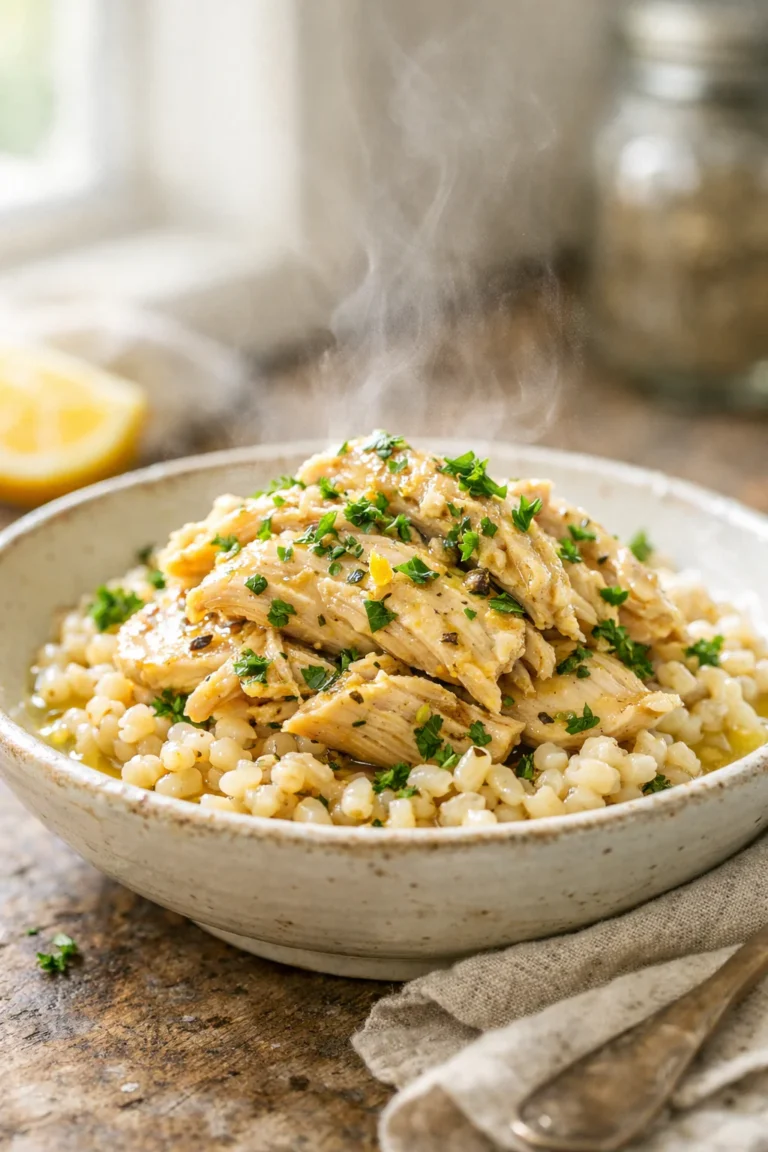
Citrus Herb Slow Cooker Chicken and Barley
Set-and-forget slow cooker citrus herb chicken with pearled barley, low sodium and portioned for one or two for easy, digestion friendly dinners.

Starting your married life together is the perfect time to build healthy habits in the kitchen, and cutting back on sodium is one of the easiest places to begin. Whether one of you is watching blood pressure, you've had a nudge from the doctor, or you just want to feel better day to day, low-sodium cooking doesn't mean bland food. With the right herbs, citrus, and a few smart swaps, you can cook flavorful meals for two that taste like a treat. Browse our growing collection of low-sodium recipes below — all designed to be easy to cook together as a couple.
Set-and-forget slow cooker citrus herb chicken with pearled barley, low sodium and portioned for one or two for easy, digestion friendly dinners.
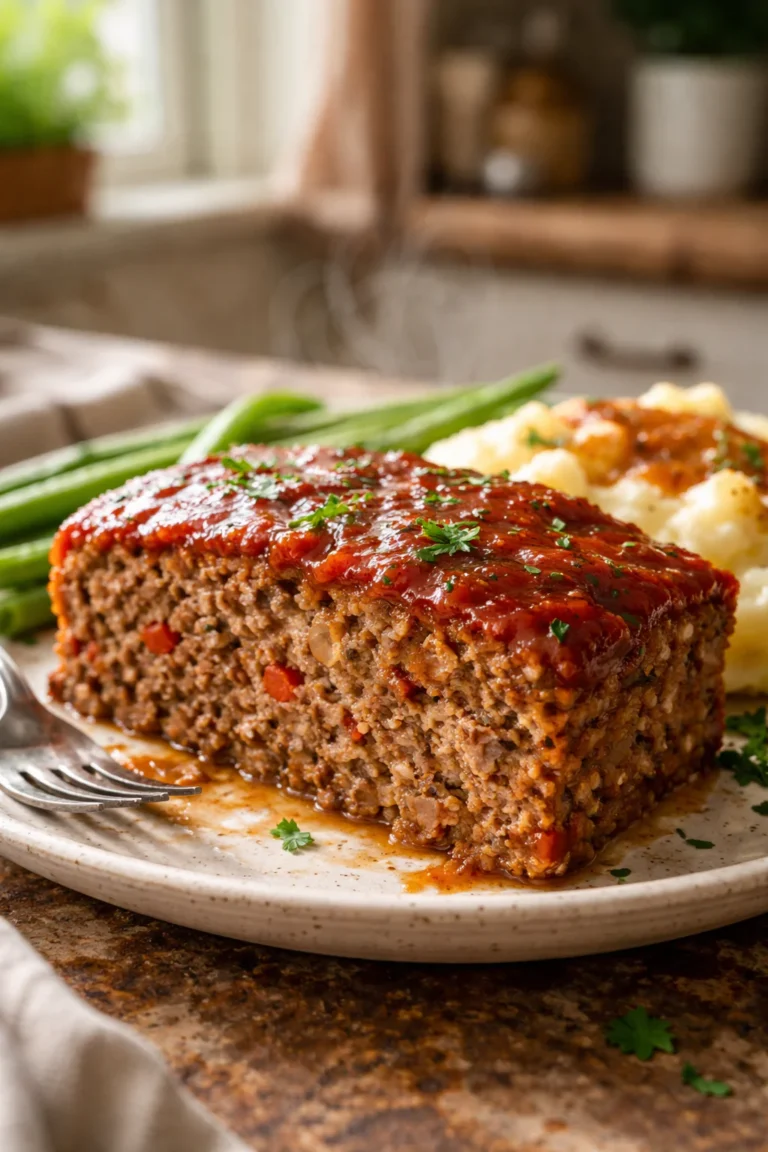
Small batch oven baked meatloaf using 90 10 ground beef that stays juicy and tender, perfect for one or two people with minimal cleanup.
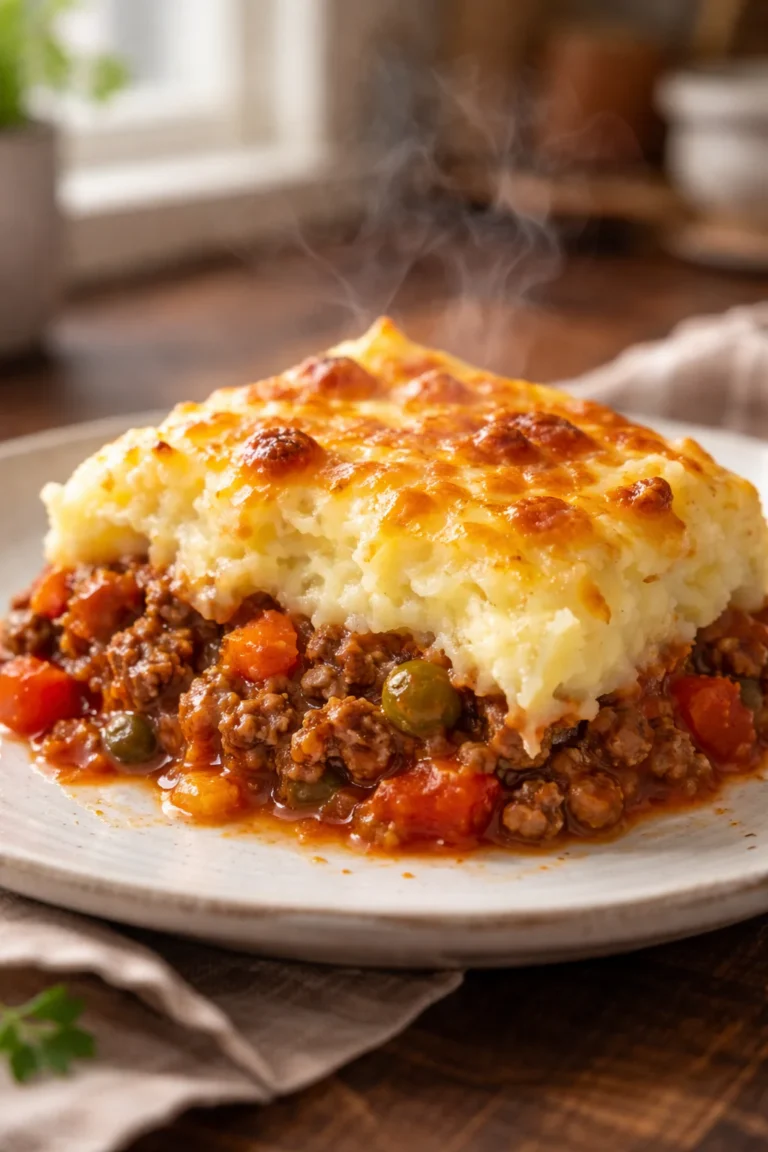
Small-batch low sodium ground beef and tomato casserole topped with mashed potato, gentle on chewing and digestion; serves 1 to 2.
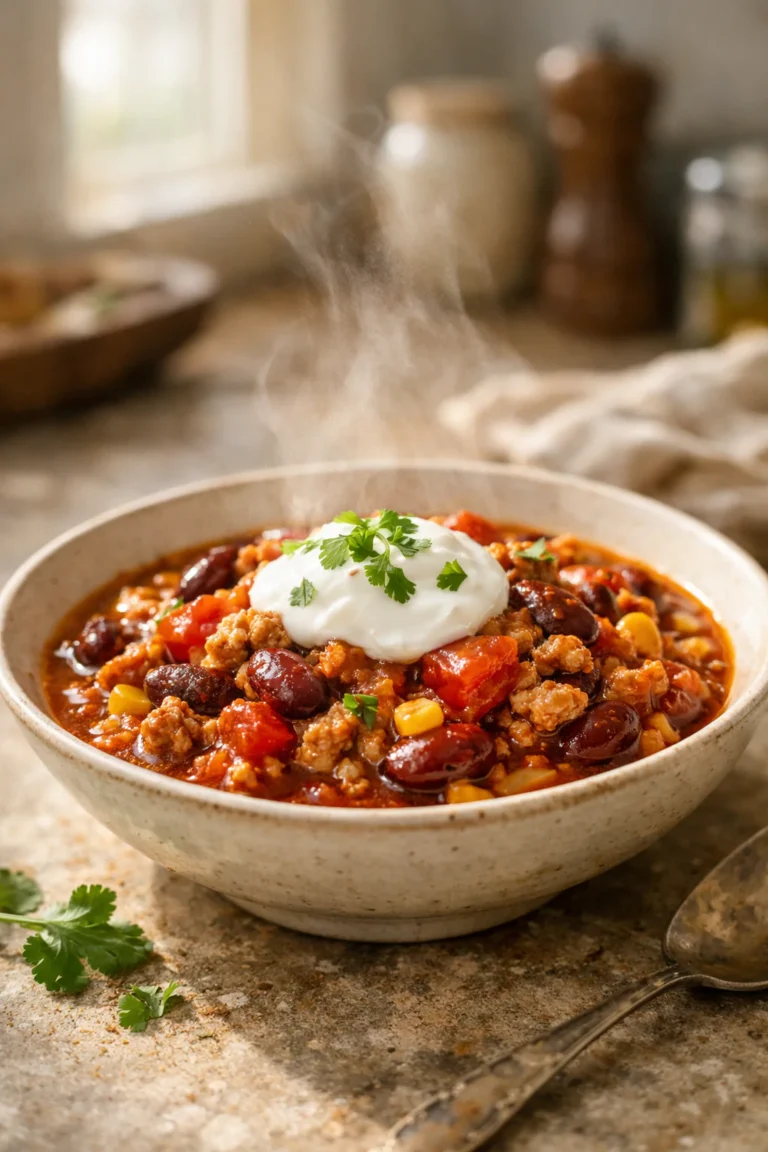
A mild small batch slow cooker turkey chili for one to two servings, with soft textures and easy hands off cooking.
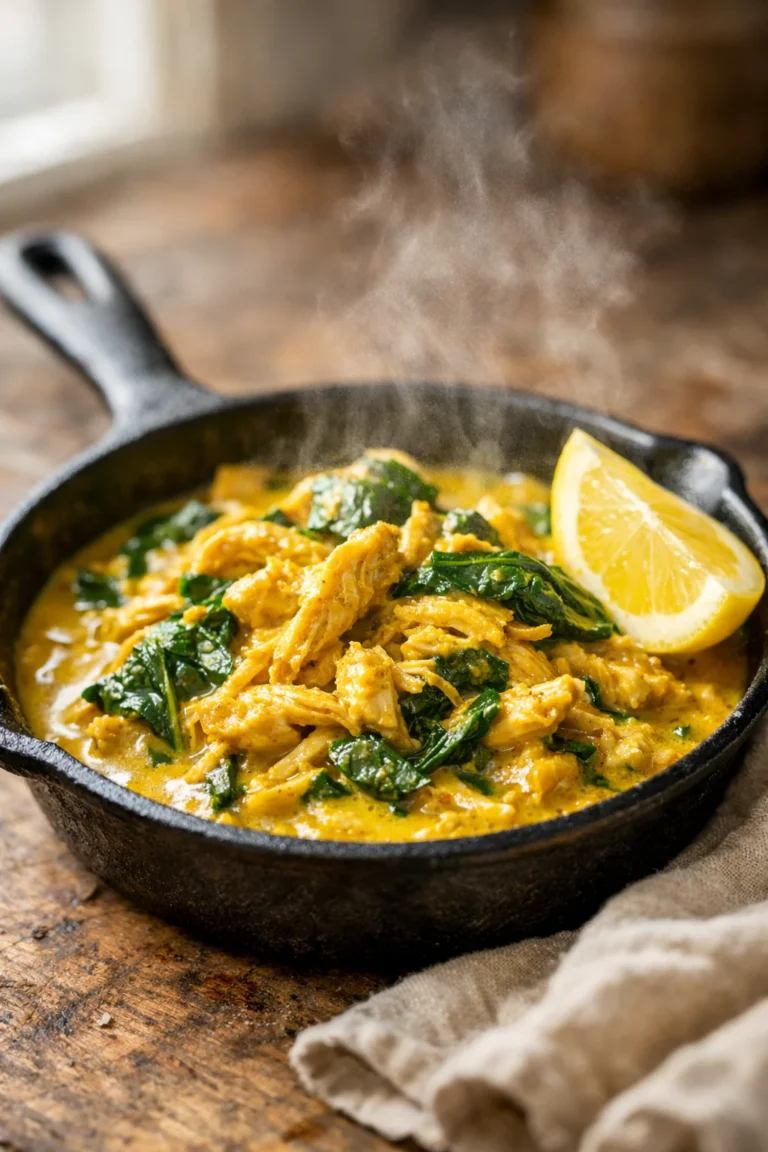
One-pan chicken skillet flavored with turmeric and ginger for 1 to 2 servings; soft texture, low in added salt, quick to make and easy to reheat.
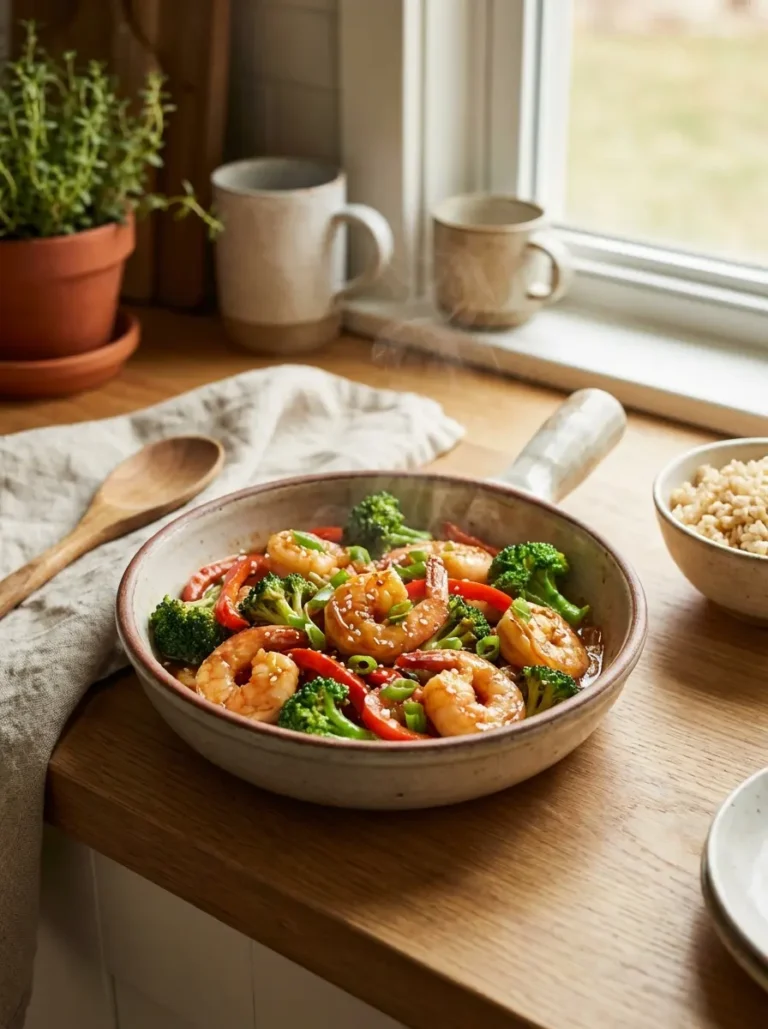
Fast one-pan shrimp and broccoli for one or two — low-sodium, gentle on digestion and ready in about 15 minutes with minimal cleanup.
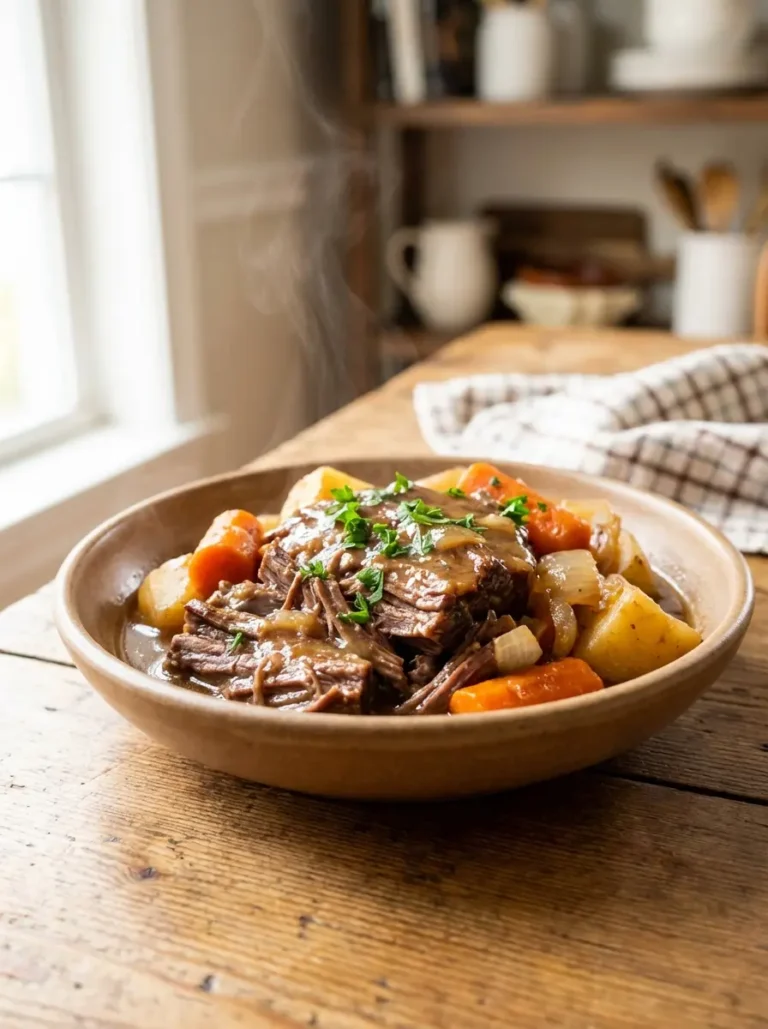
Simple small-batch slow cooker pot roast yielding fork-tender beef and soft vegetables with minimal hands-on time.
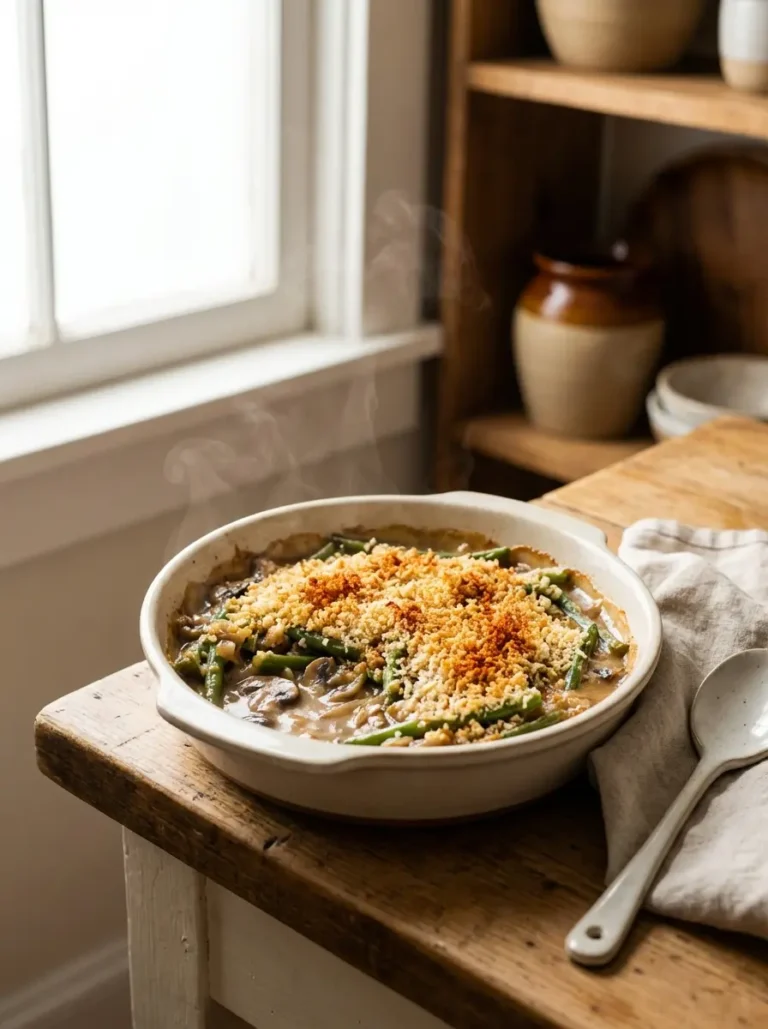
A small-batch green bean casserole made from scratch with a mushroom-onion sauce and light panko topping—perfect for 1–2 servings.
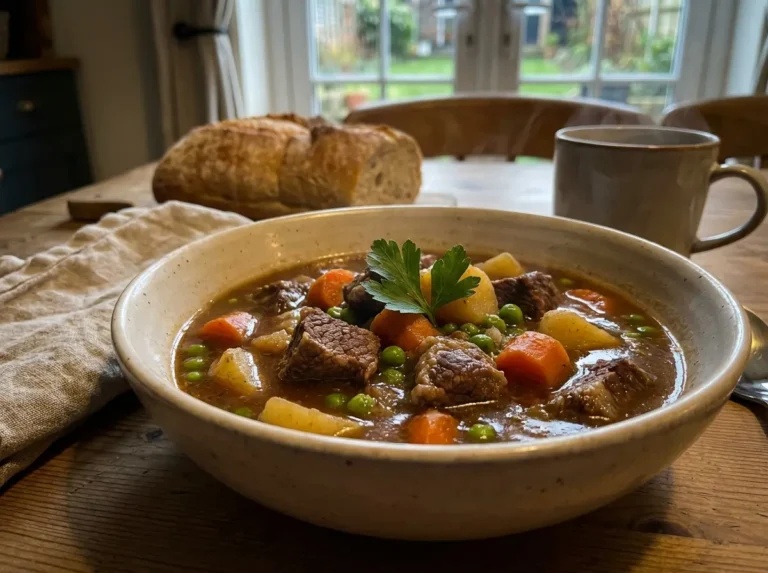
A warm, comforting beef and vegetable stew made in small portions with tender ingredients, perfect for easy cooking and gentle digestion.
The first year of marriage is the ideal moment to build healthy habits that last. Most couples consume far more sodium than they realize—mainly from processed foods, takeout, and restaurant meals. Cutting back early helps lower blood pressure and reduce the long-term risk of heart disease and stroke. The American Heart Association recommends no more than 2,300 mg of sodium per day, with an ideal target of 1,500 mg for most adults.
Cooking at home together gives you full control over what’s on your plate—and turns a daily routine into shared quality time. When you cook as a couple, you also save money, waste less food, and naturally eat smaller, better-balanced portions than you would ordering in.
The secret to low-sodium cooking is building flavor through other ingredients. Stock your kitchen with fresh herbs (basil, cilantro, parsley), citrus (lemon, lime), aromatics (garlic, onion, ginger), and salt-free spice blends. A splash of vinegar or a touch of natural sweetness can make a dish taste complete without reaching for the salt shaker. Toasting spices, roasting vegetables, and finishing a dish with fresh herbs all deepen flavor naturally—techniques that quickly become second nature.
When shopping, choose fresh or frozen produce over canned, rinse canned beans to cut sodium, and remember that “low sodium” on a label means 140 mg or less per serving. Watch out for hidden sources too: bread, deli meats, cheese, condiments, and sauces are some of the biggest sodium contributors in a typical diet.
The trick isn’t removing flavor — it’s replacing salt with something better:
You don’t need to be an experienced cook to eat well together. Start with simple, flexible dishes: a skillet of garlic-herb chicken over brown rice, whole-wheat pasta tossed with roasted vegetables and olive oil, honey-Dijon salmon with quinoa, or turkey and black bean lettuce wraps. Each comes together in under 30 minutes and is easy to scale up when you want leftovers for lunch the next day.
Breakfast and snacks matter just as much. Overnight oats with fresh fruit, unsalted nut butter on whole-grain toast, Greek yogurt with berries, and homemade hummus with raw vegetables are all naturally low in sodium and easy to prep ahead for two.
The recipes here are a starting point, not a strict rulebook. As you settle into married life, plan your meals together each week, cook in batches to avoid relying on takeout, and make grocery shopping a shared ritual rather than a chore. Keep a few go-to recipes you both love, and slowly expand from there as your confidence grows.
Change doesn’t have to happen overnight. Reducing sodium gradually lets your taste buds adjust, and within a few weeks heavily salted foods often start to taste overpowering. Small, consistent choices in your first year of marriage build a healthy kitchen culture that supports you both for decades to come.
What counts as a low-sodium recipe?
A recipe is generally considered low-sodium when it contains 140 mg of sodium or less per serving. Our recipes focus on fresh ingredients and salt-free seasonings to keep sodium low while keeping flavor high.
How much sodium should a couple eat per day?
The American Heart Association recommends a maximum of 2,300 mg of sodium per day per person, with an ideal target of 1,500 mg for most adults—especially those managing blood pressure.
Can low-sodium meals still taste good?
Absolutely. Herbs, citrus, garlic, onion, vinegar, and spice blends deliver bold flavor without salt. Most couples find their palate adjusts within a few weeks and processed foods start to taste overly salty.
Are these recipes good for high blood pressure?
Yes. Low-sodium, whole-food meals align with heart-healthy eating patterns like the DASH diet, which is widely recommended for managing blood pressure. Always follow your doctor’s specific guidance.
How do we start cooking low-sodium as newlyweds?
Begin by planning meals together each week, cooking in batches to avoid takeout, and swapping canned or processed items for fresh ones. Small, consistent choices build a healthy kitchen culture for years to come.
Do we need special equipment to cook low-sodium meals?
No. A basic skillet, a sheet pan, a good knife, and a few storage containers for batch cooking are all you need. The focus is on fresh ingredients and simple techniques, not expensive gadgets.