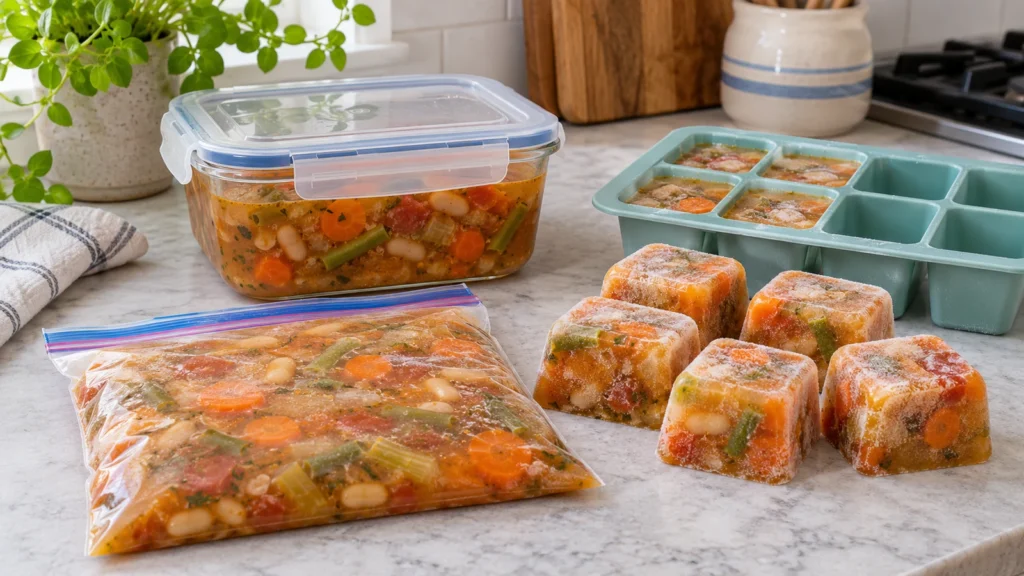
Freezing homemade soup in small portions makes it easier to enjoy a meal without thawing a whole pot. The key is to cool it safely, pack it with room to expand, and protect it from excess air.
How to Freeze Soup: Quick Answer
Cool soup promptly in shallow portions, then pack it in freezer-safe containers, bags, or silicone trays. Leave room for expansion and seal it well to protect its flavor and texture.
- Divide the soup into shallow containers or set the pot in an ice-water bath, stirring to help it cool quickly.
- Refrigerate promptly; do not leave the soup at room temperature for more than 2 hours, or 1 hour if it is above 90°F (32°C).
- Once chilled, portion the soup into freezer-safe packaging, leaving space for expansion and removing excess air where possible.
- Seal and label each portion with its contents and freezing date, then freeze at 0°F (-18°C) or below.
- Thaw safely in the refrigerator, in cold water, or in the microwave, and reheat to 165°F (74°C).
Before You Start: Prepare Soup for the Freezer
- Cool it promptly: A deep pot cools slowly. Divide soup into shallow containers or stir it in an ice-water bath, then refrigerate promptly. Hot food can go into the refrigerator in shallow containers; there is no need to wait for it to reach room temperature.
- Choose your portions: Pack the amount you normally eat in one meal. A small container works well for one person, while a larger one can hold enough for two. Silicone portions also let you combine several pieces later.
- Pick freezer-safe packaging: Use containers, jars, bags, or trays intended for freezing. If using glass, choose freezer-safe, straight-sided containers and follow the manufacturer's instructions to reduce the risk of breakage.
- Leave expansion room: Soup expands as it freezes. For rigid containers, leave about an inch of space at the top, or follow the container maker's directions. Avoid filling bags and tray cavities to the brim.
- Consider delicate ingredients: Pasta, rice, potatoes, and some vegetables can soften after freezing. Dairy may separate. If practical, freeze the soup base and add delicate ingredients or cream when reheating.
Best Ways to Freeze Soup in Small Portions
Freezer-safe containers are sturdy and easy to stack. Bags save space when frozen flat, while silicone trays offer flexible portions that can be combined for a larger meal.
Start each method with promptly cooled, chilled soup. The best choice depends on your freezer space, the texture of the soup, and how much you want to thaw at once.
How to Freeze Soup in Containers (Sturdy and Stackable)
Best for: One- or two-person meals and chunky soups
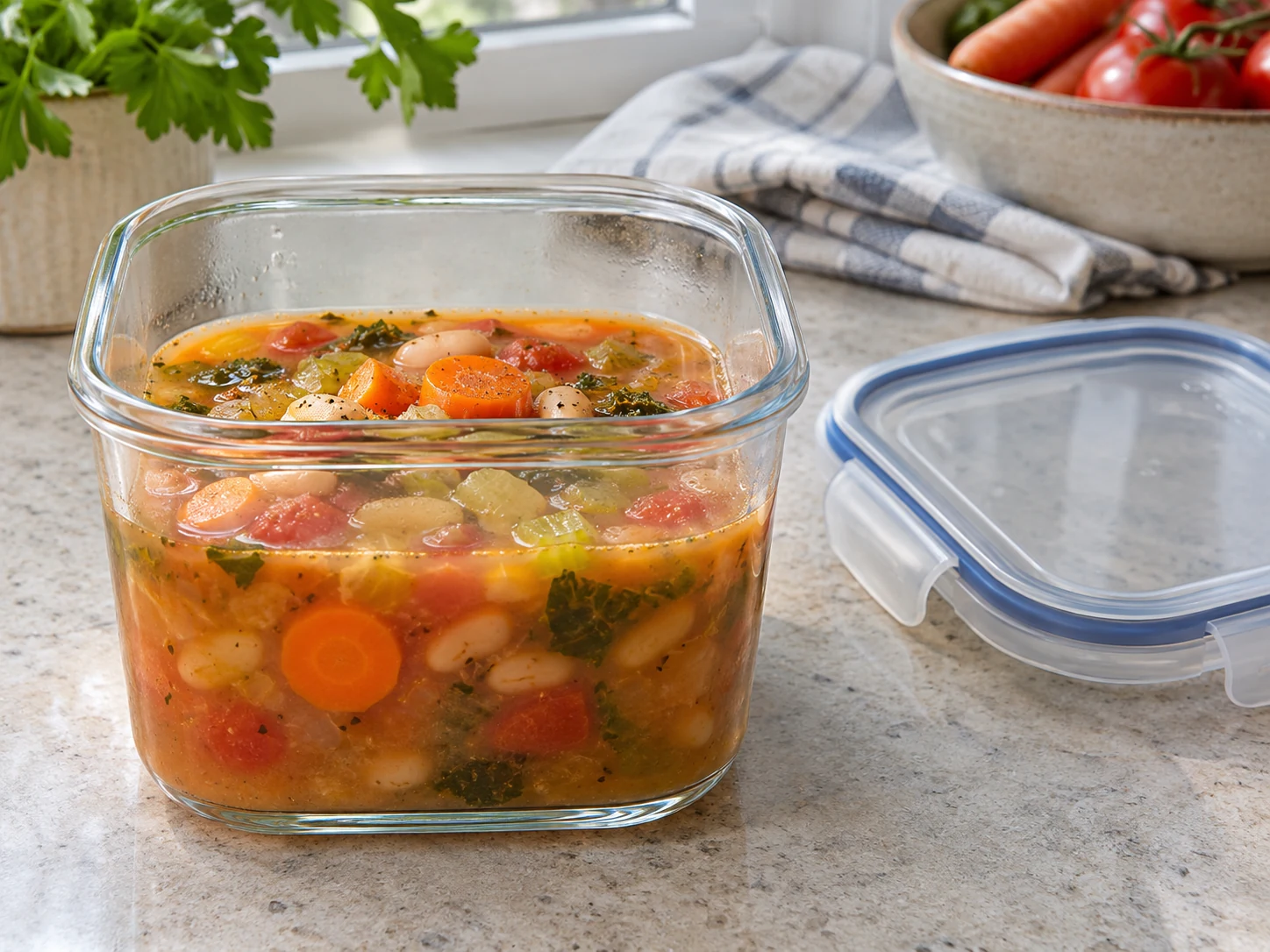
Rigid freezer-safe containers are easy to fill and protect soup from being squashed. Choose a size close to the portion you need, while still leaving room for expansion.
Steps:
- Select clean freezer-safe containers with tight-fitting lids. Check that any glass container is specifically suitable for freezing.
- Ladle in the chilled soup, distributing the broth and solid ingredients evenly between portions.
- Leave about an inch of headspace, or follow the manufacturer's instructions. Wipe the rim so the lid can seal properly.
- Close the lid, label the container with the soup type and date, and place it upright in the freezer.
- Once frozen, stack containers if their shape and lids allow them to sit securely.
Why This Method Works
A well-sealed rigid container limits air exposure and keeps the portion's shape. An appropriately sized container also avoids leaving a large air pocket above the soup.
Tip: Do not move freezer-cold glass directly into a hot oven or hot water. Follow the manufacturer's thawing and heating instructions.
How to Freeze Soup in Bags (Space-Saving)
Best for: Flat storage and thin or moderately chunky soups
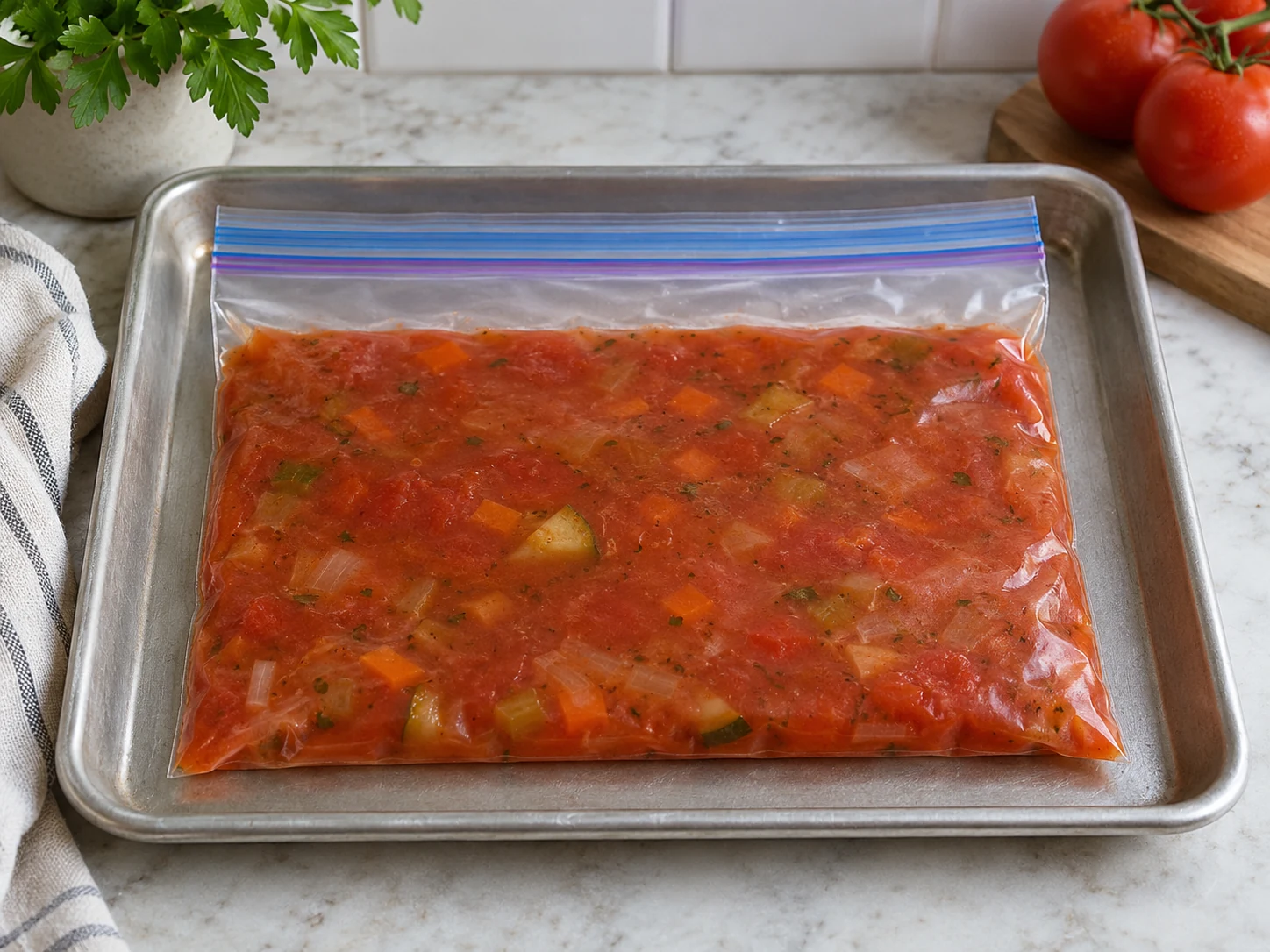
Freezer bags take up little space once the soup is frozen flat. Use bags designed for freezer storage, and support each bag in a bowl while filling it to reduce spills.
Steps:
- Label a clean freezer bag with the soup type and date before filling it.
- Stand the bag in a bowl and fold its opening over the rim. Ladle in one chilled portion without overfilling it.
- Lift the bag out, gently press out excess air, and close the seal securely, leaving enough room for the soup to expand.
- Lay the bag flat on a rimmed tray, arranging it so the soup forms an even layer and checking for leaks.
- Freeze until firm, then remove the tray and stack the bags flat or stand them upright in a freezer bin.
Why This Method Works
A thin, flat package uses freezer space efficiently and can thaw more evenly than a deep block. Removing excess air also helps limit freezer burn.
Tip: Place the bag inside a bowl or on a plate while thawing in the refrigerator in case the seal leaks. Avoid bags with holes or damaged seams.
How to Freeze Soup in Silicone Trays (Flexible Portions)
Best for: Small servings and mixing portions to suit one or two people
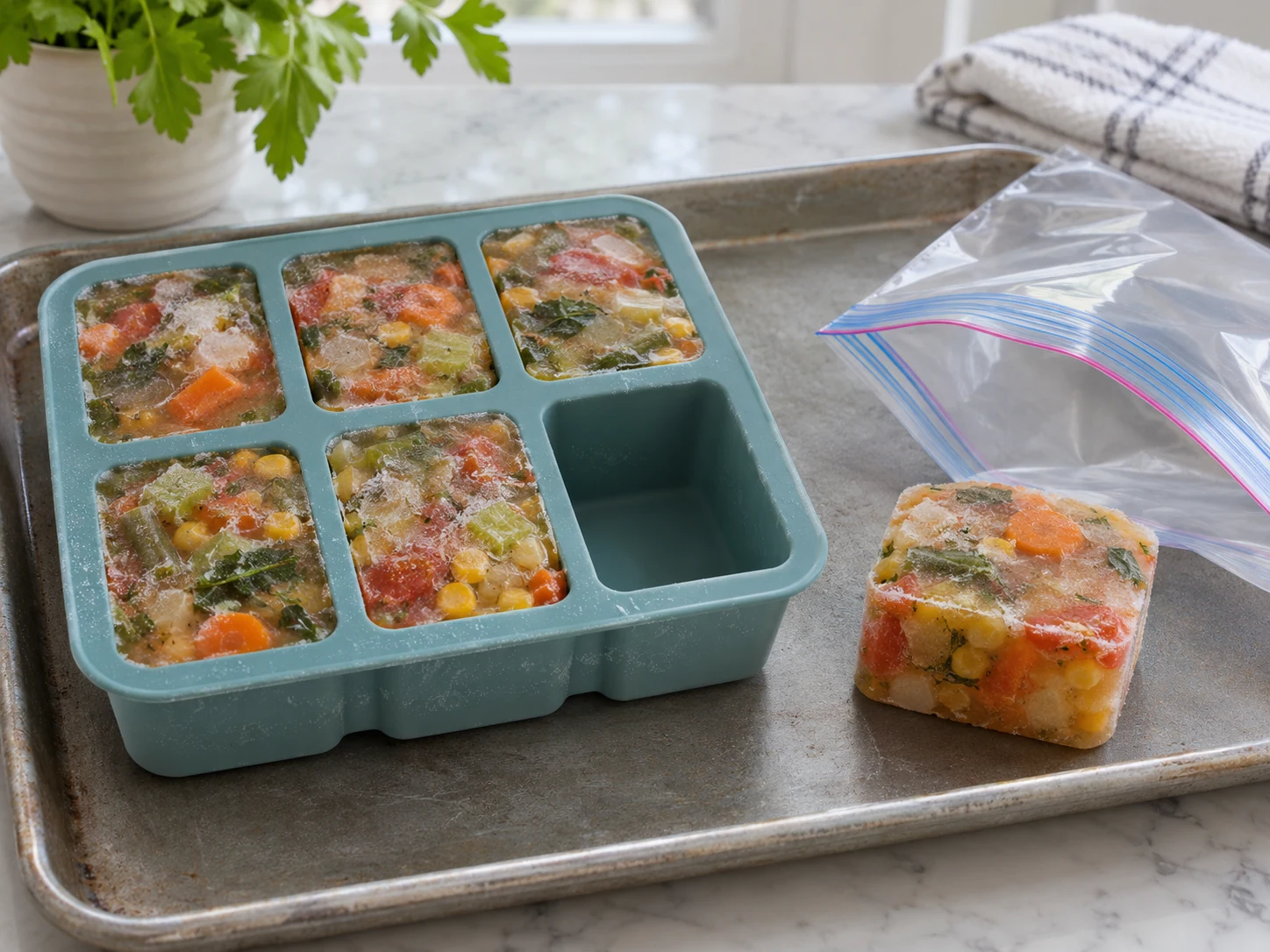
A freezer-safe silicone tray makes separate blocks or cubes that you can store together in a sealed freezer bag or container. This is useful when you want a small serving or need to combine portions.
Steps:
- Place a clean freezer-safe silicone tray on a rigid baking sheet so it is easy to carry without spilling.
- Spoon chilled soup into the cavities, leaving space at the top for expansion and following the tray manufacturer's instructions.
- Cover with the tray's freezer-safe lid or a suitable freezer-safe covering, then place the baking sheet in the freezer.
- Once the soup is completely firm, remove the frozen portions from the tray.
- Transfer them promptly to a labeled freezer bag or airtight freezer-safe container. Press excess air from the bag, seal it, and return the portions to the freezer.
Why This Method Works
The tray creates manageable portions, and the flexible silicone helps release them. Sealed outer packaging protects the portions from drying out during storage.
Tip: For chunky soup, divide the solids and broth evenly so each frozen portion contains a useful mix.
How Long Does Frozen Soup Keep?
For best quality, use frozen soups and stews within about 2 to 3 months. Soup kept continuously frozen at 0°F (-18°C) or below remains safe longer, but flavor and texture may decline. Freezing time varies with portion size, packaging, freezer load, and appliance performance.
- How to Freeze Soup in Containers (Sturdy and Stackable): Allow several hours or overnight to freeze, depending on portion size, container shape, and freezer conditions.
- How to Freeze Soup in Bags (Space-Saving): A flat bag may freeze within several hours; thicker portions and crowded freezers can take longer.
- How to Freeze Soup in Silicone Trays (Flexible Portions): Allow several hours or overnight for the portions to freeze solid; larger cavities generally take longer.
Common Problems and Easy Fixes
Why does the soup have dry or icy patches?
- These can be signs of freezer burn, which affects quality rather than making continuously frozen food unsafe. Trim off affected areas if practical, or discard the portion if the flavor is poor.
- Next time, use airtight freezer packaging, press excess air from bags, and transfer frozen tray portions to a sealed bag or container promptly.
Why did the container crack or leak?
- Discard soup contaminated with broken glass or packaging fragments; do not try to pick them out.
- Use freezer-safe packaging, leave headspace, and avoid sudden temperature changes with glass. Check bag seals before freezing.
Why is the pasta, rice, or potato mushy?
- Add a freshly cooked portion when reheating, or use the softened ingredients in a thicker soup where their texture is less noticeable.
- For the next batch, freeze the base separately and add pasta or rice after reheating. Slightly undercooked vegetables may also hold their shape better.
Why did a creamy soup separate?
- Reheat gently and stir well; a brief blend may help bring some soups back together.
- Next time, freeze the soup before adding cream or milk, then stir it in during reheating.
What if the soup was left out too long?
- Discard perishable soup left at room temperature for more than 2 hours, or more than 1 hour when the temperature is above 90°F (32°C).
- For future batches, divide the soup into shallow portions and refrigerate promptly, or use an ice-water bath to speed cooling.
Frequently Asked Questions About Freezing Soup
Can I put hot soup straight into the refrigerator?
Yes. Divide it into shallow containers so it cools more quickly, rather than refrigerating a deep pot. You can also stir the soup in an ice-water bath before refrigerating it. Follow your container manufacturer's guidance, especially for glass.
How much space should I leave in a soup container?
Leave about an inch at the top of a rigid container, or follow its manufacturer's directions. Soup expands as it freezes, so do not fill bags or silicone cavities to the brim either.
What is the safest way to thaw frozen soup?
Thaw it in the refrigerator, in a leakproof package submerged in cold water, or using the microwave's defrost setting. Change cold water every 30 minutes. Cook or reheat soup thawed in cold water or the microwave immediately.
Can I reheat soup without thawing it first?
Yes, if you can safely remove it from its packaging. Heat it in a saucepan over gentle heat, stirring as it loosens, or use a microwave-safe dish and stir during heating. Bring soup to a rolling boil and check that it reaches 165°F (74°C) throughout.
How should I reheat thawed soup?
Heat it in a saucepan or a microwave-safe dish, stirring to distribute the heat. Bring soup to a rolling boil and check it reaches 165°F (74°C) throughout. Microwave power and portion size affect the time, so check the temperature rather than relying on a set time.
Can I freeze soup containing cream or milk?
Yes, though dairy can separate or become grainy. If you have not added it yet, freeze the soup base and add the dairy when reheating. Stir gently if a thawed creamy soup separates.
Can I freeze soup with noodles or rice in it?
Yes, but noodles and rice may absorb broth and become soft. For the best texture, freeze the soup base separately and add freshly cooked noodles or rice when serving.
Can I refreeze thawed soup?
Soup thawed safely in the refrigerator can be refrozen without reheating, although its quality may decline. If thawed in cold water or the microwave, reheat it promptly before refreezing. Discard it if it has been left out beyond the safe time limits.
How long can soup stay in the refrigerator before freezing?
Refrigerate cooked soup promptly and freeze it within 3 to 4 days. If you know you will not eat it soon, freezing it earlier can help preserve quality.
To choose the most convenient approach, consider how much soup you eat at once, how much freezer space you have, and whether the soup contains delicate ingredients such as pasta or cream.
With prompt cooling, secure packaging, and a date on each portion, you can keep homemade soup ready for a convenient meal while protecting its texture and flavor.