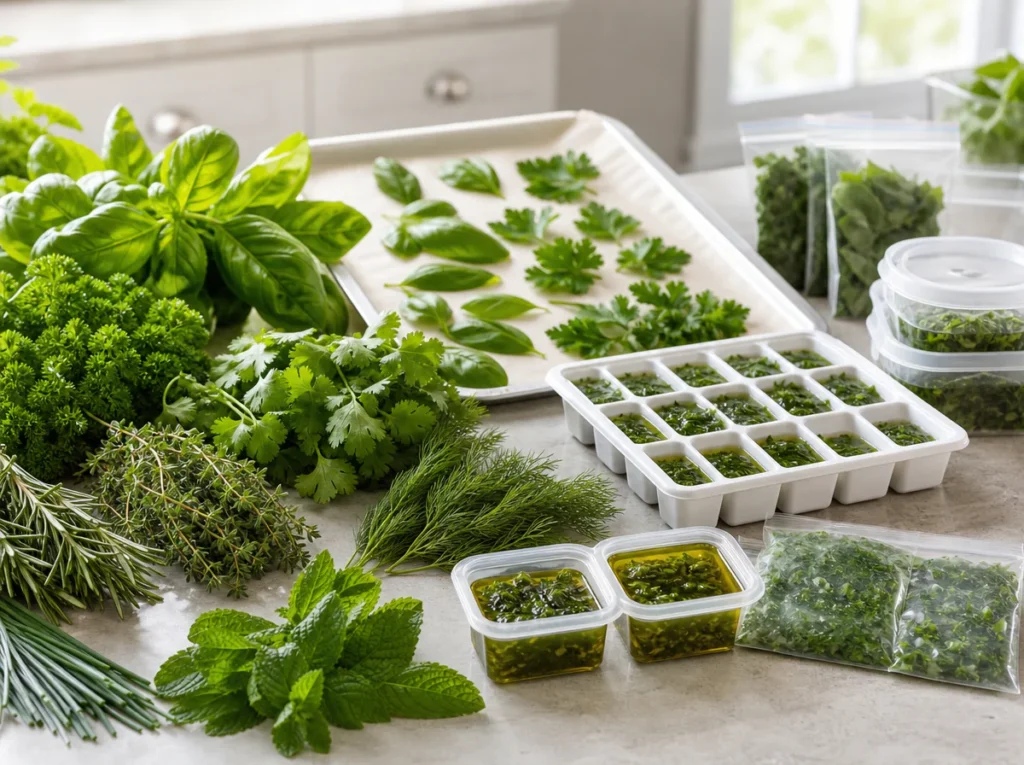
Learning how to freeze fresh herbs is an easy way to reduce waste and keep garden flavor available for future meals. Herbs can be frozen as whole leaves, chopped portions, flavored cubes, or smooth herb paste, depending on how you plan to use them.
How to Freeze Fresh Herbs (Quick Answer)
For the best results, wash the herbs gently, dry them completely, remove damaged leaves, and freeze them in airtight portions. Use frozen herbs directly in cooked dishes because most varieties become soft after thawing.
- Remove wilted or damaged leaves.
- Rinse the herbs gently in cool water.
- Dry them thoroughly with a clean towel or salad spinner.
- Leave the herbs whole or chop them for your preferred method.
- Pack them in freezer bags, containers, or ice cube trays.
- Label and freeze for up to 6 months for the best flavor.
Before You Freeze Fresh Herbs
- Choose fresh herbs without dark, slimy, or wilted leaves.
- Dry the herbs completely to reduce ice crystals.
- Freeze herbs as soon as possible after buying or harvesting them.
- Divide herbs into small recipe-size portions.
- Expect most frozen herbs to become soft after thawing.
- Use frozen herbs mainly in soups, sauces, stews, and cooked meals.
Best Ways to Freeze Fresh Herbs
The best freezing method depends on the type of herb and how you plan to cook with it. Hardy herbs such as rosemary, thyme, sage, and oregano freeze well as whole leaves or sprigs.
Tender herbs such as basil, parsley, cilantro, dill, mint, and chives often keep more flavor when chopped and frozen in water, oil, or small prepared portions.
How to freeze whole herb leaves (Best Overall)
Best for: parsley, cilantro, dill, mint, basil leaves, small portions
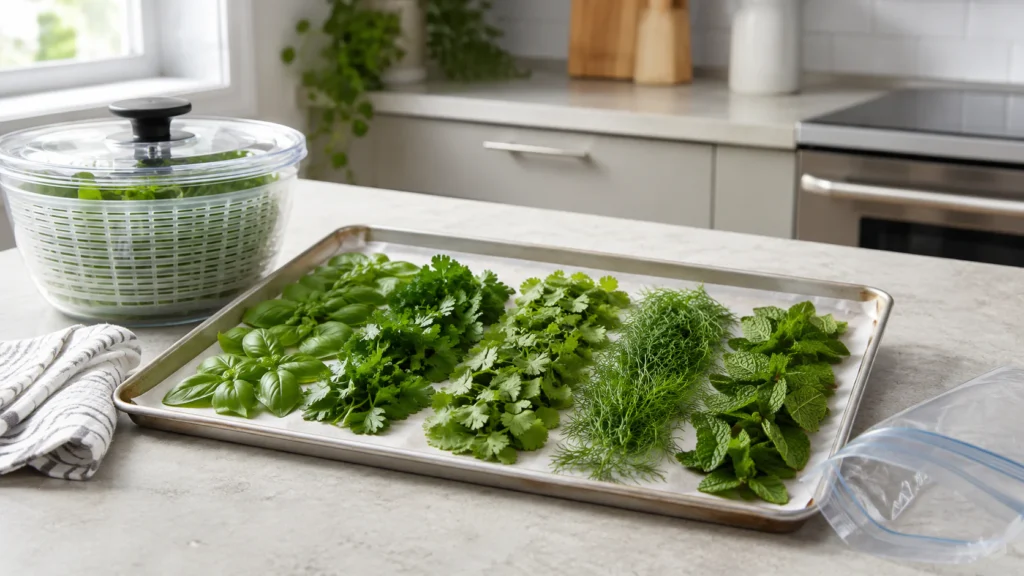
Freezing whole leaves keeps preparation simple and allows you to remove only the amount needed for a recipe. Flash freezing the herbs first helps prevent them from forming one large frozen clump.
This method works best when the leaves are completely dry before they enter the freezer.
Steps:
- Wash the herbs gently and remove damaged leaves.
- Dry them thoroughly with a towel or salad spinner.
- Remove the leaves from thick stems if desired.
- Spread the leaves in one layer on a parchment-lined tray.
- Freeze for 1 to 2 hours, until firm.
- Transfer the frozen leaves to an airtight freezer bag.
Why This Method Works
Flash freezing keeps the leaves separate so you can easily take out a small amount without thawing the entire batch.
Tip: Press excess air from the freezer bag before sealing it to protect the herbs from freezer burn.
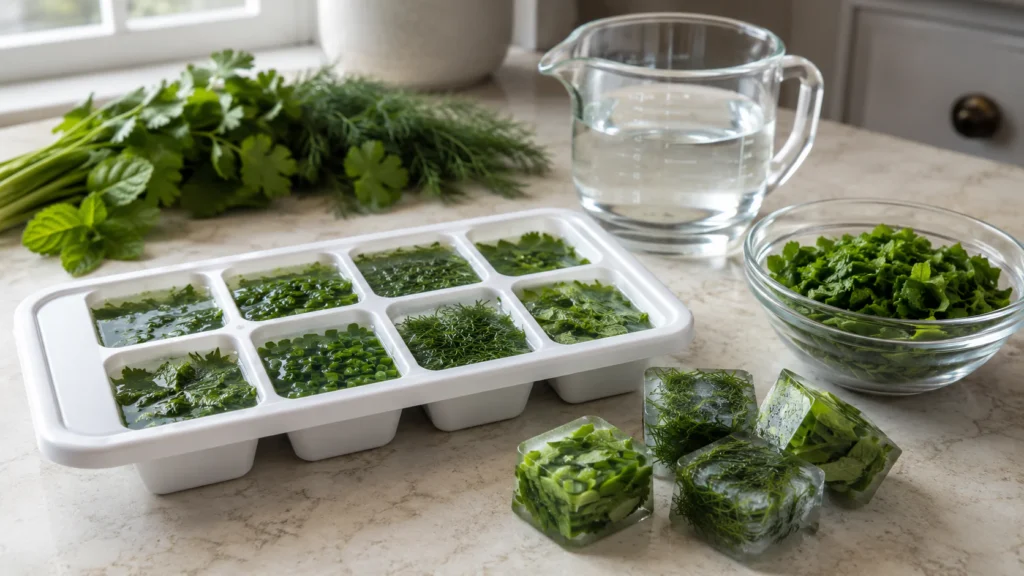
How to freeze chopped herbs in water (Best for Soups and Sauces)
Best for: parsley, cilantro, dill, mint, chives, soups, stews
Freezing chopped herbs in water creates convenient portions that can go directly into soups, sauces, rice, and other cooked dishes. The water protects the herbs from freezer air.
This method is especially useful when you regularly cook recipes that need small amounts of fresh herbs.
Steps:
- Wash and dry the herbs thoroughly.
- Remove thick stems and chop the leaves.
- Fill each ice cube compartment about halfway with herbs.
- Add enough water to cover the herbs.
- Freeze until solid.
- Transfer the cubes to a labeled freezer bag.
Why This Method Works
The frozen water surrounds the chopped herbs and helps preserve their color, aroma, and moisture until they are added to a cooked dish.
Tip: Add the frozen cubes directly to hot soups or sauces without thawing them first.
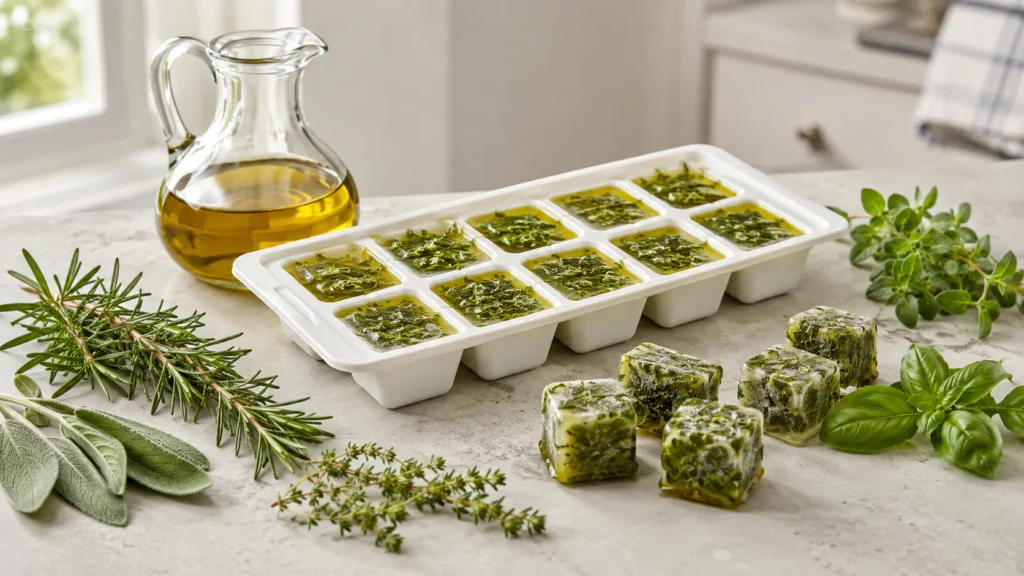
How to freeze fresh herbs in oil (Best for Sautéing)
Best for: rosemary, thyme, sage, oregano, basil, skillet meals
Herbs frozen in oil are convenient for starting sauces, roasted vegetables, soups, and skillet meals. The oil helps protect the herbs while creating ready-to-use cooking portions.
Choose a mild cooking oil so the flavor does not overpower the herbs.
Steps:
- Wash and completely dry the herbs.
- Remove tough stems and chop the leaves.
- Divide the herbs between ice cube tray compartments.
- Cover each portion with a small amount of oil.
- Freeze until completely solid.
- Move the cubes to an airtight labeled freezer bag.
Why This Method Works
The oil coats the chopped herbs and reduces exposure to freezer air while creating convenient portions for cooked recipes.
Tip: Keep the herb and oil mixture frozen until cooking, and do not leave the cubes at room temperature.
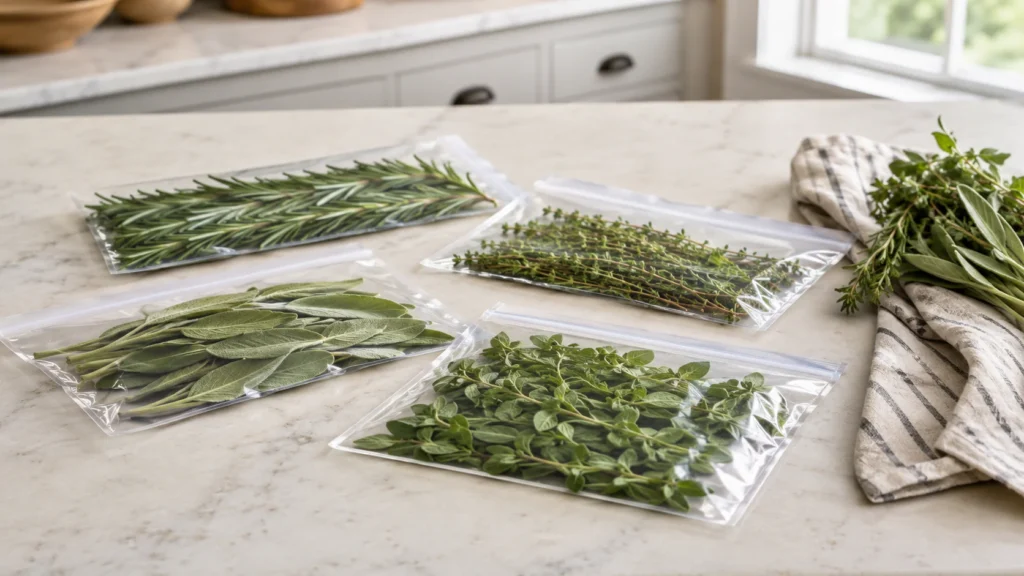
How to freeze herb sprigs in freezer bags (Best for Hardy Herbs)
Best for: rosemary, thyme, sage, oregano, savory herbs
Hardy herbs can be frozen as complete sprigs without much preparation. After freezing, you can remove individual leaves or add the entire sprig to soups, sauces, and roasted dishes.
This method saves time and works well when you want to preserve a large harvest quickly.
Steps:
- Rinse the herb sprigs gently.
- Dry them completely.
- Arrange the sprigs in a single layer inside a freezer bag.
- Press out as much air as possible.
- Seal, label, and lay the bag flat in the freezer.
- Remove individual sprigs as needed.
Why This Method Works
Hardy herb leaves contain less moisture than many tender herbs, so they hold their flavor and shape relatively well during freezing.
Tip: Crush the frozen sprigs gently inside the bag when you need loose leaves for cooking.
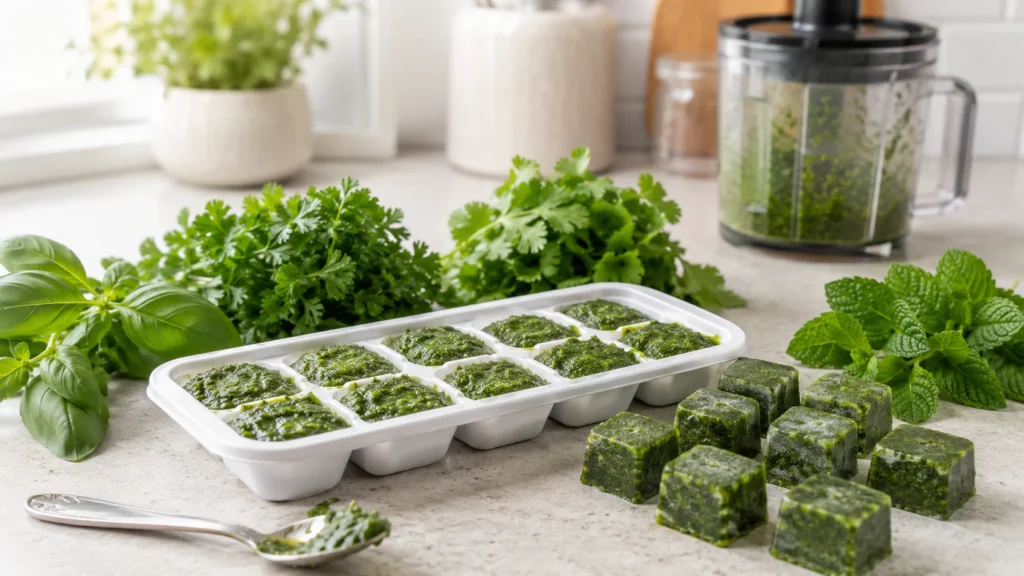
How to freeze fresh herb paste (Best for Large Batches)
Best for: basil, cilantro, parsley, mint, sauces, marinades
Turning herbs into a simple paste is a practical way to freeze a large amount in a compact form. The paste can be portioned into small cubes and added directly to sauces, soups, marinades, or cooked grains.
Keep the paste simple so it can be used in different recipes later.
Steps:
- Wash the herbs and dry them completely.
- Remove thick or woody stems.
- Blend the herbs with a small amount of water or cooking oil.
- Spoon the paste into an ice cube tray.
- Freeze until solid.
- Transfer the cubes to a labeled airtight freezer bag.
Why This Method Works
Blending reduces the volume of the herbs and creates measured portions that are easy to add directly to cooked dishes.
Tip: Freeze different herb varieties separately so their flavors remain easy to identify and combine.
How Long Can You Freeze Fresh Herbs?
- Whole herb leaves: About 4 to 6 months
- Herbs frozen in water: About 4 to 6 months
- Herbs frozen in oil: About 3 to 6 months
- Hardy herb sprigs: About 6 months
- Herb paste: About 3 to 6 months
- Flash-freezing time: About 1 to 2 hours
Common Problems and Fixes
The frozen herbs turn dark
- Freeze herbs as soon as possible after washing and drying.
- Remove as much air as possible from freezer bags.
- Use water or oil cubes for herbs that discolor easily.
The herbs are covered with ice crystals
- Dry the herbs completely before freezing.
- Use airtight freezer bags or containers.
- Keep the freezer temperature steady.
The herbs become soft after thawing
- Use them directly in cooked recipes.
- Do not expect frozen herbs to replace fresh herbs in garnishes.
- Add them near the end of cooking when possible.
The herbs have little flavor
- Freeze only fresh, strongly scented herbs.
- Use them within 4 to 6 months.
- Add an extra small portion to the recipe if needed.
The frozen herb cubes are stuck in the tray
- Let the tray rest at room temperature for about one minute.
- Gently twist the tray to release the cubes.
- Transfer frozen cubes to a bag soon after they become solid.
Frequently Asked Questions
What is the best way to freeze fresh herbs?
Wash and dry the herbs thoroughly, flash freeze the leaves on a tray, and transfer them to an airtight freezer bag. Chopped herbs can also be frozen in water or oil.
Can you freeze fresh herbs?
Yes. Most fresh herbs can be frozen, although they usually become soft after thawing and are best used in cooked recipes.
Should you wash fresh herbs before freezing?
Yes. Rinse them gently and remove dirt or damaged leaves, then dry them completely before freezing.
Can you freeze fresh herbs without blanching?
Yes. Most herbs do not need to be blanched before freezing. Washing, drying, and airtight storage are usually enough.
Can you freeze fresh basil?
Yes. Basil can be frozen as whole leaves, chopped in oil, or blended into a paste. The leaves may darken and soften after thawing.
Can you freeze fresh parsley?
Yes. Freeze parsley leaves on a tray or chop them and freeze them in water cubes for soups, sauces, and cooked dishes.
Can you freeze fresh cilantro?
Yes. Cilantro freezes well when chopped and stored in water cubes or small airtight portions. Its texture will be softer after thawing.
Can you freeze rosemary and thyme?
Yes. Rosemary and thyme can be frozen as complete sprigs in airtight freezer bags and added directly to cooked recipes.
Can you freeze herbs in olive oil?
Yes. Chop clean, dry herbs, cover them with oil in an ice cube tray, and keep the cubes frozen until they are added to a cooked dish.
Do frozen herbs need to be thawed before cooking?
No. Frozen leaves, sprigs, and herb cubes can usually be added directly to soups, sauces, stews, and skillet meals.
How long do fresh herbs last in the freezer?
Most frozen herbs keep their best flavor for approximately 4 to 6 months when stored in airtight packaging.
Can frozen herbs be used as a fresh garnish?
Frozen herbs usually become soft, so they are better for cooking than garnishing. Use fresh herbs when appearance and crisp texture are important.
Tell me which herbs you have, how much you want to freeze, and which recipes you plan to make, and I can suggest the best freezing method and portion size.
With thorough drying, small portions, and airtight storage, frozen herbs can keep useful flavor ready for soups, sauces, stews, and everyday cooking.