Anti-inflammatory Diet Recipes: Ginger Chicken Stir-Fry
This simple stir-fry uses ginger, turmeric, and garlic to add anti-inflammatory flavor without fuss, following Nutritional Pyramid 2026–2030 principles for more vegetables and whole-food swaps.
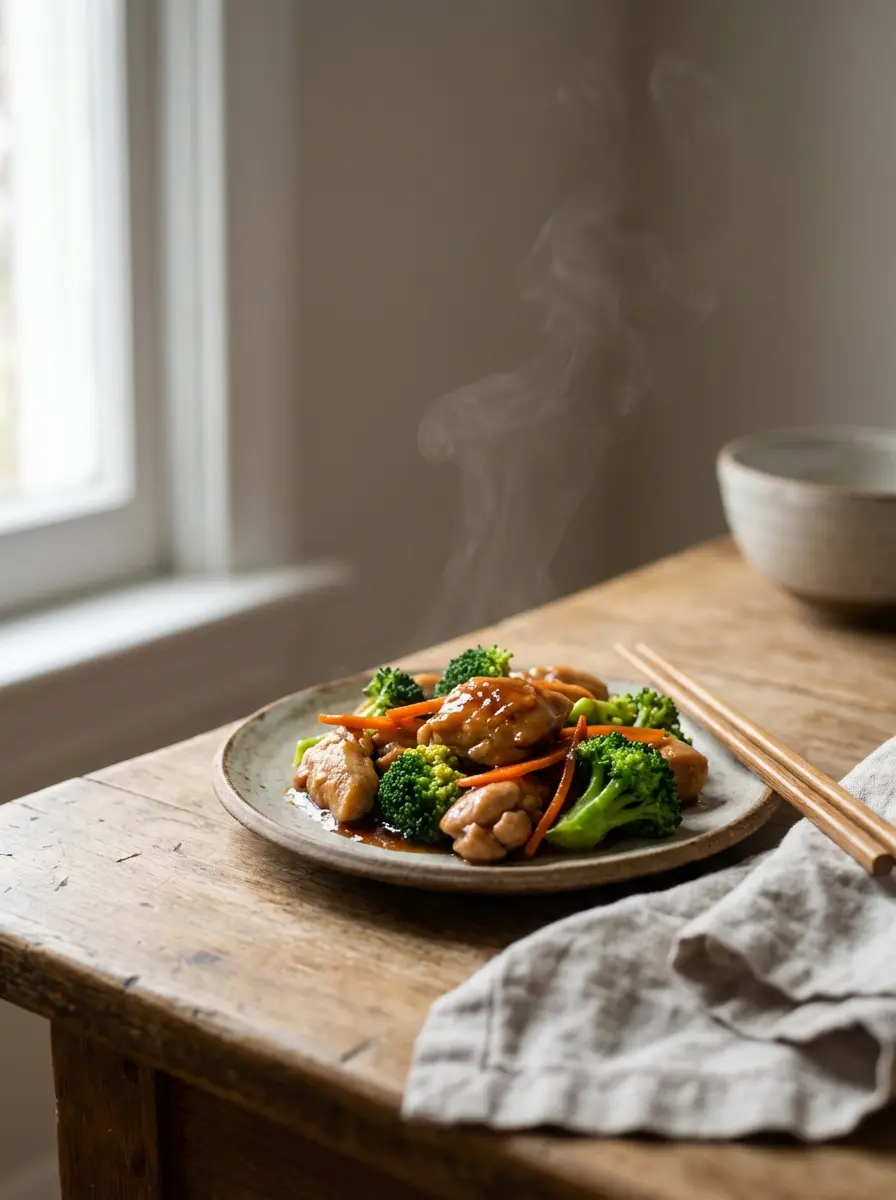
Cooking for one or two is easier when the recipe is sized right and uses common pantry staples. This recipe keeps things flexible: slice the chicken thin for quicker cooking, or use pre-cooked chicken to save time.
The textures are soft and tunable. Steam the broccoli more if you prefer it very tender and use a little extra broth to keep the sauce light and easy to swallow.
Ingredients You’ll Need
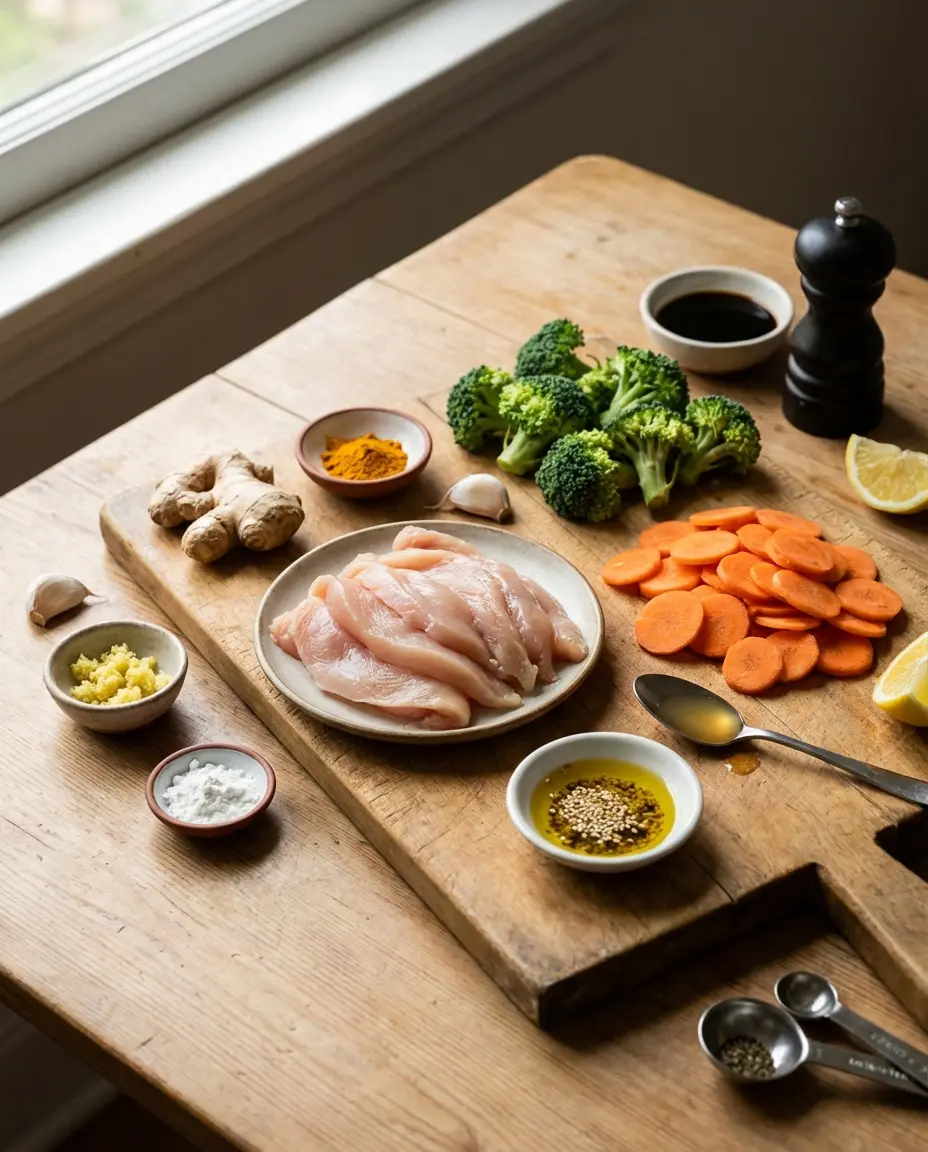
- 8–10 oz (225–285 g) boneless skinless chicken thigh or breast, thinly sliced
- 1 tablespoon extra-virgin olive oil
- 1 teaspoon fresh ginger, grated (or 1/2 teaspoon ground ginger)
- 1 garlic clove, minced
- 1/2 teaspoon turmeric (optional, for extra anti-inflammatory benefit)
- 1 small head broccoli, cut into small florets (about 2 cups)
- 1 small carrot, thinly sliced (optional, for color and fiber)
- 2 tablespoons low-sodium soy sauce or tamari
- 1 tablespoon low-sodium chicken or vegetable broth (plus extra if needed)
- 1 teaspoon rice vinegar or lemon juice
- 1 teaspoon toasted sesame oil or more olive oil (for flavor)
- Freshly ground black pepper, to taste
- 1 teaspoon cornstarch mixed with 1 tablespoon water (optional, to thicken)
You can serve this ginger chicken stir-fry with a small side of soft brown rice, mashed potatoes, or soft bread if you like.
Step-by-Step Recipe

- Pat the chicken dry and slice thin across the grain so pieces cook quickly and stay tender.
- Mix soy sauce, broth, rice vinegar, turmeric (if using), and cornstarch slurry in a small bowl and set aside.
- Heat the olive oil in a medium nonstick skillet over medium heat, add grated ginger and minced garlic, and stir 20–30 seconds until fragrant without browning.
- Add the chicken in a single layer and cook 2–3 minutes per side until just cooked through, then remove to a plate.
- If needed, add a splash more oil and add the carrot and broccoli, pour in 2–3 tablespoons water or broth, cover, and steam 3–5 minutes until vegetables are tender.
- Return the chicken to the pan, pour the sauce over, and stir gently. Cook 1–2 minutes until the sauce slightly thickens and everything is heated through.
- Finish with toasted sesame oil and freshly ground black pepper, and taste and adjust seasoning or dilute with broth or lemon if you need to limit sodium.
- Serve warm, or spoon the mixture over mashed potatoes or soft rice for an even gentler texture.
Tips and Easy Variations
Make it softer
- Slice chicken thin and cook gently until tender to reduce chewing effort.
- Steam vegetables longer or cut them smaller for easier chewing.
- Serve over soft grains or mashed root vegetables to soften each bite.
Lower sodium and boost flavor
- Use low-sodium tamari or dilute the sauce with extra broth instead of adding salt.
- Add lemon or rice vinegar for brightness instead of salt.
- Use extra grated ginger and herbs to enhance flavor without sodium.
Plant-forward and leftover swaps
- Replace chicken with firm tofu or cooked chickpeas for a plant-based option.
- Use shredded cooked or rotisserie chicken to shorten cook time and simplify prep.
- Add a pinch of black pepper with turmeric to help absorption and more grated ginger for extra anti-inflammatory punch.
Anti-inflammatory highlights
- Turmeric plus black pepper enhances curcumin absorption.
- Fresh ginger adds flavor and gentle anti-inflammatory benefit.
- Choose low-sodium sauces and dilute with broth to control salt.
Storage and Leftovers
Fridge
Refrigerate leftovers in an airtight container for up to 3 days and reheat gently before serving.
Freezer
Freezing is not recommended if you prefer very soft vegetables, as broccoli can become mushy after thawing.
Reheating
Reheat gently in a skillet with a splash of broth to loosen the sauce, or microwave covered until warm.
Conclusion
Try this ginger chicken stir-fry as an approachable way to add anti-inflammatory spices to familiar meals; it’s simple, gentle, and sized for one or two.
The recipe supports Nutritional Pyramid 2026–2030 guidance with more vegetables, whole-food swaps, and mindful fats, making small-portion cooking easy and satisfying.
FAQ
Can I use chicken breast instead of thigh?▶
Yes. Breast works fine—slice thin and avoid overcooking so it stays tender.
How can I make this even easier to chew?▶
Steam the vegetables longer, cut them smaller, and serve the stir-fry over soft grains or mashed potatoes for gentler texture.
Is there a plant-based version?▶
Yes. Swap in firm tofu or cooked chickpeas. Press and cube tofu, then pan-fry lightly before adding the sauce.
How long will leftovers keep?▶
Store in the fridge up to 3 days and reheat gently with a splash of broth to keep the texture soft.
Can I reduce the salt?▶
Yes—use low-sodium tamari, add lemon or rice vinegar for brightness, and dilute the sauce with broth instead of adding more soy sauce.