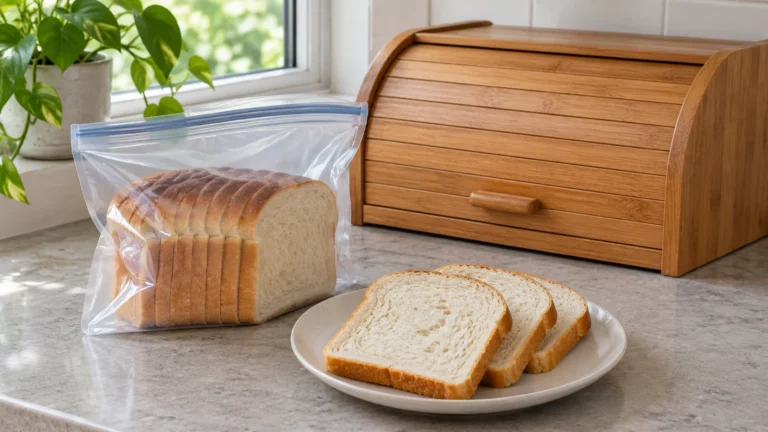
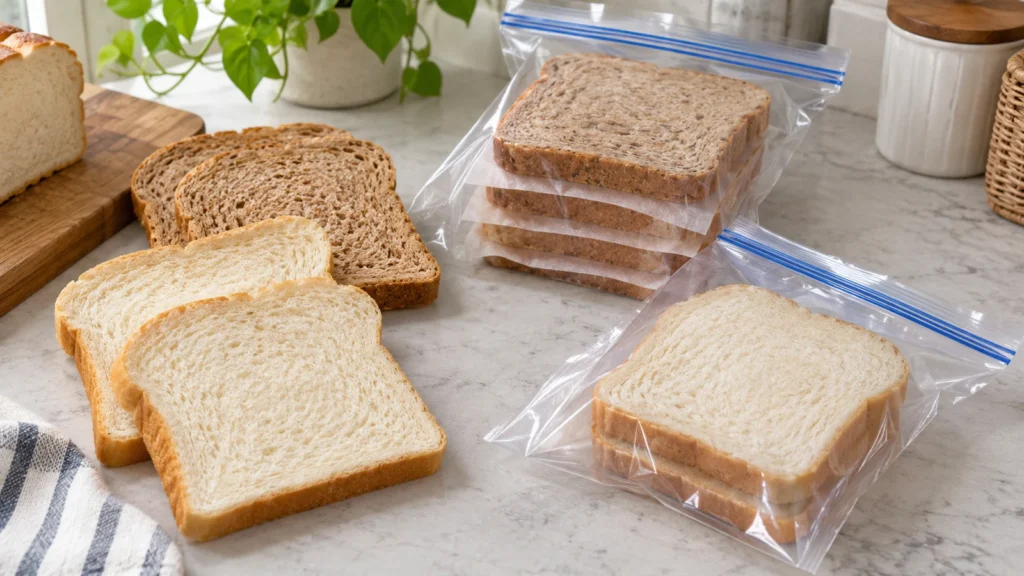
Knowing how to freeze sliced bread makes it easier to keep a loaf on hand without rushing to finish it. Whether your bread is homemade or store-bought, a little preparation helps protect its texture and lets you take out only what you need.
How to Freeze Sliced Bread: Quick Answer
Freeze fresh, completely cool slices in an airtight freezer bag, using parchment between slices if you want to separate them easily. Keep the freezer at 0°F (-18°C) or below, and use the bread within about three months for best quality.
- Start with fresh bread and let homemade loaves cool completely before slicing.
- Divide the slices into portions you are likely to use, or place parchment squares between slices.
- Put the bread in a freezer bag, gently press out excess air, and seal it securely.
- Mark the bag with the date and place it flat in the freezer until the bread is firm.
- Remove only the slices you need; thaw them at room temperature or toast them straight from frozen.
Before You Start: Prepare Bread for the Freezer
- Choose fresh bread: Freeze bread while it still tastes good. Freezing slows further quality loss but will not make stale bread fresh again. If you see mold, discard the entire loaf rather than freezing the unaffected-looking slices.
- Cool homemade bread: Let a freshly baked loaf cool completely before slicing and packing it. Trapped warmth can create condensation, which may turn into ice crystals and leave the bread damp when thawed.
- Slice to suit your meals: Cut homemade bread into the thickness you normally use. Similar-sized slices freeze and toast more evenly, and you will not need to cut a frozen loaf.
- Use freezer-ready packaging: Choose a sturdy, resealable freezer bag or another airtight freezer-safe container. A thin bread wrapper alone offers less protection from dry freezer air.
- Plan for small portions: For one or two servings, pack two to four slices together. Smaller portions mean you can leave the rest sealed and frozen.
Best Ways to Freeze Sliced Bread
White and whole wheat bread can be frozen using the same basic approaches. Choose parchment for easy separation, small bags for ready-to-use portions, or a tray for slices that tend to stick together.
For every method, protect the bread from air and moisture. Write the freezing date on the outer package so you can use older bread first.
How to Freeze Bread With Parchment Between Slices (Easy Separation)
Best for: Taking one or two slices from a larger stack
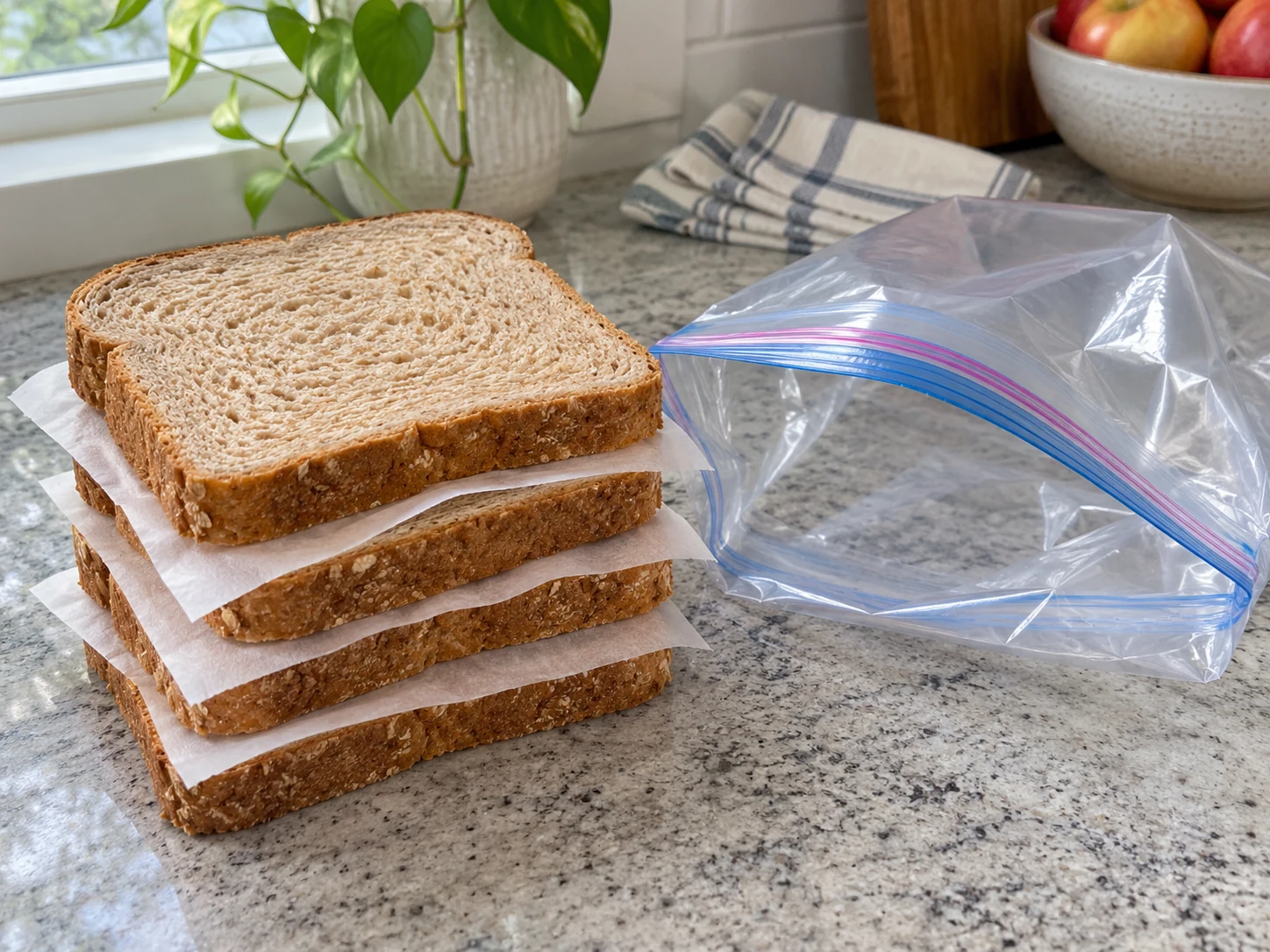
Parchment creates a simple barrier between slices, so you can remove what you need without pulling the whole stack apart. This is useful for homemade bread and soft store-bought loaves.
Steps:
- Cut pieces of parchment roughly the size of the bread slices.
- Stack the cool slices with one parchment piece between each pair. Keep the stack small enough to fit comfortably in a freezer bag.
- Slide the stack into the bag without crushing it. Press out excess air gently and seal the bag completely.
- Date the bag and freeze it flat. Once firm, store it where the slices will not be crushed.
- When needed, open the bag, lift out the desired slices, and reseal the remaining bread promptly.
Why This Method Works
The parchment limits direct contact between slices, while the sealed freezer bag reduces exposure to dry air. You can remove individual pieces without repeatedly thawing the rest.
Tip: Parchment is a separator, not an airtight wrapper. Keep the entire stack inside a sealed freezer bag.
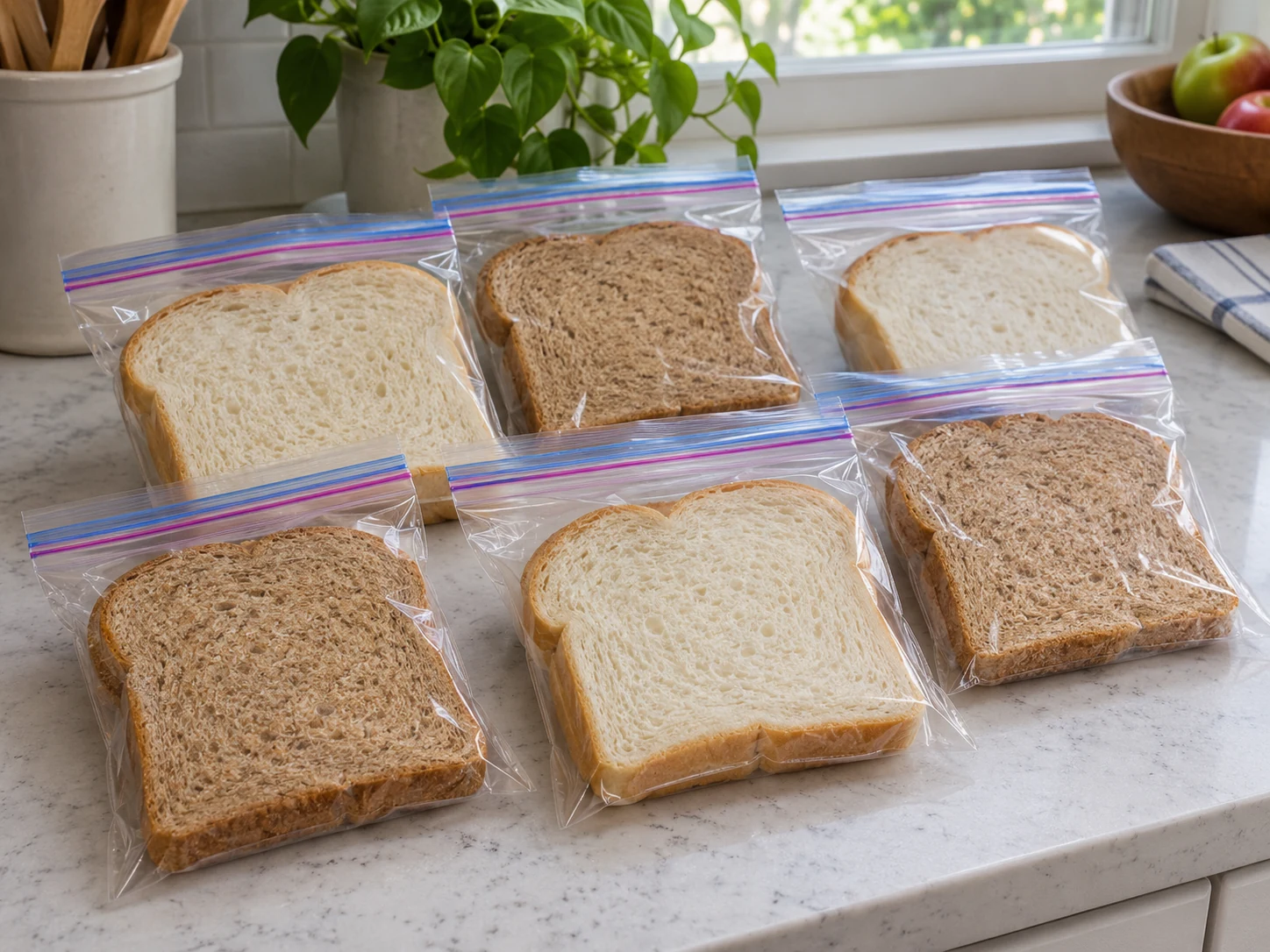
How to Freeze Bread in Small Portions (Ready for One or Two)
Best for: Sandwiches, toast, and quick meals
Separate freezer bags make it easy to pull out just enough bread for a meal. This method also works when you do not have parchment paper.
Steps:
- Count out the number of cool slices you normally use at once, such as two slices for a sandwich.
- Place each portion in a small freezer bag. Keep the slices flat rather than folding or compressing them.
- Press excess air from each bag and close the seal fully. For extra organization, group the sealed portions in a larger freezer bag.
- Date the outer bag or each individual bag, then freeze the portions flat.
- Remove a whole portion when needed, keeping the other bags sealed in the freezer.
Why This Method Works
Each portion stays protected until you need it, reducing the number of times the remaining bread is exposed to air. Small bags also make serving sizes easy to manage.
Tip: Without parchment, slices may stick together. If you need only one slice at a time, use the parchment method or freeze the slices separately on a tray first.
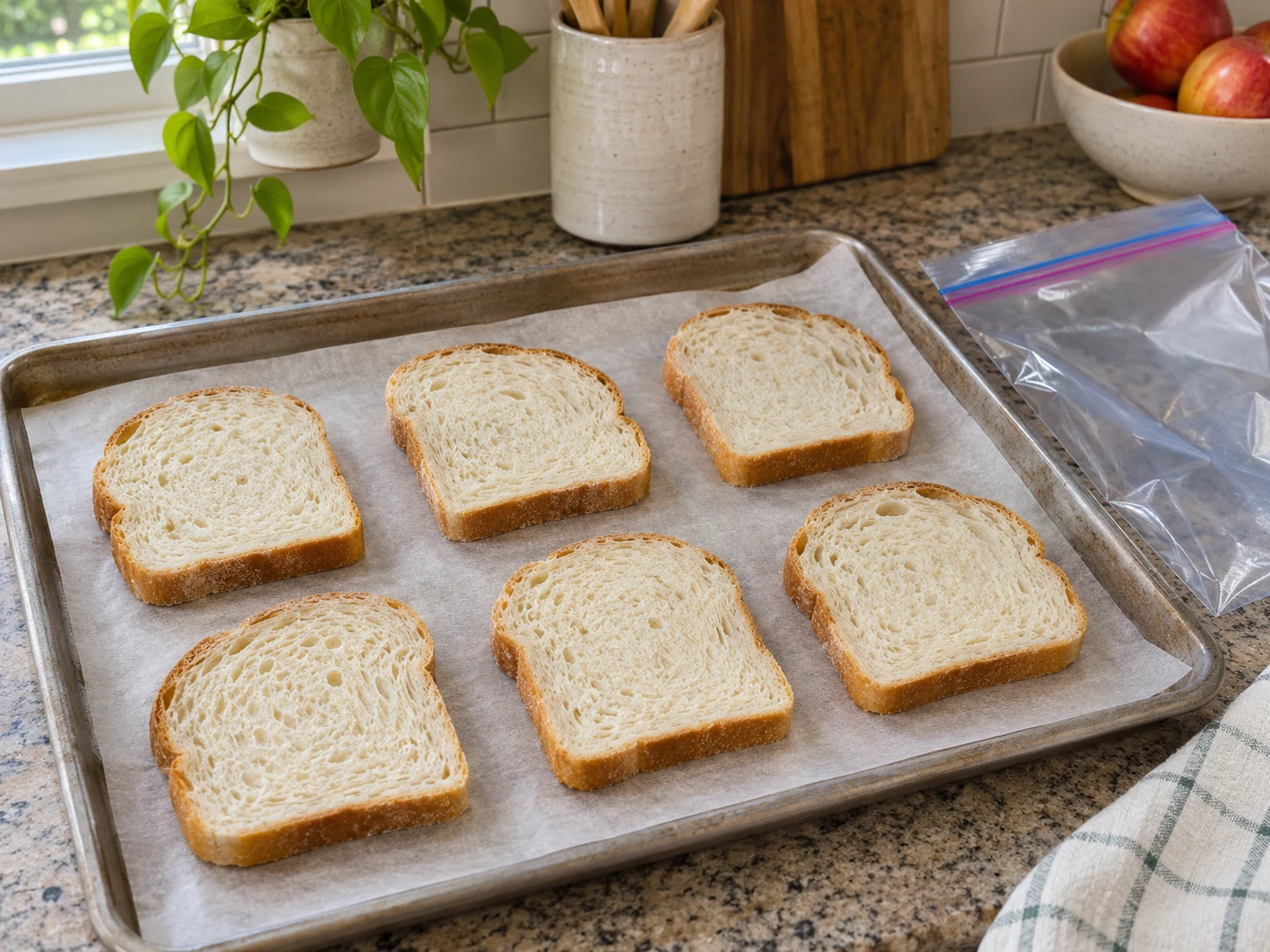
How to Tray-Freeze Bread Slices (Less Sticking)
Best for: Soft slices you want to store loose in one bag
Freezing slices separately on a tray before bagging them helps keep them from clumping. It takes a little more freezer space at first but makes individual slices easy to grab later.
Steps:
- Line a freezer-safe tray or baking sheet with parchment. Arrange cool bread slices in a single layer without overlapping.
- Place the tray level in the freezer until the slices are firm. Check after about an hour; thicker slices or a crowded freezer may need longer.
- Transfer the firm slices promptly to a freezer bag. Press out excess air without breaking the bread, then seal and date the bag.
- Return the bag to the freezer immediately and remove individual slices as needed.
Why This Method Works
The slices become firm before they touch, so they are less likely to freeze together. The sealed bag then provides the longer-term protection the uncovered tray cannot.
Tip: Do not leave the slices uncovered on the tray for long after they are firm; exposed surfaces can dry out.
How Long Does Sliced Bread Last in the Freezer?
For best quality, aim to use frozen sliced bread within about three months. This is a quality guideline, not an exact expiration date: packaging, bread type, and temperature changes affect texture. Bread kept continuously frozen at 0°F (-18°C) or below remains safe beyond that point, but it may become dry or develop freezer burn. Discard bread that was moldy before freezing.
- How to Freeze Bread With Parchment Between Slices (Easy Separation): Allow a few minutes to assemble the stack; freezing time varies with slice thickness and freezer conditions.
- How to Freeze Bread in Small Portions (Ready for One or Two): Packing takes a few minutes; small flat portions generally freeze faster than a thick stack.
- How to Tray-Freeze Bread Slices (Less Sticking): About 1 hour or longer to firm the slices, plus a few minutes to bag them.
Common Problems and Easy Fixes
Why do my bread slices have dry patches or ice crystals?
- Dry patches can be freezer burn, which develops when moisture is lost from exposed areas. Ice crystals may also form when moisture collects inside the package or temperatures fluctuate.
- Use a well-sealed freezer bag, press out excess air, and cool homemade bread completely before packing. Freezer-burned bread is generally safe if it was handled safely, but its texture and flavor may suffer.
Why are the slices stuck together?
- Place parchment between slices before freezing, or freeze them separately on a tray until firm before bagging.
- If a frozen stack is already stuck, gently work a butter knife between the slices on a stable surface. Do not force the blade toward your hand.
Why is thawed bread damp or soggy?
- Bread may have been packed while warm, or condensation may have collected inside the bag. Cool bread fully before freezing.
- For a crisp result, toast the slice directly from frozen. If thawing for a sandwich, let the slice reach room temperature and check that its surface is dry before adding fillings.
Why does my frozen bread taste stale?
- Bread that was stale before freezing will still taste stale afterward. Freeze it while it is fresh and use a well-sealed freezer bag.
- If the bread is safe but dry, try toasting it or using it for breadcrumbs instead of a soft sandwich.
Frequently Asked Questions About Freezing Sliced Bread
Can I freeze bread in its original bag?
You can, but a thin store wrapper may not seal tightly enough for good freezer protection. For better results, place the closed original bag inside a sturdy freezer bag and press out excess air before sealing. If you need individual slices, add parchment or divide the loaf into portions first.
Can I freeze homemade sliced bread?
Yes. Let the loaf cool completely, then slice it and pack it in a freezer bag. Homemade bread can dry out when exposed to air, so seal the bag carefully and remove only the slices you need.
Do white and whole wheat bread freeze differently?
Both freeze well using the same packaging methods. Their textures may differ after thawing depending on the recipe and how fresh the bread was when frozen. Airtight packaging matters for both.
How do I thaw individual bread slices?
Remove the slices you need and let them thaw at room temperature, covered or in a closed bag to limit drying. Thin slices may soften in about 20 to 40 minutes, while thicker slices can take longer. Timing depends on the bread and room conditions.
Can I toast bread directly from frozen?
Yes. Put frozen slices in a toaster or toaster oven using its normal operating instructions. Use the frozen setting if available, or allow extra time and check the bread; thickness and appliance settings affect browning. Never use metal utensils to retrieve bread from a plugged-in toaster.
Can I make a sandwich with frozen bread?
You can thaw slices first for a soft sandwich, or toast them from frozen if you prefer a crisp base. If using frozen slices without toasting, let them soften before eating and avoid adding very wet fillings until you are ready to serve.
Is freezer-burned bread safe to eat?
Freezer burn mainly affects quality, making bread dry or less flavorful. Bread that has remained safely frozen is generally safe to eat, but you may prefer to trim dry areas or use the bread toasted. Discard the entire loaf if it had mold before freezing.
Can I refreeze thawed bread?
Plain bread thawed at room temperature can be refrozen, but repeated freezing and thawing can make it drier. Freezing small portions helps avoid the need. Bread made into a sandwich with perishable fillings needs to be handled according to the storage requirements of those fillings.
Can I microwave a frozen bread slice?
Yes, but use brief bursts and check often. Microwaving can make bread chewy or tough as it cools, and the time varies by appliance and slice thickness. For toast, heating directly in a toaster usually gives a crisper result.
Choose a method based on how many slices you use at once, whether your bread is homemade or store-bought, and how much freezer space you have. Those details will help you decide between parchment, small portions, and tray-freezing.
A good seal and a fresh, completely cool loaf are the essentials. With slices protected and easy to separate, you can enjoy toast or sandwiches without thawing more bread than you need.