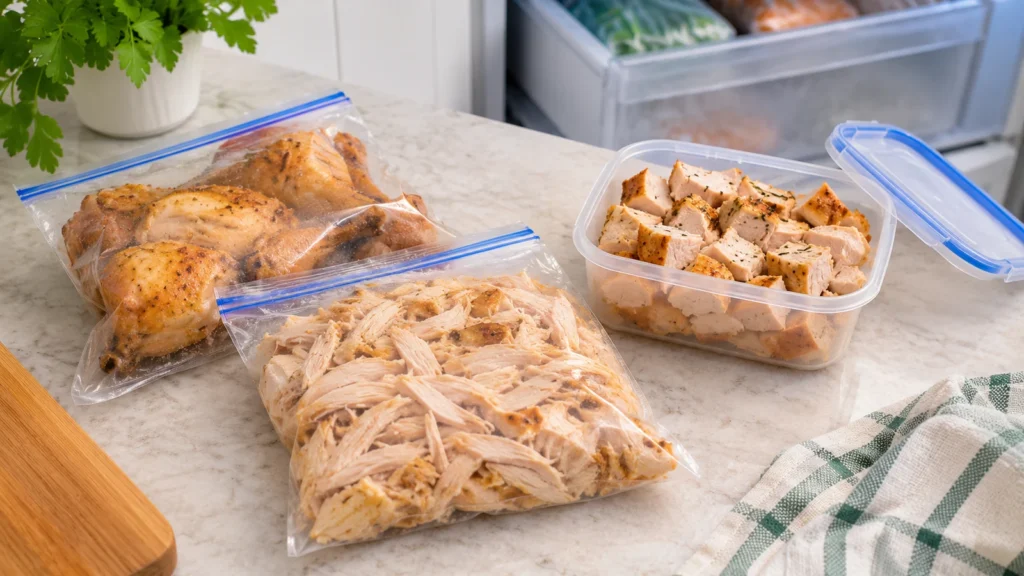
Yes, you can freeze cooked chicken. With prompt chilling and airtight packaging, leftover pieces, shredded chicken, and diced chicken can become convenient meals for one or two without much waste.
Can You Freeze Cooked Chicken? Quick Answer
Chill cooked chicken promptly, divide it into useful portions, and package it tightly before freezing. For the best quality, use frozen cooked poultry within about 2 to 6 months.
- Refrigerate chicken in shallow containers within 2 hours of cooking, or within 1 hour if the surrounding temperature is above 90°F (32°C).
- Once chilled, separate it into whole pieces, shreds, dice, or complete meal-size portions.
- Pack portions in freezer bags or freezer-safe containers, removing as much air as practical. Label each package with its contents and freezing date.
- Freeze at 0°F (-18°C) or below. Thaw safely in the refrigerator, in cold water, or in the microwave, then reheat leftovers to 165°F (74°C).
Before You Start: Prepare Chicken for Freezing
- Start with safe leftovers: Freeze chicken that was cooked safely and refrigerated promptly. If it sat out longer than the limits above, discard it; freezing cannot make it safe again.
- Cool in shallow portions: Divide a large batch or whole cooked bird into smaller pieces and refrigerate in shallow containers. Do not leave it on the counter until completely cool.
- Freeze promptly: If the chicken has been refrigerated, freeze it within 3 to 4 days of cooking. Freezing sooner can help preserve quality.
- Think in meals: Pack only what you expect to use at one time. A small bag for one sandwich or a container for two servings is easier to thaw than a large block.
- Use freezer-ready packaging: Choose freezer bags or containers designed for freezer use. Keep the freezer at 0°F (-18°C) or below, and avoid overfilling it so cold air can circulate.
Best Ways to Freeze Cooked Chicken
The best method depends on how you plan to use the chicken. Bags work well for individual pieces, while a tray-freezing step makes shredded or diced chicken easier to scoop.
For ready-to-eat lunches or chicken with sauce, use small freezer-safe containers. All three methods start with chicken that has been cooled safely in the refrigerator.
How to Freeze Cooked Chicken Pieces in Bags (Easy Storage)
Best for: Drumsticks, thighs, breasts, and other individual cooked pieces
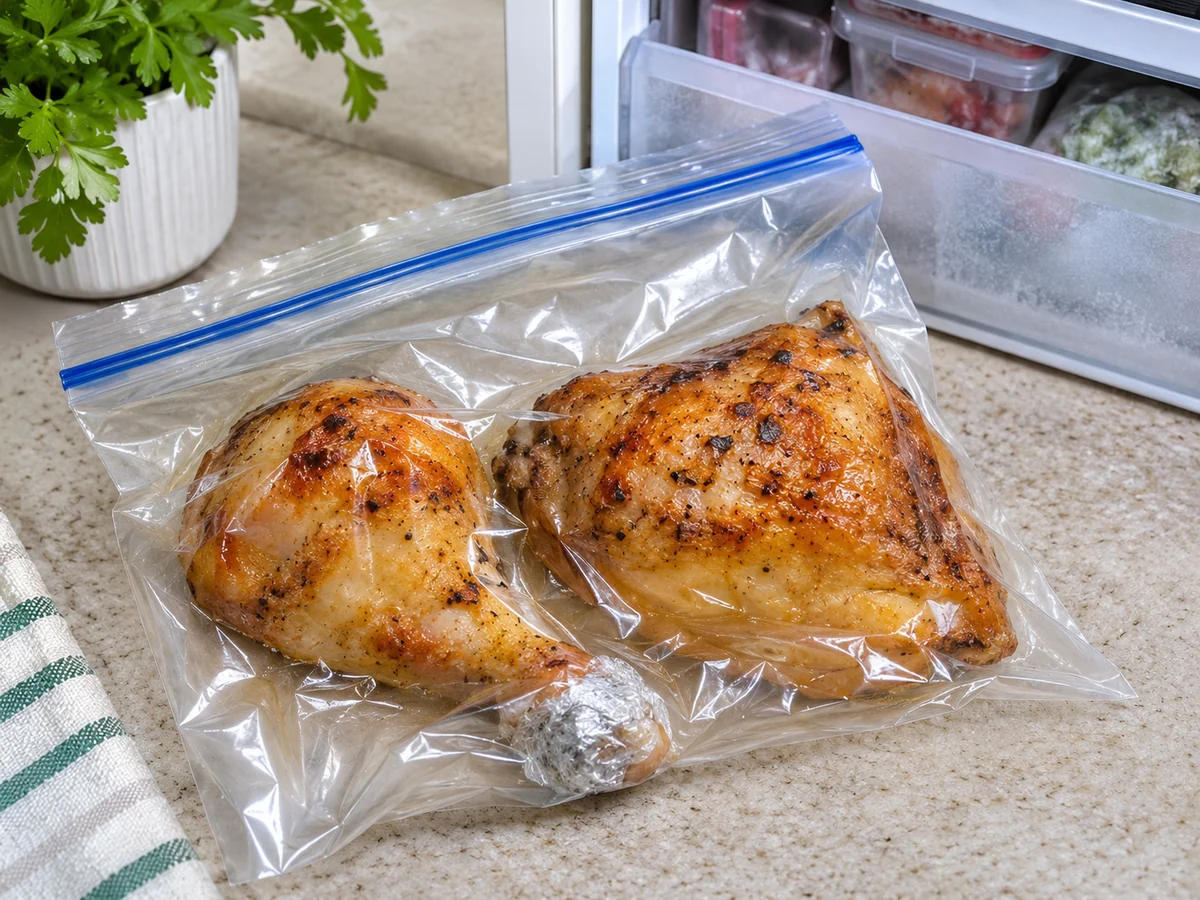
A freezer bag takes up little space and lets you package one or two pieces together. Bone-in and boneless pieces can both be frozen this way.
Steps:
- Separate a cooked whole chicken into smaller pieces before chilling. Remove any stuffing and store it separately.
- Refrigerate the pieces in shallow containers, then transfer a meal-size amount to a freezer bag.
- Arrange the pieces in one layer where practical. Press out as much air as you can without crushing the meat, and seal the bag.
- Label the bag with the contents and date, then lay it flat in the freezer until firm.
Why This Method Works
A small, well-sealed package limits the air around the chicken and makes it easier to thaw only the amount needed. Removing excess air also helps reduce freezer burn.
Tip: Wrap sharp bone ends with a little freezer-safe wrap before bagging so they are less likely to puncture the bag. Check the seal before freezing.
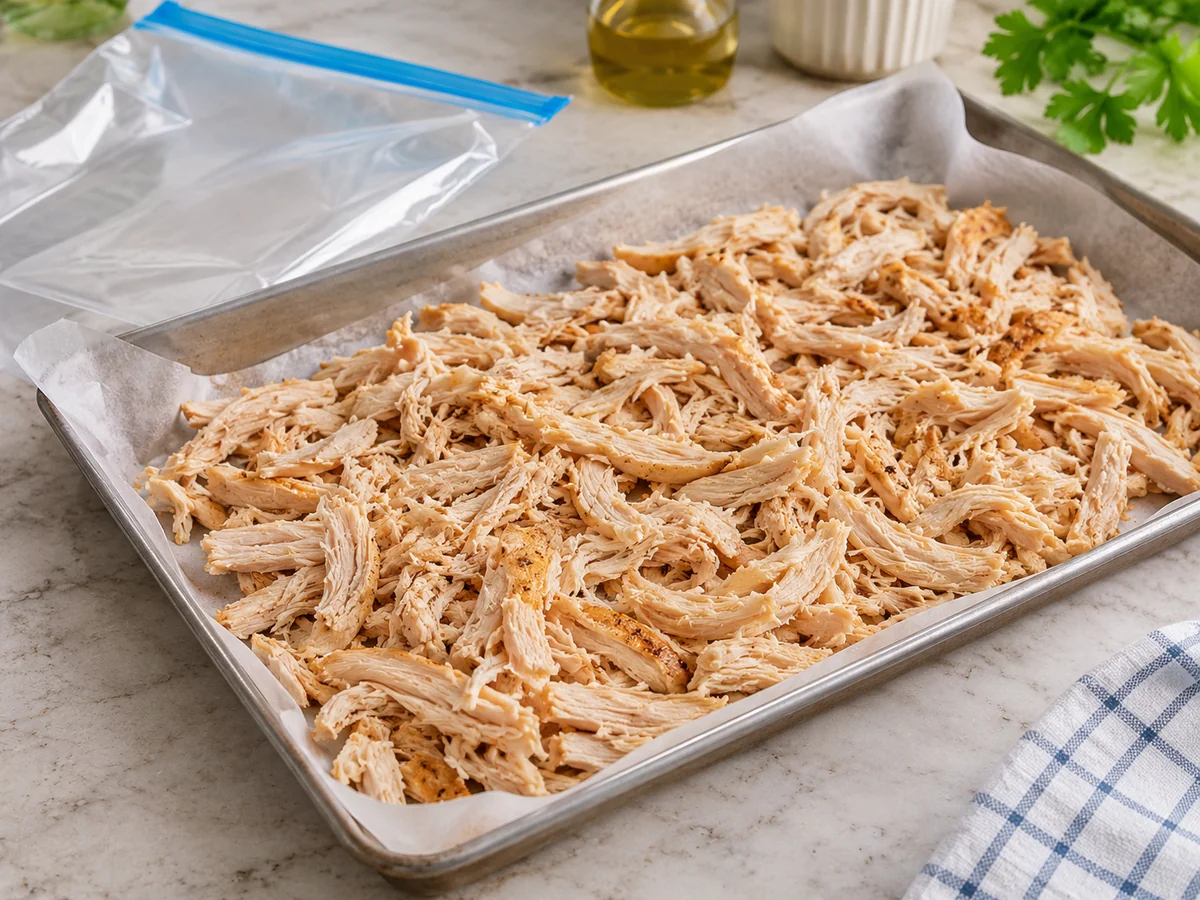
How to Tray-Freeze Shredded or Diced Chicken (Easy to Scoop)
Best for: Small additions to soups, salads, wraps, and casseroles
Freezing chicken in a loose layer before bagging helps keep the pieces separate. You can then take out a small amount without thawing the entire package.
Steps:
- Shred or dice refrigerated cooked chicken with clean utensils. Keep the pieces fairly even so they freeze at a similar rate.
- Spread the chicken in a single layer on a clean, freezer-safe tray lined with parchment paper.
- Place the tray in the freezer until the chicken is firm enough to separate, often about 1 to 2 hours, depending on piece size and the freezer.
- Transfer the frozen pieces promptly to a freezer bag or freezer-safe container. Remove excess air from the bag and seal it.
- Label with the contents and date, then return the package to the freezer.
Why This Method Works
The initial layer freeze limits clumping. Once packed tightly, the loose pieces are convenient for small portions and take up less space than a tray.
Tip: Do not leave the chicken uncovered on the tray for extended storage. If the pieces have clumped, loosen them gently before sealing the bag.
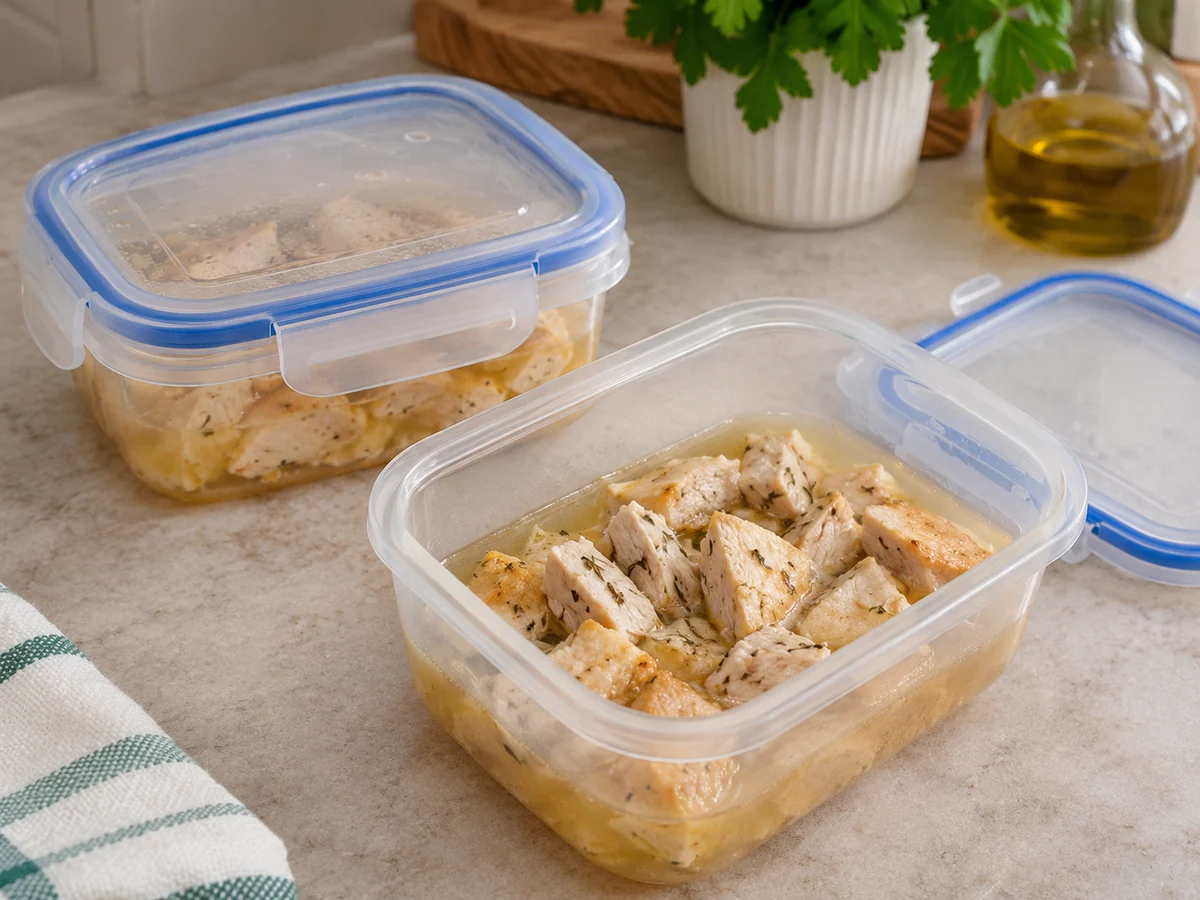
How to Freeze Chicken Meal Portions in Containers (Ready for Later)
Best for: Chicken with sauce, broth, or other cooked meal components
Small containers are useful when you want a complete portion or have chicken in a little broth or sauce. Choose components that you enjoy after freezing; some crisp vegetables can soften.
Steps:
- Divide the chilled chicken and any cooked accompaniments among clean, freezer-safe containers sized for one or two servings.
- If desired, add a little chilled broth or sauce to cover or moisten the chicken. Use only broth or sauce that has been handled and chilled safely.
- Leave headspace for liquid to expand, following the container manufacturer's guidance. Close each lid securely.
- Label each container with its contents and date, then place it in the freezer with space for cold air to circulate until frozen.
Why This Method Works
A tight container protects the portion during storage, while broth or sauce can help chicken stay moist when reheated. Individual portions also limit repeated thawing.
Tip: Use containers specifically marked as freezer-safe, including any glass containers. Thaw before reheating if the container is not suitable for direct heating.
How Long Does Cooked Chicken Last in the Freezer?
For best quality, use frozen cooked chicken within about 2 to 6 months. This is a quality guideline, not a safety deadline: food kept continuously frozen at 0°F (-18°C) or below remains safe, though flavor and texture can decline. Package size, air exposure, and freezer temperature affect quality. Record the freezing date so you can use older portions first.
- How to Freeze Cooked Chicken Pieces in Bags (Easy Storage): Allow about 10 to 15 minutes to portion and package chilled chicken. Freezing time varies with piece size and freezer load.
- How to Tray-Freeze Shredded or Diced Chicken (Easy to Scoop): Allow about 10 minutes of hands-on work, plus roughly 1 to 2 hours for the initial freeze.
- How to Freeze Chicken Meal Portions in Containers (Ready for Later): Allow about 10 to 15 minutes to assemble chilled portions. Freezing time depends on container size and contents.
Common Problems and Easy Fixes
Why does my chicken have dry, pale patches?
- Those patches may be freezer burn from air exposure. If the chicken has remained safely frozen, trim the dry areas if you like and use the rest in a moist dish.
- Next time, press more air out of freezer bags or use a better-fitting freezer-safe container.
Why is my shredded chicken frozen into one solid block?
- Thaw the package in the refrigerator and use the amount you need.
- For the next batch, freeze the shreds in a single layer on a tray before transferring them to a bag.
Why is the reheated chicken dry?
- Add a little broth or sauce and cover the chicken while reheating. Check it as it heats rather than relying on a fixed time.
- Use a food thermometer to confirm the thickest part reaches 165°F (74°C), then stop heating.
What if I forgot to refrigerate the chicken promptly?
- Discard cooked chicken left at room temperature for more than 2 hours, or more than 1 hour when the surrounding temperature is above 90°F (32°C).
- Do not rely on smell or appearance to judge safety, and do not freeze it to save it.
Frequently Asked Questions About Freezing Cooked Chicken
Can you freeze cooked chicken on the bone?
Yes. Chill and freeze individual bone-in pieces in meal-size portions. Protect bag packaging from sharp bone ends, and check the meat near the bone when reheating because thick areas can warm more slowly.
Can you freeze a whole cooked chicken?
You can, but dividing it into pieces is more practical and helps it cool promptly. Remove any stuffing and refrigerate it separately. Pack the chilled chicken in portions that fit your household.
Should cooked chicken be cold before it goes in the freezer?
Chill it promptly in shallow containers first, especially if you have a large batch. Do not wait for it to cool completely on the counter. Once chilled, package it and freeze it.
Can you freeze cooked chicken in its original takeout container?
Only if the container is suitable for freezer storage and seals well. Otherwise, transfer the chicken to a freezer bag or freezer-safe container. Refrigerate takeout promptly and freeze it within 3 to 4 days of cooking.
What is the safest way to thaw frozen cooked chicken?
Thaw it in the refrigerator at 40°F (4°C) or below, allowing more time for larger portions. You can also submerge a leakproof package in cold water, changing the water every 30 minutes, or use the microwave defrost setting. Reheat chicken thawed by either of those faster methods immediately.
How long can thawed cooked chicken stay in the refrigerator?
Chicken thawed in the refrigerator can generally stay there for another 3 to 4 days. Keep it at 40°F (4°C) or below. If it was thawed in cold water or the microwave, reheat it immediately instead of storing it for later.
Can you reheat cooked chicken from frozen?
Yes. You can reheat it from frozen in a microwave, covered skillet, or oven, though a thick or tightly packed portion takes longer and can heat unevenly. Stir or turn it where possible and use a food thermometer to check that all parts reach 165°F (74°C). Appliance and portion size affect the time.
Can you refreeze cooked chicken after thawing?
Yes, if it was thawed in the refrigerator and stayed safely chilled, although the texture may suffer. If you thawed it in cold water or the microwave, reheat it immediately before refreezing; chill the reheated leftovers promptly.
Is freezer-burned chicken unsafe to eat?
Freezer burn affects quality rather than safety if the chicken has been kept continuously frozen. Dry patches can taste tough or bland, so trim them if desired and use the remaining chicken in a saucy dish.
For more specific guidance, consider the cut or form of chicken, the number of portions you need, and whether you plan to serve it plain or in a sauce.
A little portioning and airtight packaging now can protect texture and make it easy to use cooked chicken later, without thawing more than you need.