Swiss Meringue Buttercream – Simple Stovetop Method
Make a small-batch Swiss meringue buttercream using a gentle stovetop method. This soft, silky frosting is smooth, stable, and made safe by warming the egg whites and sugar over simmering water.
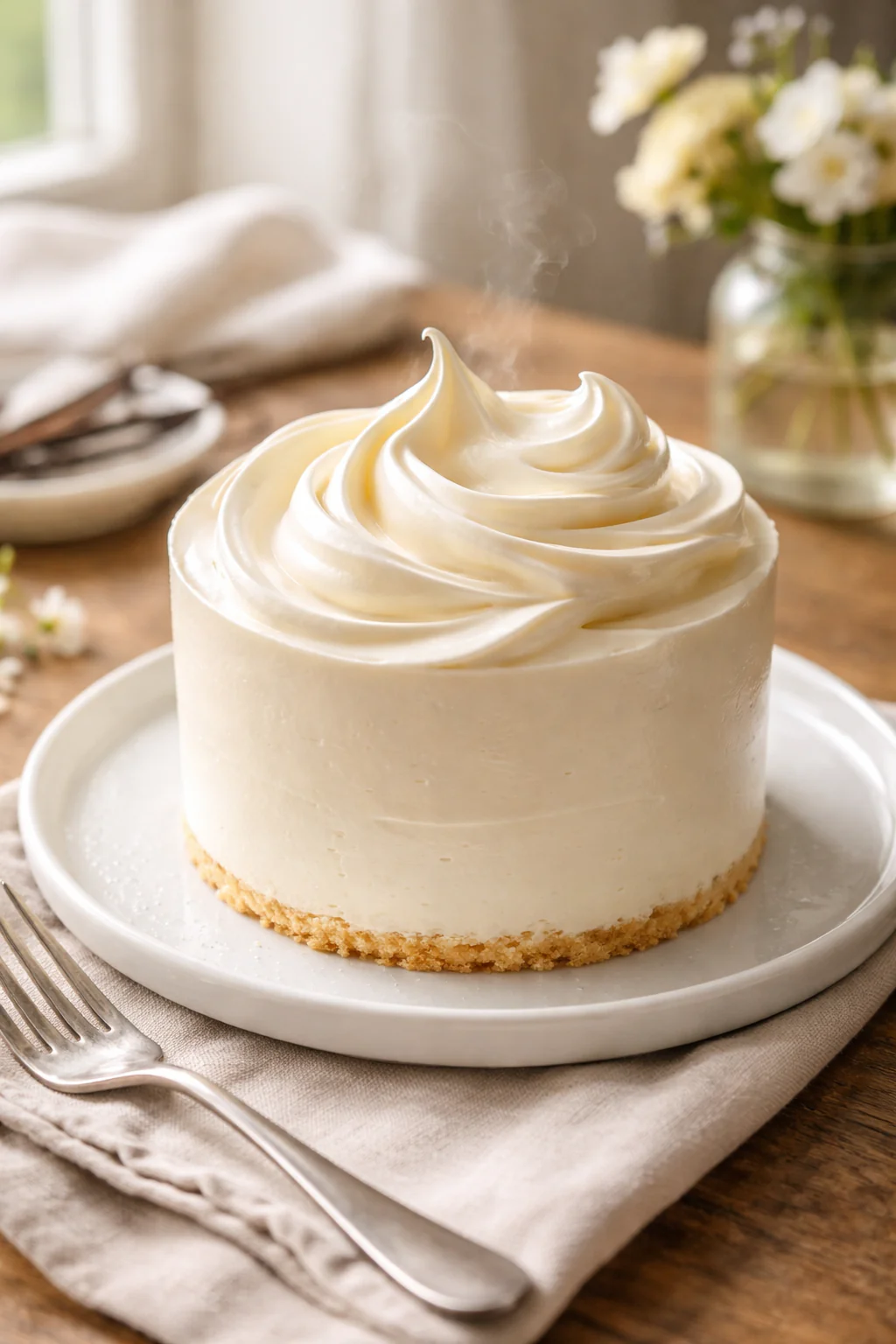
This frosting is convenient when you want a neat, soft finish on a 6-inch cake, a few cupcakes, or some cookies. The stovetop step gently warms the egg whites and sugar so the meringue whips up glossy and safe to eat.
The small batch keeps cleanup easy. The finished buttercream is soft and spreadable, which makes it pleasant to eat and easier to chew if you keep layers thin or use it as a filling.
Ingredients You’ll Need
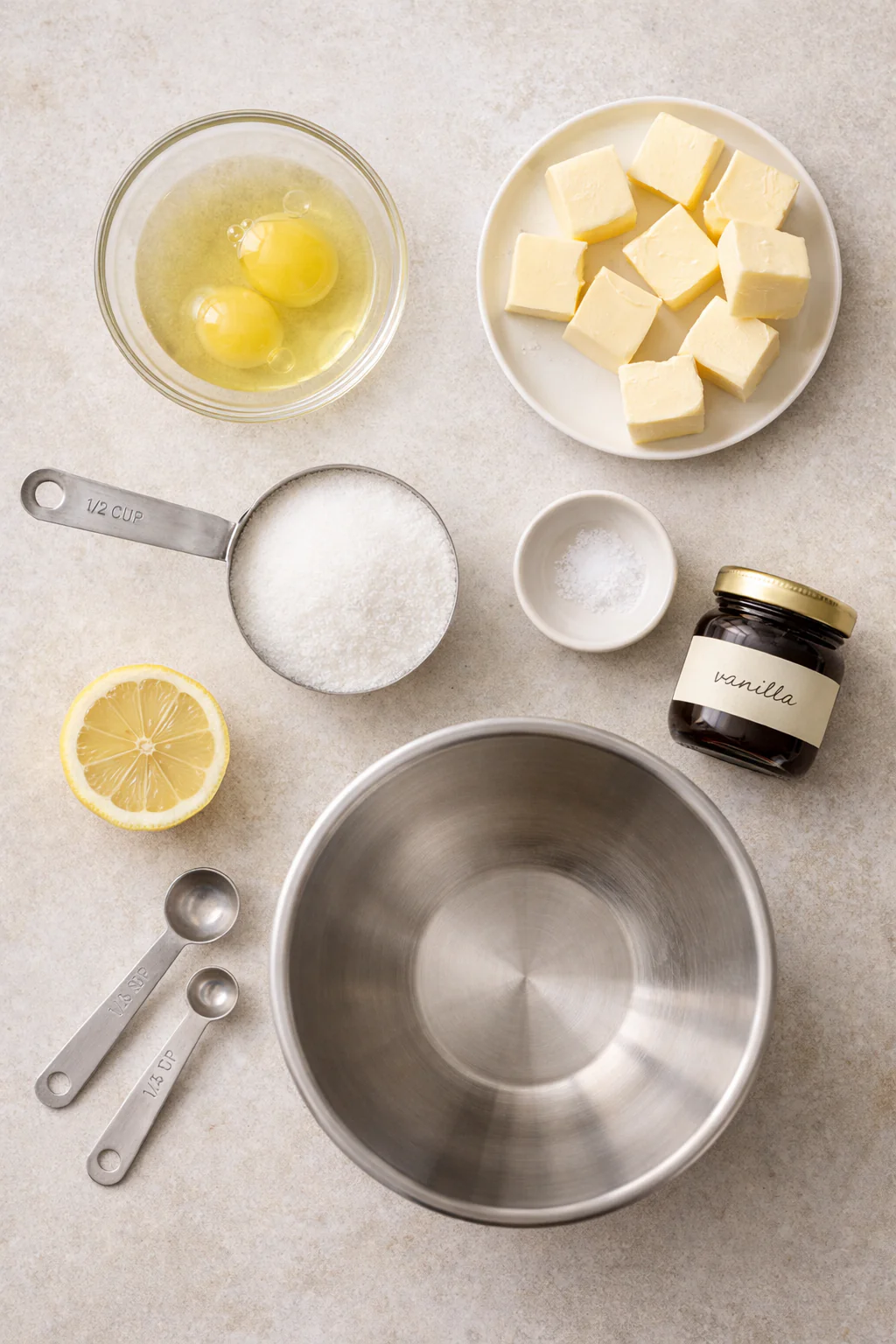
- 2 large egg whites, room temperature
- 3/4 cup (150 g) granulated sugar
- 3/4 cup (170 g) unsalted butter, softened to room temperature and cut into tablespoons
- 1 teaspoon pure vanilla extract
- Pinch of fine salt
- Optional – 1 teaspoon fresh lemon juice for a lighter flavor
This small batch frosts a 6-inch cake, about 6 cupcakes, or a batch of cookies. Keep layers thin for a gentler texture when eating.
Step-by-Step Recipe
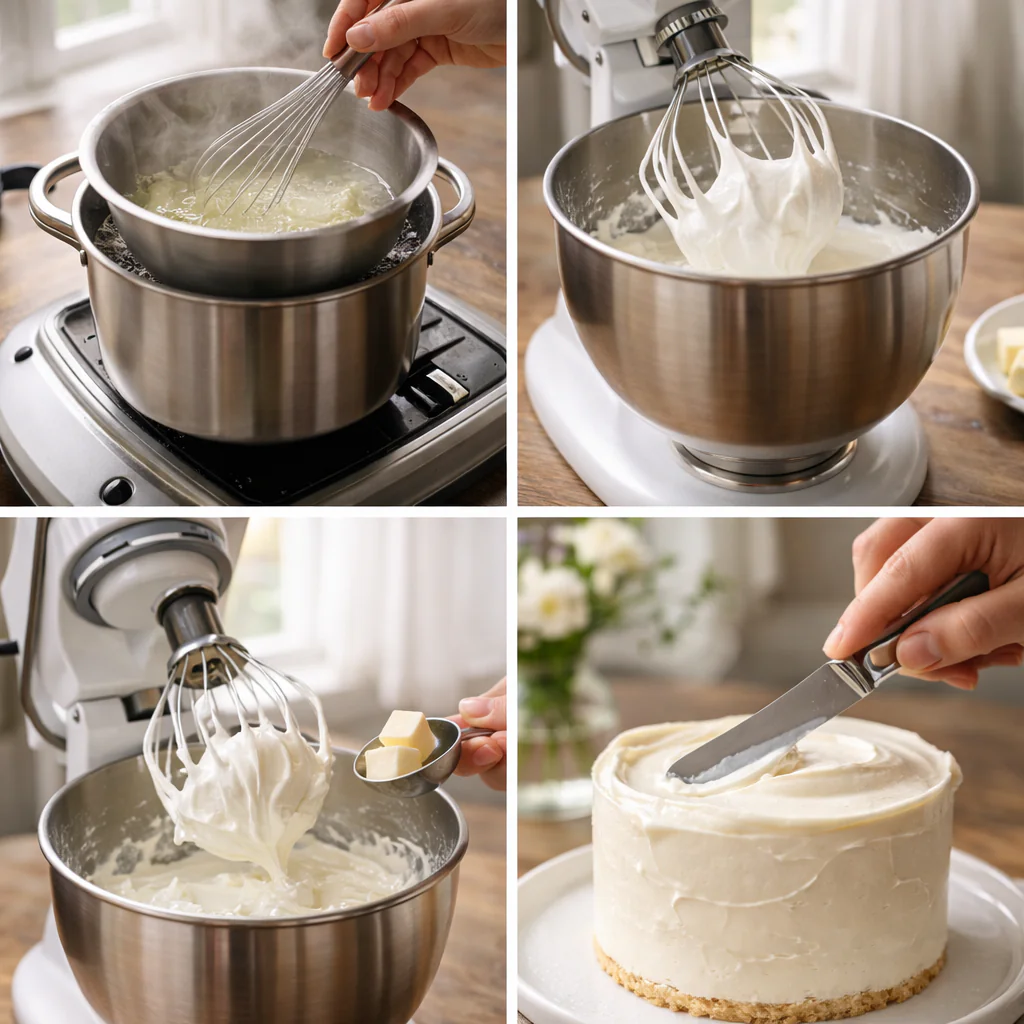
- Set up a double boiler – fill a small pot with 1 to 2 inches of water and bring to a very gentle simmer. Use low heat so water is steaming but not boiling.
- In a heatproof bowl that fits over the pot without touching the water, whisk together the egg whites and granulated sugar until combined.
- Place the bowl over the simmering water. Whisk constantly for 3 to 5 minutes until the sugar dissolves and the mixture reaches 160 F on an instant-read thermometer. If you do not have a thermometer, rub a bit between your fingers – it should feel smooth, not gritty.
- Remove the bowl from the pot. Using a stand mixer or a hand mixer, whip the warmed egg white mixture on medium-high until cool and glossy and it holds soft to medium peaks – about 6 to 10 minutes.
- With the mixer running on low, add the softened butter a tablespoon at a time. Do not rush this step. After about half the butter is incorporated, increase speed to medium-high and beat until smooth and silky. If the buttercream looks curdled, keep beating – it usually comes together as the bowl cools.
- Beat in the vanilla extract, salt, and optional lemon juice. Taste and adjust very slightly – if your doctor advised you to limit sugar, use a thinner layer when serving.
- Use immediately or chill briefly to firm up for easier spreading. For a softer spreadable finish, let the assembled dessert sit at room temperature for 20 to 30 minutes before serving.
Tips and Easy Variations
Texture tips
- For a softer texture use fully softened butter and beat until smooth but still spreadable.
- Avoid overbeating which can make the buttercream airy and harder to spread thinly.
- If the buttercream looks curdled keep beating; it often comes together as the bowl cools.
Lower sugar and digestion
- If you need less sugar reduce by up to 10 percent only since sugar helps stability.
- Use a thin layer on your cake or cut smaller slices to make it gentler to eat.
- Add a teaspoon of lemon juice to brighten flavor so you can use less frosting per serving.
Flavor swaps
- Swap vanilla for 1 teaspoon almond extract for a different note.
- Fold in 1 to 2 tablespoons softened cream cheese for a tangy variation.
- Always use room temperature ingredients for best texture.
Safety and serving notes
- Heat the sugar and egg whites to 160 F to reduce risk from raw eggs; use an instant-read thermometer if possible.
- If your doctor advised you to limit sugar prefer smaller portions rather than large recipe changes.
- If the buttercream separates chill the bowl briefly then rewhip until smooth.
Storage and Leftovers
Fridge
Store leftover buttercream in an airtight container in the refrigerator for up to 1 week. Bring to room temperature and rewhip briefly before using.
Freezer
Freeze the buttercream in a sealed container for up to 1 month. Thaw overnight in the refrigerator then bring to room temperature and rewhip.
Reheating
Allow chilled buttercream to warm to room temperature and rewhip with a mixer until smooth. Small portions are easiest to thaw and rework.
Conclusion
Try this Swiss meringue buttercream stovetop method for a smooth, small-batch frosting that is gentle, stable, and easy to make. The gentle warming step yields a glossy meringue and a silky finish.
The small yield is perfect for cooking for one or two and helps avoid excess while making cleanup simple.
FAQ
Is this safe to eat since it uses raw egg whites?▶
Yes. Warming the egg whites and sugar to 160 F on the stovetop helps make the mixture safer. If you do not have a thermometer heat until the mixture feels smooth when rubbed between your fingers.
What if my buttercream looks curdled?▶
Keep beating. Often it comes together as the mixture cools and the butter incorporates. If it does not come together chill the bowl briefly then rewhip.