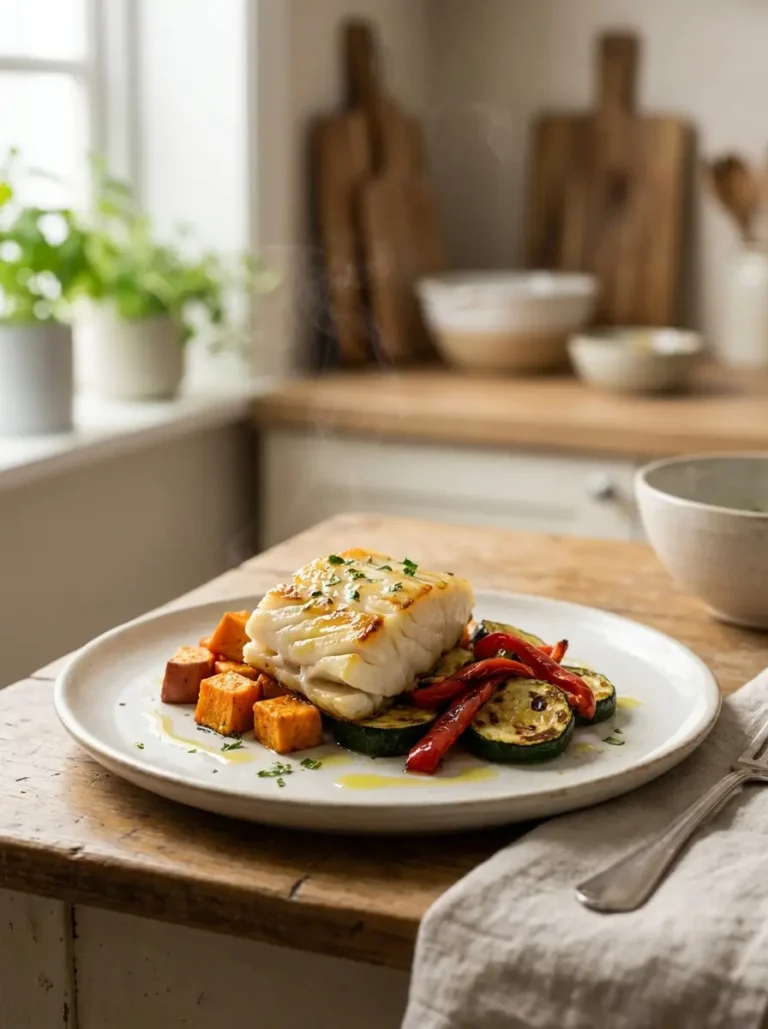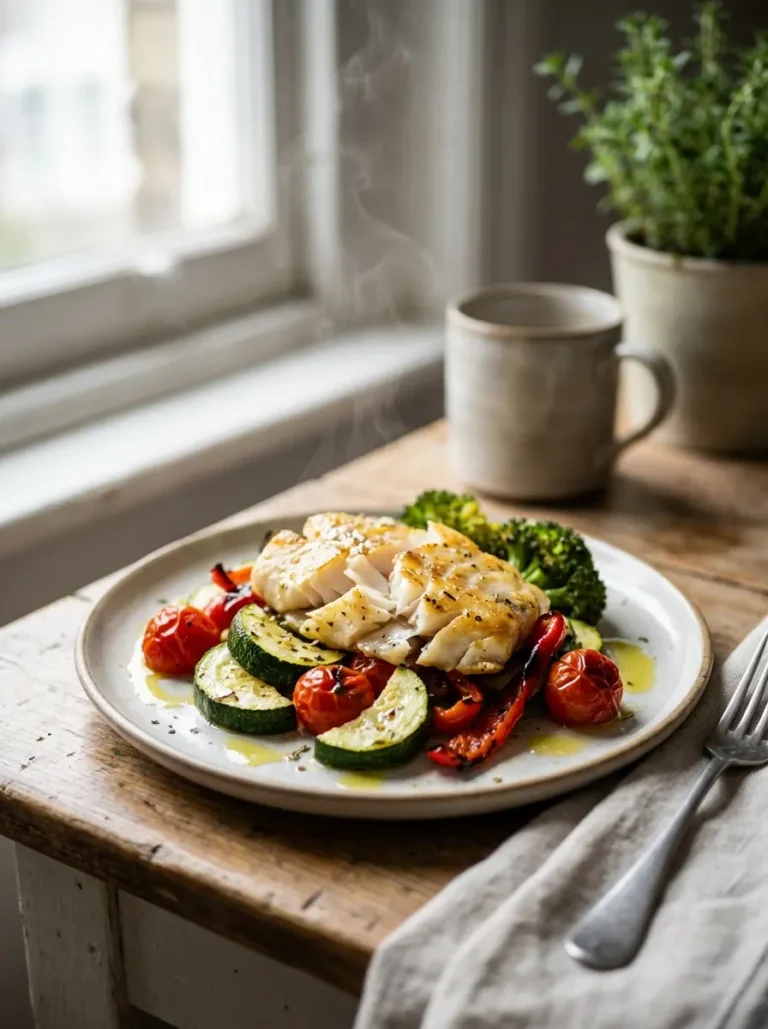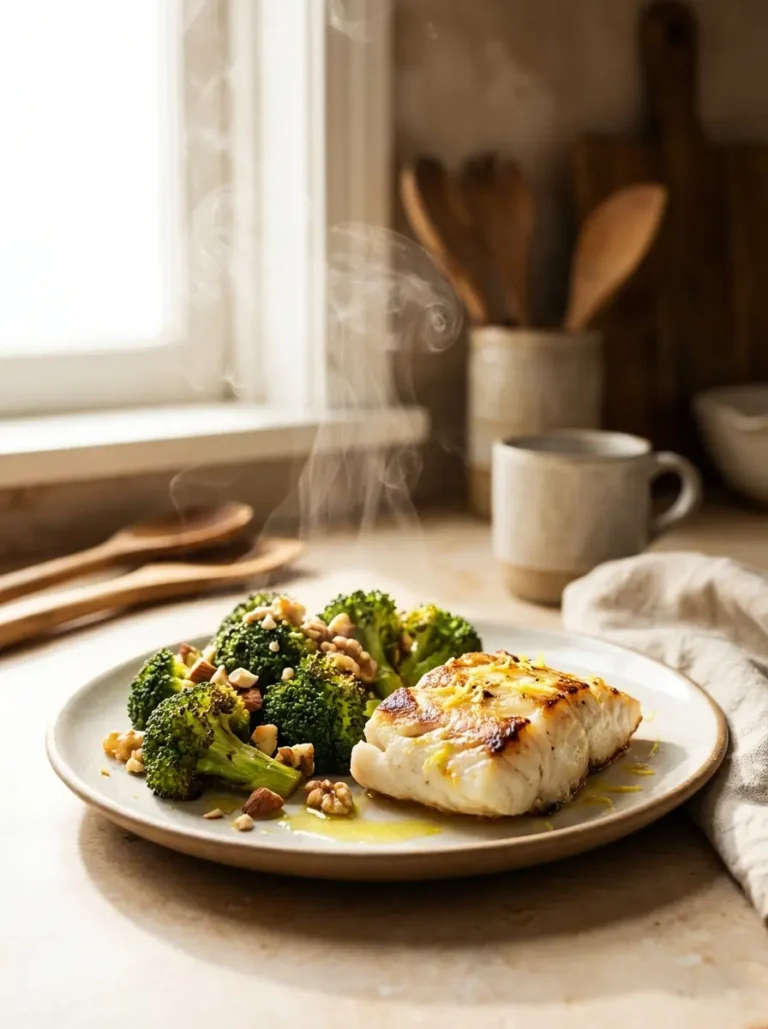
5 No-Fuss Heart-Healthy Salmon
Salmon is a simple way to add omega-3s and lean protein to weeknight meals. These heart-healthy salmon recipe fit the Nutritional Pyramid 2026–2030: lots of vegetables, whole grains, and healthy fats. Below you’ll find five quick dinner ideas and one full, gentle recipe for 1–2 servings you can make in about 20 minutes.
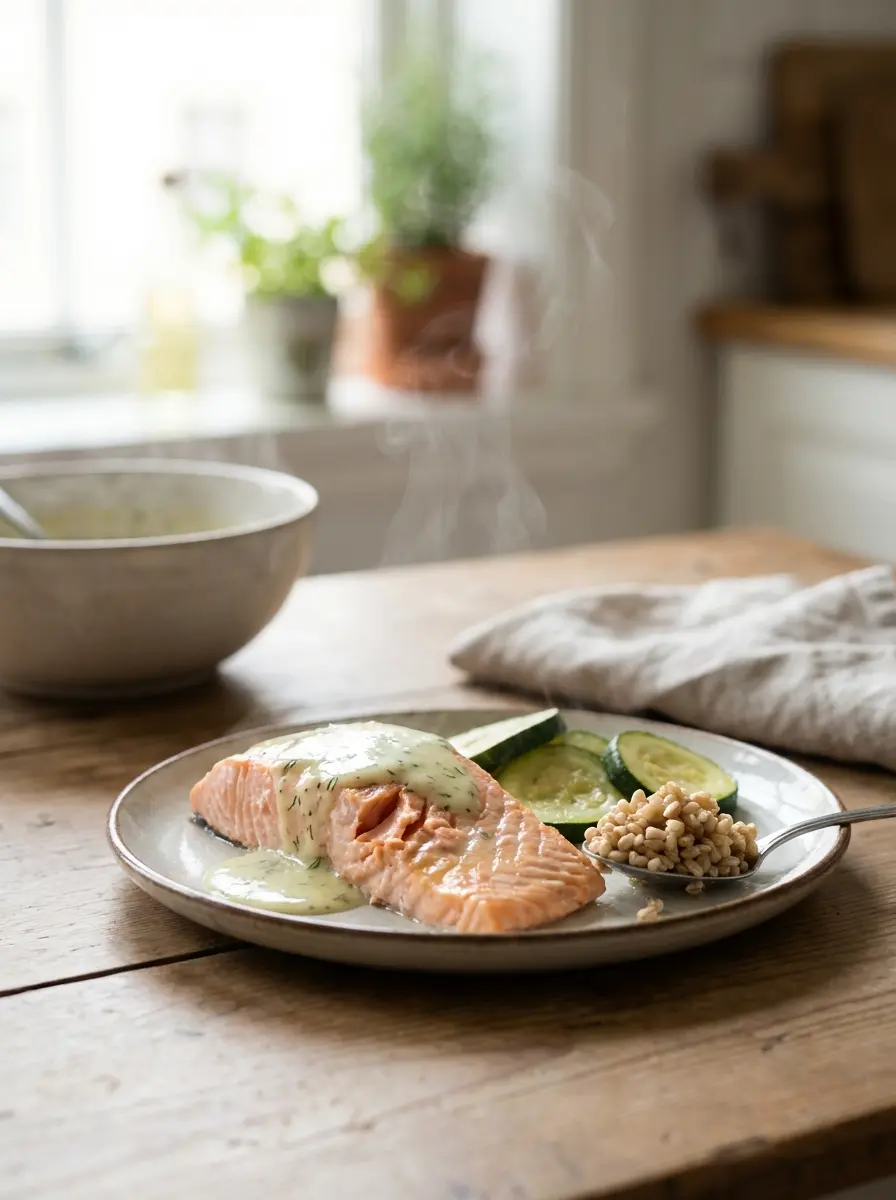
Most ingredients are common grocery items. The portions are modest, so you won’t waste food and cleanup stays minimal.
Ingredients You’ll Need
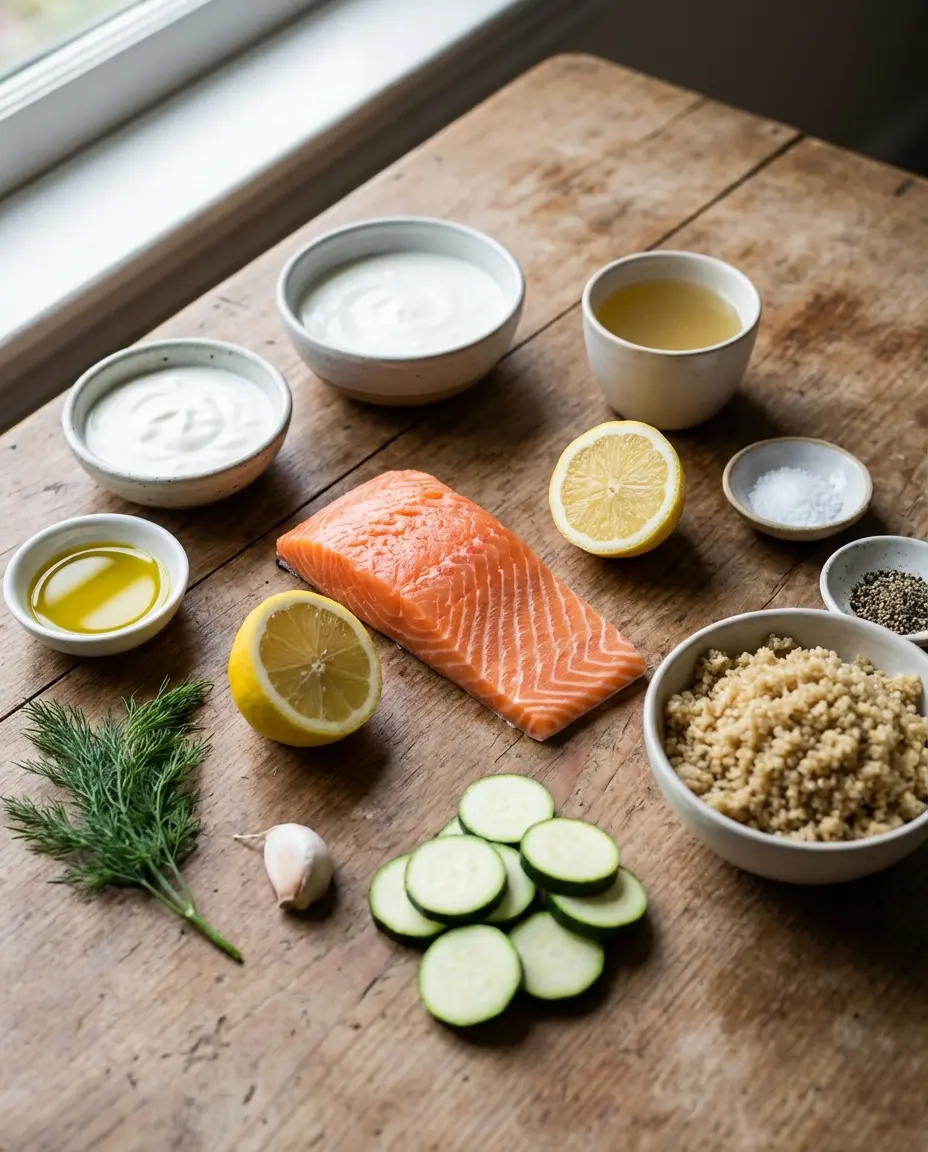
- 1 salmon fillet (4–6 oz / 115–170 g), skin removed if you prefer
- 1/2 cup low-sodium vegetable or chicken broth
- 2 Tbsp plain low-fat yogurt or Greek yogurt
- 1 tsp olive oil
- Juice of 1/2 lemon
- 1 tsp fresh dill or 1/2 tsp dried dill
- 1 small clove garlic, minced (optional)
- Salt and pepper to taste
- 1 small zucchini, sliced thin, or 1 cup tender steamed greens
- 1/2 cup cooked soft whole grain (quinoa, couscous, or soft-cooked farro)
You can serve this salmon with soft rice, mashed potatoes, or soft bread if you like.
Step-by-Step Recipe
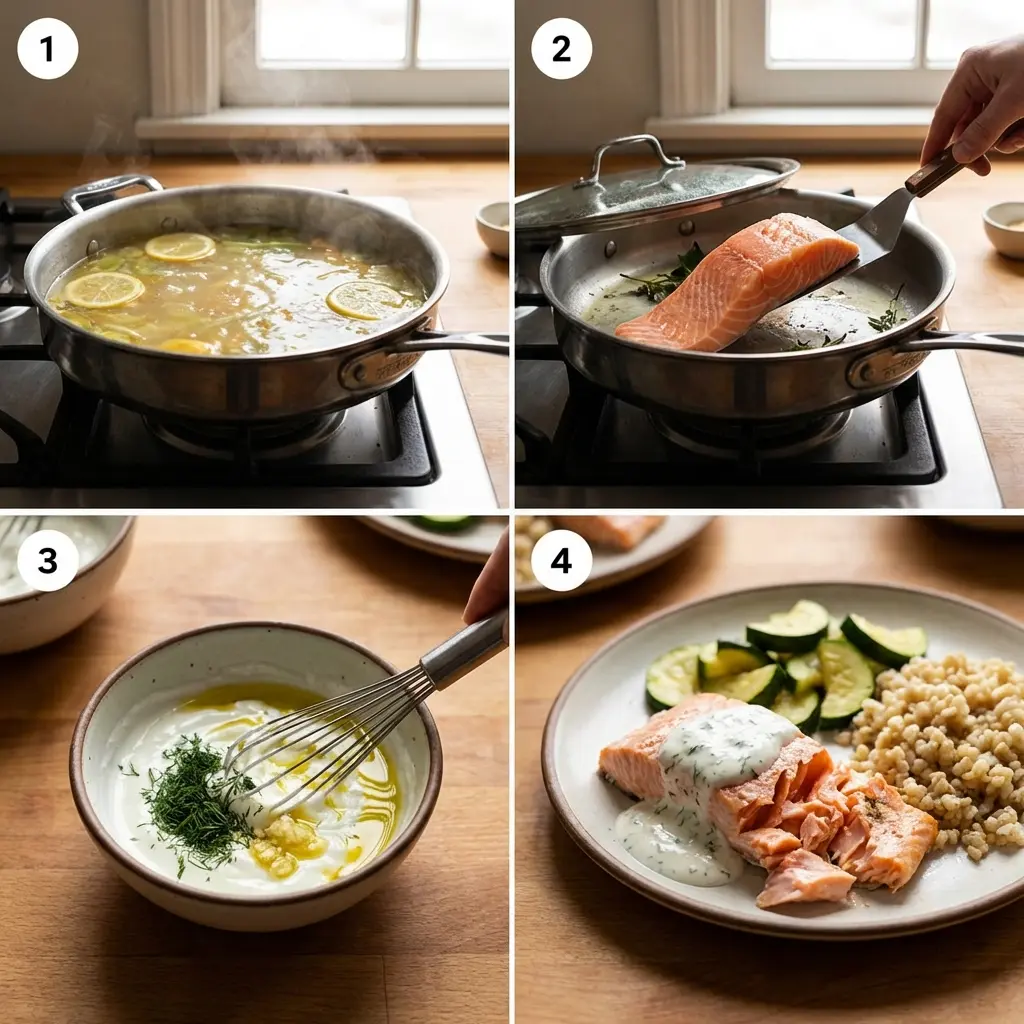
- Bring broth and lemon juice to a gentle simmer in a wide skillet over medium heat. Add a pinch of salt if using.
- Reduce heat to low. Slide the salmon into the liquid, cover, and poach 6–8 minutes, until the fish flakes easily with a fork.
- While the salmon cooks, stir yogurt, olive oil, dill, garlic (if using), and a little black pepper in a small bowl. Thin with 1–2 tsp water if you want a looser sauce.
- Steam or briefly sauté the zucchini slices until tender (2–3 minutes). Warm your cooked grain.
- Transfer salmon to a plate, spoon the yogurt-dill sauce over the top, and serve with the soft vegetables and grain. Flake the fish into bite-sized pieces for an easier chew.
Tips and Easy Variations
Texture & digestion
- Make it softer to chew: remove the skin before cooking and flake the salmon into small pieces.
- Poaching yields a very tender texture that is easy to chew and digest.
- Pair with soft grains or mashed vegetables to ease chewing.
Flavor swaps
- Swap dill for chopped parsley or basil for a different herb profile.
- Use a teaspoon of rinsed capers for a briny pop without much added salt.
- If you don’t like yogurt, use mashed avocado thinned with lemon as a creamy alternative.
Quick dinner ideas
- Grill or pan-sear salmon (2–3 minutes per side) and finish with the same yogurt sauce.
- Serve salmon on mashed sweet potato for extra fiber and comfort.
- Use leftover flaked salmon in salads or soft grain bowls for another meal.
Quick heart-healthy tips
- Choose low-sodium broth and skip added salt if you need to limit sodium.
- Prioritize vegetables first and include a soft whole grain for balance.
- Use lemon and fresh herbs to boost flavor without extra salt.
Storage and Leftovers
Fridge
Cool leftovers quickly and store in an airtight container in the fridge for up to 2 days.
Freezer
You can freeze cooked salmon portions for up to 1 month; thaw in the fridge overnight before reheating.
Reheating
Reheat gently in a microwave at low power or steam briefly so the salmon stays tender; avoid high heat to prevent drying out.
Conclusion
Try this poached salmon for a small, gentle meal that fits the Nutritional Pyramid 2026–2030: vegetables first, whole grains, lean protein, and healthy fats.
It’s fast, low-fuss, and kind on digestion—perfect for a weeknight when you want something heart-healthy and easy to eat.
FAQ
Can I use frozen salmon?▶
Yes. Thaw in the fridge overnight or use the defrost setting on your microwave. Pat dry before poaching so it cooks evenly.
How do I know when salmon is done?▶
It should flake easily with a fork and be opaque through the center. Poaching time varies slightly with thickness, typically 6–8 minutes for a 4–6 oz fillet.