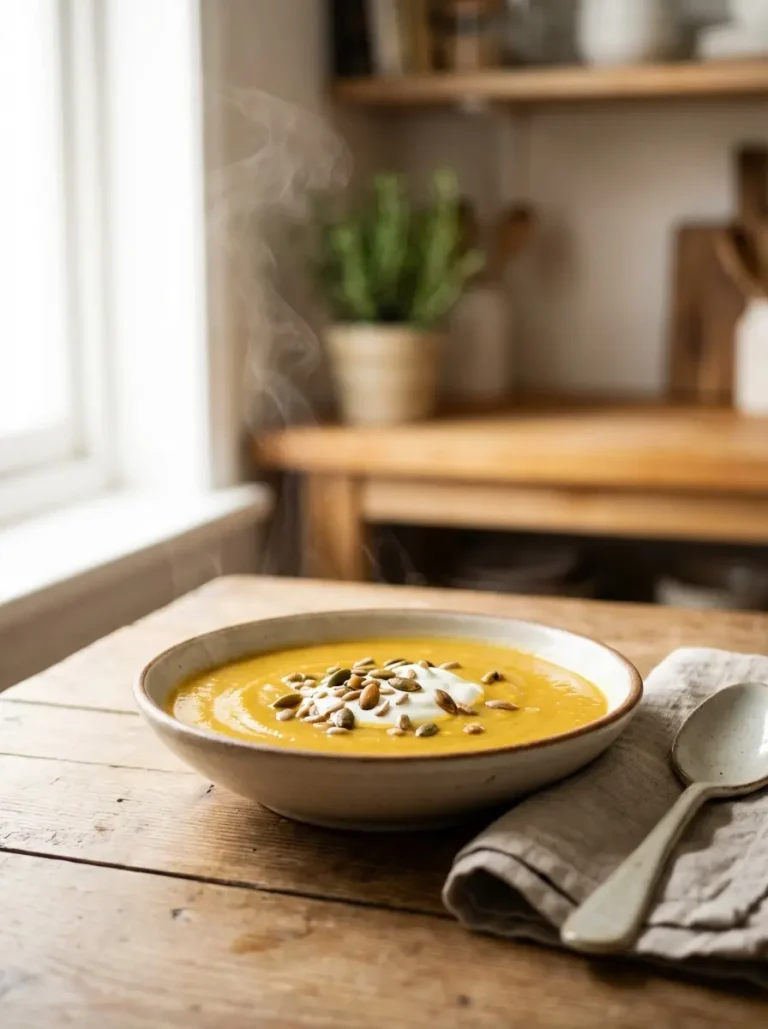
Gentle Winter Squash for Easy Digestion
Winter squash is in peak season in January. These recipes use simple ingredients and soft textures to provide vitamins and fiber without heavy spices or excess salt. This small-batch skillet feeds 1–2 people and follows the Nutritional Pyramid 2026–2030: vegetables first, modest lean protein, whole-food fats, and low added sodium.

The texture is adjustable. Mash the squash for a softer sauce or keep cubes for a gentle bite. The flavors come from herbs and a little lemon—not salt—so the dish stays light and digestion-friendly.
Ingredients You’ll Need
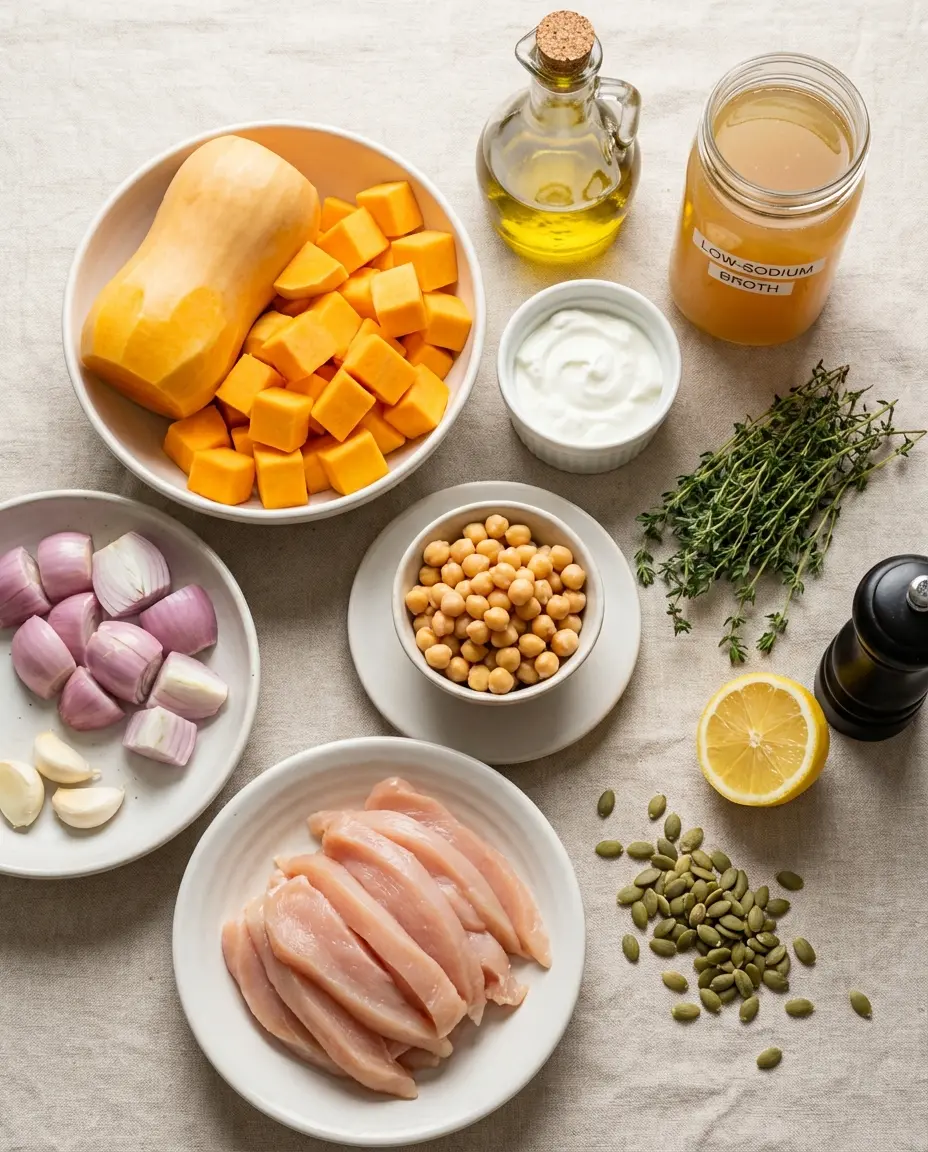
- 1 small butternut squash (about 1–1.25 lb) or 2 cups peeled, cubed winter squash (acorn or kabocha)
- 1 tablespoon extra-virgin olive oil, divided
- 1 small shallot or 1/4 small onion, finely chopped
- 1 small garlic clove, minced (optional)
- 8 oz boneless skinless chicken breast or thigh, thinly sliced (or 1 cup canned chickpeas, drained, for vegetarian)
- 1/2 cup low-sodium chicken or vegetable broth
- 2 tablespoons plain low-fat Greek yogurt or 2 tablespoons milk (to finish)
- 1 teaspoon fresh lemon juice
- 1/4 teaspoon dried thyme or 1 teaspoon fresh thyme leaves
- Freshly ground black pepper to taste
- Optional garnish: chopped parsley or a few toasted pumpkin seeds
For 1–2 servings. You can serve this creamy chicken skillet with a small side of rice, mashed potatoes, or soft bread if you like.
Step-by-Step Recipe
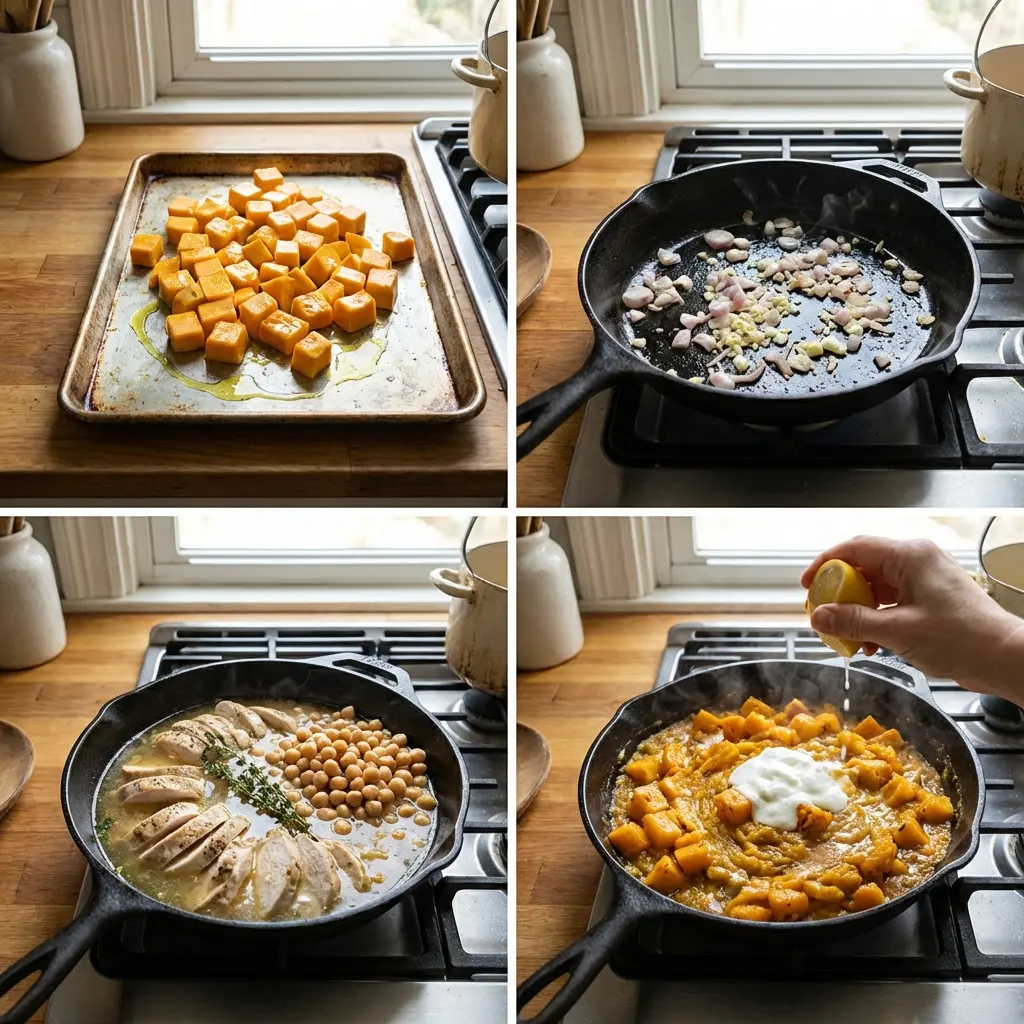
- Preheat oven to 400°F (200°C). Peel, seed, and cut the squash into 1-inch cubes. Toss with 1/2 tablespoon olive oil and spread on a small baking sheet. Roast 18–22 minutes until very tender and fork‑soft.
- While squash roasts, heat 1/2 tablespoon olive oil in a medium skillet over medium heat. Add shallot and cook until soft, 2–3 minutes. Add garlic and cook 30 seconds more.
- Add the thinly sliced chicken (or chickpeas). Cook, stirring, until chicken is just cooked through, about 4–6 minutes for thin slices. Reduce heat if chicken browns too fast.
- Pour in 1/2 cup low-sodium broth and thyme. Scrape any browned bits, then let simmer 2 minutes so flavors meld.
- Add roasted squash to the skillet. Use a fork or potato masher to mash half the squash into the broth to create a creamy sauce; leave some cubes whole for texture.
- Stir in Greek yogurt (or milk) off the heat, then add lemon juice and black pepper. Taste and adjust: if your doctor advised limiting salt, skip adding salt and rely on lemon and herbs for brightness.
- Serve warm, garnished with parsley or pumpkin seeds. Let cool slightly before eating for easier digestion.
Tips and Easy Variations
Texture & Digestion
- Mash the squash completely for a smooth, stew-like texture that’s easier to chew.
- Use extra broth and skip the yogurt for a lighter, looser sauce.
- Let the dish cool slightly before eating to aid gentle digestion.
Flavor & Swaps
- Lower sodium: choose low-sodium broth and skip added salt; add lemon or smoked paprika instead.
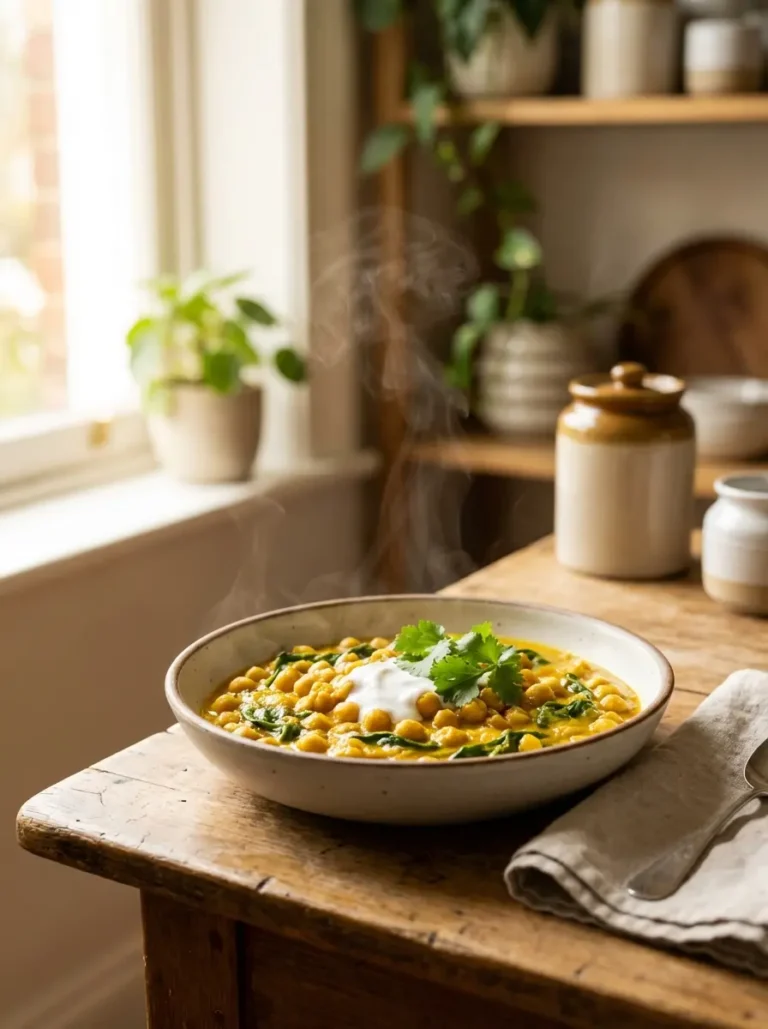
- Vegetarian swap: replace chicken with a can of chickpeas, warmed and gently mashed for creaminess.
- Herb swap: use sage or rosemary and add fresh leaves at the end for aroma.
Meal Prep & Serving
- Roast squash ahead and refrigerate to speed weeknight dinners.
- Serve with a small scoop of soft whole grain like brown rice or quinoa to make it more filling.
- Drain and pat chickpeas dry before adding if using canned to reduce excess liquid.
Quick notes
- Mash more squash to soften the dish for easier chewing.
- Use low-sodium broth and brighten with lemon instead of adding salt.
- Roast squash ahead and store for up to 3 days to simplify cooking.
Storage and Leftovers
Fridge
Cool leftovers within two hours and store in an airtight container in the refrigerator for up to 3 days.
Freezer
Freeze in a shallow airtight container for up to 2 months. Thaw overnight in the fridge before reheating.
Reheating
Reheat gently on the stovetop over low heat with a splash of water or broth to loosen the sauce and keep textures soft.
Conclusion
Give this gentle winter squash skillet a try this week. It’s simple, soft, and made for small portions—vegetable-forward and balanced for easy digestion.
Adjust texture and protein to suit your needs: mash for lower-fiber or easier-chew meals, or swap in chickpeas for a plant-forward option.
FAQ
Can I use canned squash purée?▶
Yes. Use about 1 1/2 cups canned purée and add less broth since purée is already moist; adjust seasoning and texture as needed.
Can I skip the chicken?▶
Yes. Use chickpeas or extra mushrooms for a plant-forward dish; warm and gently mash some chickpeas for added creaminess.